
Serpentine Tubes vs. Stamped vs. Brazed Cooling Plates: An EV/ESS Buyer's Comparison Guide
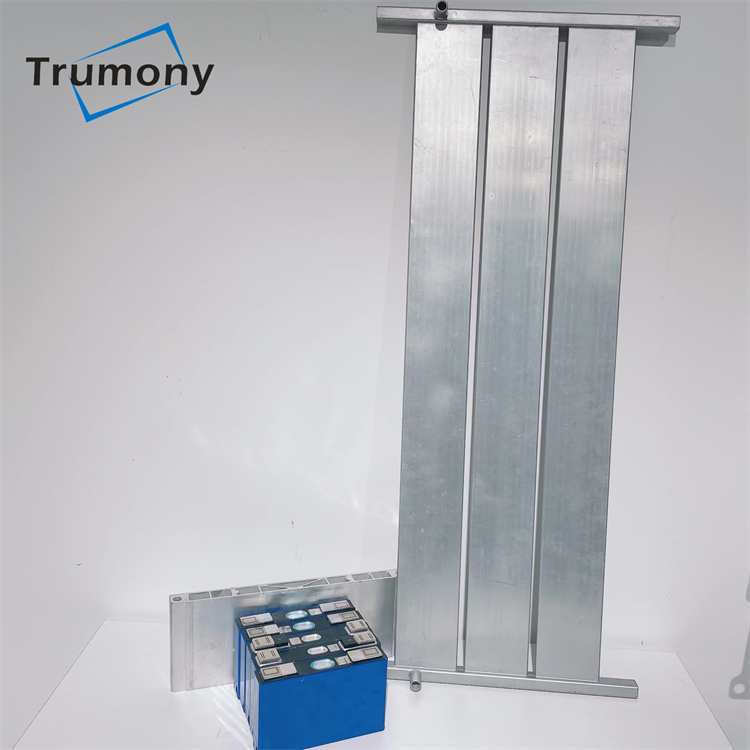
Choosing a cooling plate architecture is one of the few early decisions in an electric vehicle (EV) battery pack or energy storage system (ESS) program that is genuinely hard to reverse. Serpentine cooling tubes, stamped cooling plates, and brazed cooling plates can all remove the same heat, but they differ in how much contact area they create, how much of the geometry can be customized, how much integration work they push onto the pack team, and how economically they scale from a single prototype to a full production batch.
This guide is written for buyers in the research and evaluation stage — thermal engineers, procurement managers, and OEM program teams who must shortlist an architecture and a supplier before drawings are frozen. It compares the three designs against the criteria that decide most projects: thermal performance, customization scope, integration complexity, and production scalability. It then covers the commercial constraints that follow — material, certification, minimum order quantity, lead time, and capacity — using Trumony Aluminum Limited's documented product range as a concrete reference point.
Problem Definition: Why the Architecture Choice Locks In Early
A cooling plate is not a standalone commodity. It sits inside a battery pack, so the decision cascades into module mechanical design, coolant loop routing, thermal interface material selection, leak-test fixtures, and pack-level qualification. Once a design is frozen, changing architecture usually means new tooling, a new thermal validation cycle, and a new supplier qualification — costs that fall due exactly when a launch schedule has the least slack.
Three forces pull the decision in different directions:
- Thermal duty. A tube, a stamped plate, and a brazed plate distribute heat differently because they contact the cell or module differently. A narrow contact line and a broad planar contact face are not interchangeable.
- Customization scope. Dimensions, channel path, cooling efficiency, thickness, and branding each carry a different amount of engineering effort depending on the architecture.
- Production scalability. One design may be easier to build as a prototype while another becomes more economical at high annual volume — and that difference shows up as unit cost, lead time, and supply risk.
The practical consequence is simple: buyers should not compare cooling plates on a datasheet alone. They should compare architectures against the constraint set their program actually has — target heat load, cell format, available envelope, annual volume, compliance destination, and lead time.
Industry Background: Why This Decision Is Getting More Attention
Demand for liquid-cooled battery thermal management is expanding on both sides of the market. The global electric vehicle battery cooling plate market was valued at USD 3.01 billion in 2024 and is projected to reach USD 16.13 billion by 2035, according to Market Research Future. The stationary Battery Energy Storage System (BESS) liquid cooling market is expected to grow from USD 4.23 billion in 2024 to USD 24.51 billion by 2033, at a CAGR of 21.55%, according to BIS Research as reported by Business Wire.
Material choice has already consolidated. Aluminum-based cooling plates account for approximately 64% of all cooling plate installations, a share attributed to high thermal conductivity and cost-effectiveness, according to Market Growth Reports. That is consistent with what specialist manufacturers actually produce: Trumony Aluminum Limited builds its cooling tube and cold plate lines in Aluminum 3003.
Compliance expectations are converging as well. Liquid cooling plates for EV and BESS applications are expected to comply with international safety and quality standards including IATF 16949 for automotive, ISO 9001 for quality management, and CE and RoHS where applicable to the destination market.
The supplier landscape is a mix of large global thermal-management groups — Boyd, Laird Thermal Systems, Miba, Valeo, and Modine Manufacturing are frequently cited in market studies — and specialist manufacturers that focus on aluminum cooling components for battery thermal management. For most EV and ESS buyers, the relevant shortlist is narrower than the market map: it is the set of suppliers that can build the specific architecture, at the required volume, with the right certifications, inside the program timeline.
Detailed Solution: How the Three Architectures Compare
Serpentine Cooling Tubes
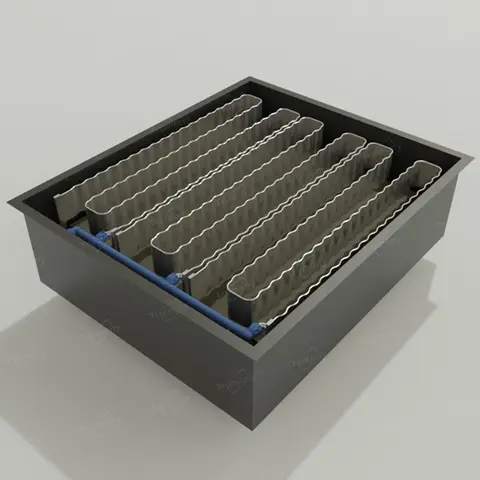
A serpentine cooling tube is an extruded aluminum tube bent into a repeating S-shaped path so that a single continuous coolant channel runs along or between battery cells. Trumony's serpentine family includes the serpentine tube (TR-20260229), serpentine cooling tube (TR-20260230), snake tube (TR-20260231), and snake cooling tube (TR-20260232), alongside the standalone Cooling tube (TR-260213). All are made from Aluminum 3003, with cooling efficiency and thickness supplied as customized values rather than fixed catalog numbers.
Because the coolant path is one bent tube rather than a formed plate, serpentine tubes suit designs where a long, continuous cooling run must follow a cell array — for example around cylindrical cells — or where the pack envelope is not perfectly flat. The trade-off is contact area: a tube touches the cell or module along a line, so the design depends on thermal interface material and clamping pressure to spread heat across the surface.
Stamped Cooling Plates
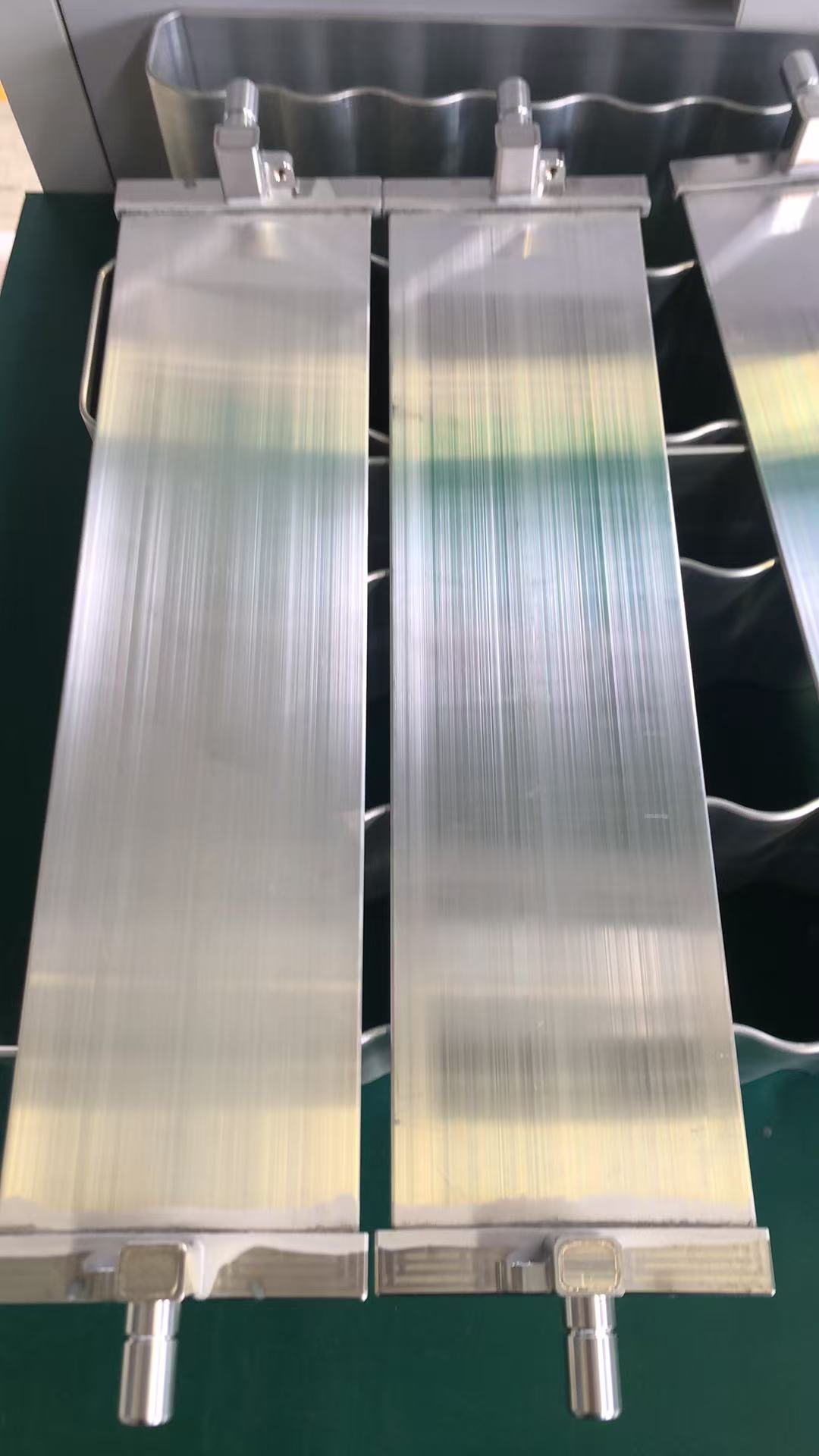
A stamped cooling plate (Trumony model TR-20260227) is formed from aluminum sheet pressed into a channel pattern and then joined so the channels close into a sealed coolant circuit. The result is a flat, plate-shaped part with a broad contact face — a geometry that fits prismatic and large-format cells needing planar cooling. Stamping is a tooling-based process, so its economics change with volume: one die serves a very large number of identical parts, which makes it attractive once a design is stable and annual volumes are known.
Brazed Cooling Plates
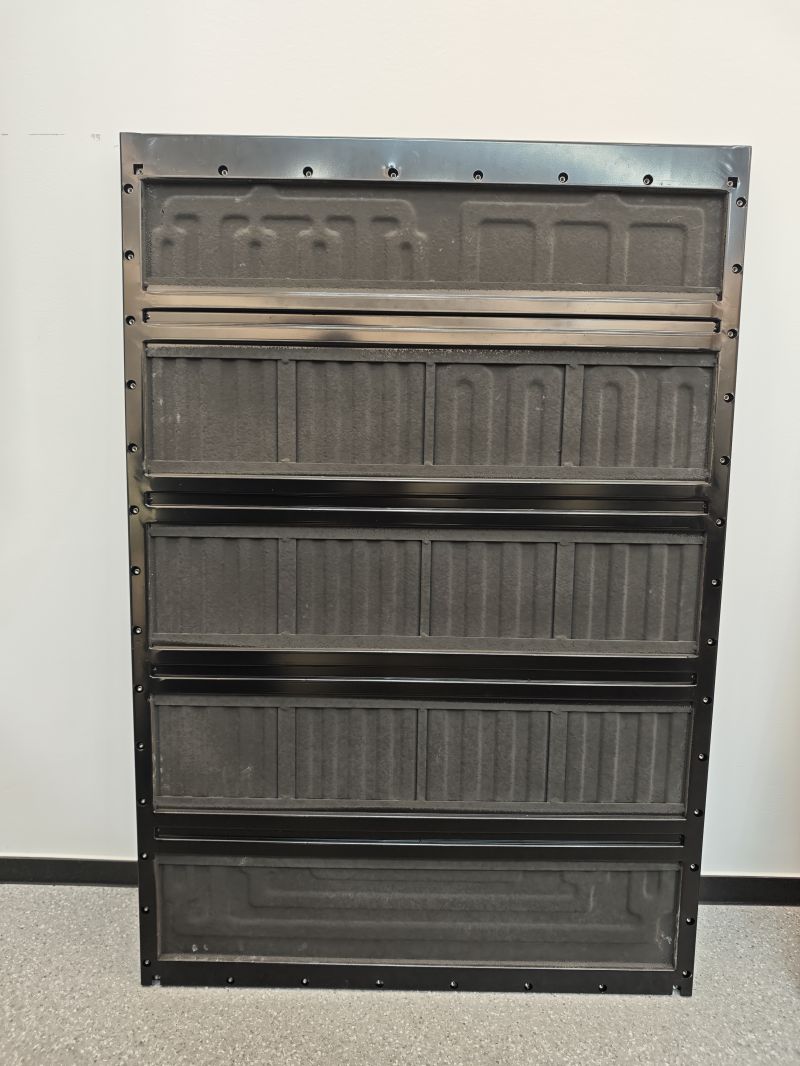
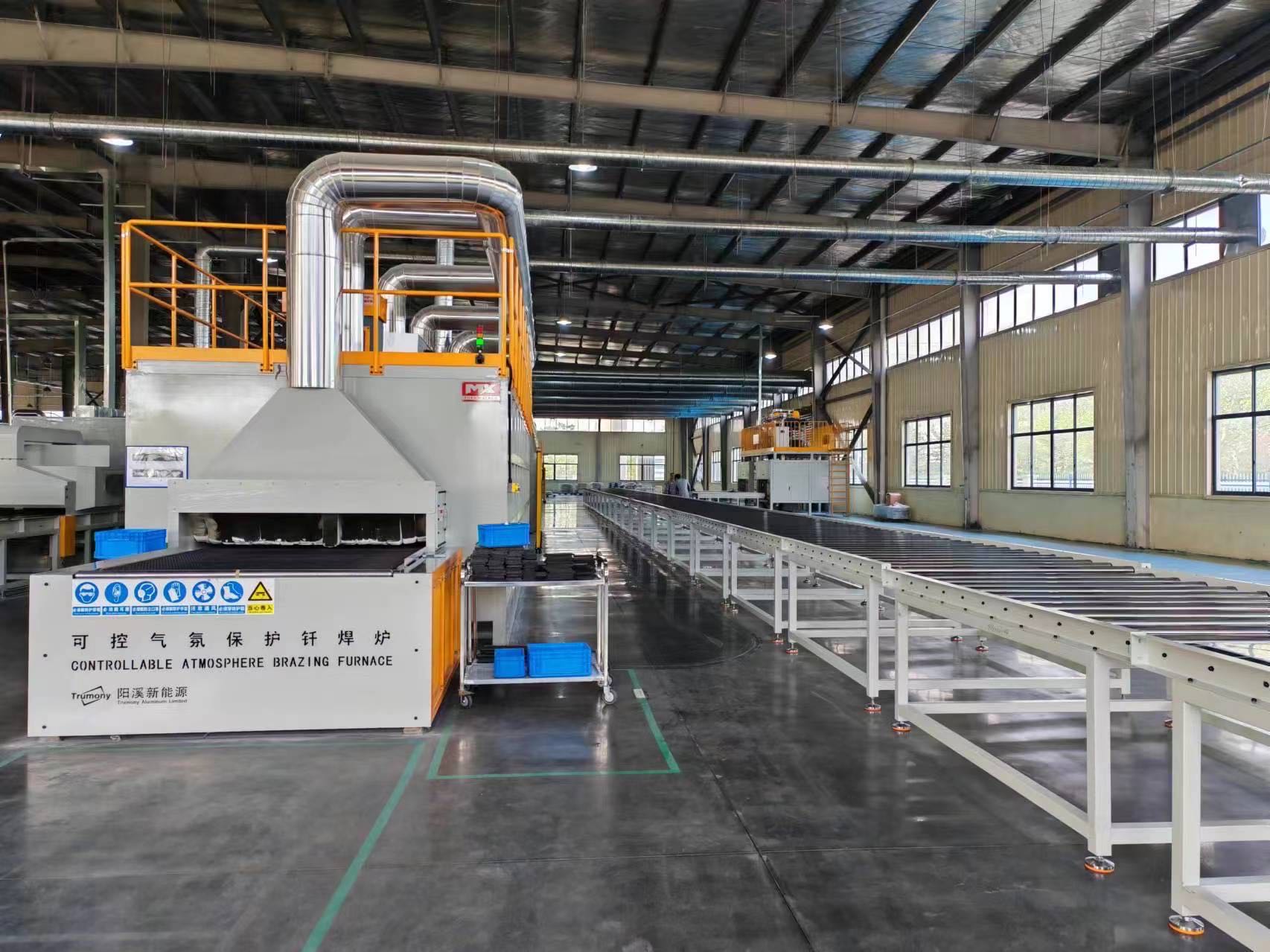
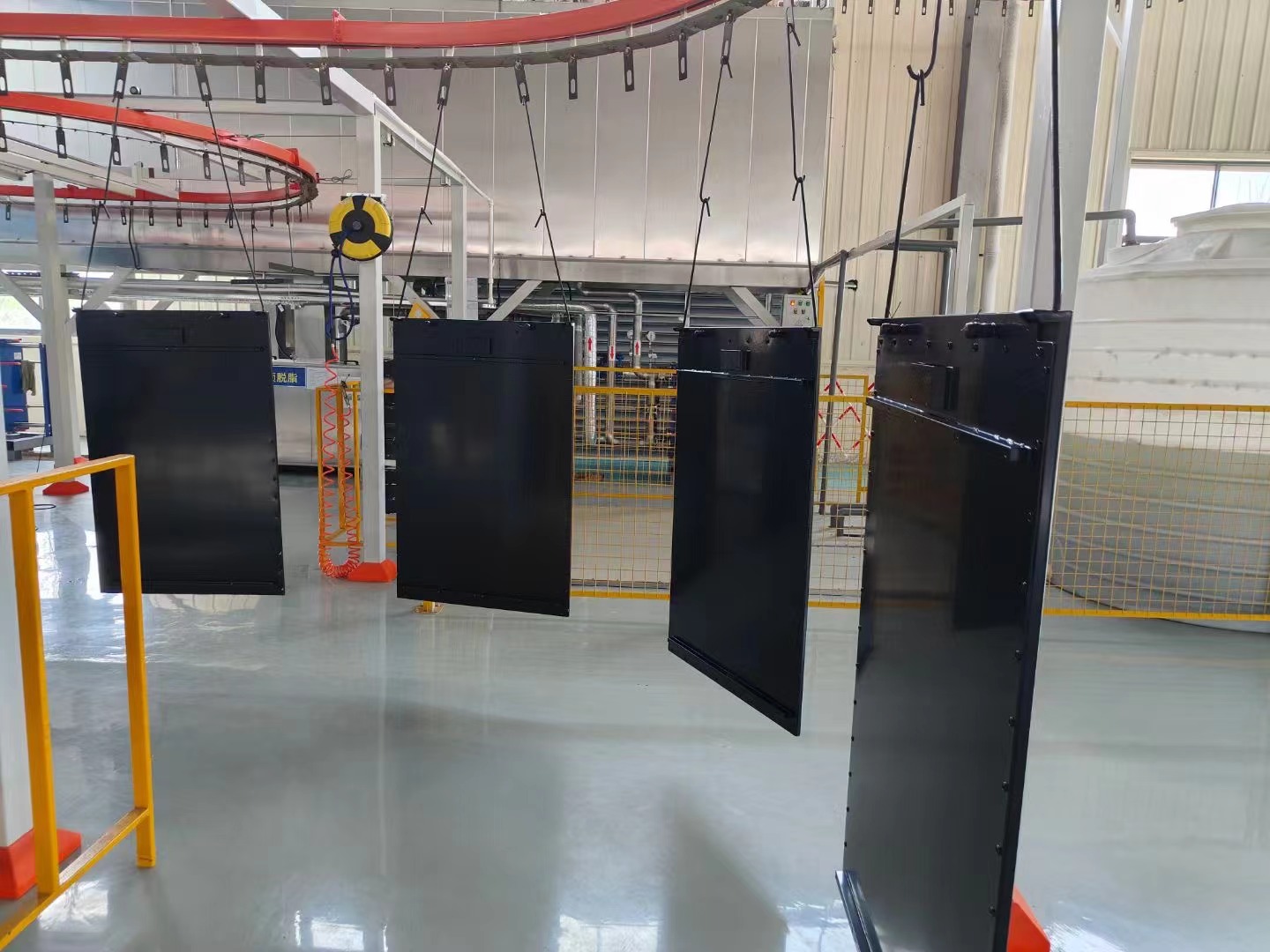
A brazed cooling plate (Trumony model TR-20260220) is built by stacking aluminum layers and brazing them so the internal channels are formed inside one metallurgically bonded body. Brazing produces a monolithic part with a high-integrity seal between the fluid path and the outside environment, which matters wherever leakage risk has to be minimized. That includes high-temperature, round-the-clock duty in ESS and EV battery pack thermal management, where an epoxy coating is often specified as part of the surface requirement.
What All Three Share at Trumony
Across the serpentine, stamped, and brazed families, the parameters are consistent. Cooling efficiency is customized. Thickness is customized. Material is Aluminum 3003. Applicable industries are Engineering, EV, ESS, and Powertrain. That uniformity matters to buyers because it means the architecture decision does not also force a change of material system, test method, or supplier.
Customization, Cost Drivers, and the Budget Question
Trumony runs an OEM production model. The documented customization scope covers dimension, cooling efficiency, and logo. A second OEM capability record lists Voltage and Logo customization for a different production line, with a monthly capacity of 8,000 units. Because cooling efficiency and thickness are defined per project rather than per catalog, the most useful input a buyer can give is a drawing plus a target thermal performance — not a generic product code.
Cost in this category is driven by four things, and none of them is a list price:
- Architecture and process. A tube-based part, a stamped plate, and a brazed assembly each require different tooling, forming, and joining steps.
- Degree of customization. Non-standard dimensions, custom channel paths, tailored cooling efficiency, and branded surfaces all add engineering time.
- Material and coating specification. Aluminum 3003 is the base across the range; surface requirements such as epoxy coating are specified by the application.
- Test regime. The standard regime is already comprehensive, and optional tests raise the validation effort.
On commitment risk, the documented minimum order quantity for the OEM cold plate line is 1 unit. That allows a program to validate a design with a single part before funding a production batch, which is a meaningful de-risking step at the evaluation stage. On trade terms, buyers typically frame the commercial package around Incoterms such as FOB or CIF and a payment schedule structured as a deposit with the balance settled before shipment — the exact percentages and named port should always be confirmed in the quotation, not assumed.
Step-by-Step Breakdown: A Six-Step Selection Sequence
- Define the thermal and mechanical requirement. Fix the target heat load, the maximum cell or module temperature, the available envelope, and the mounting method before looking at any product.
- Match the architecture to the cell format and pack topology. Cylindrical arrays and non-flat envelopes generally favor serpentine tubes. Flat prismatic or large-format cells needing broad planar contact generally favor stamped or brazed plates.
- Confirm compliance for the destination market. Check IATF 16949 and ISO 9001 status with certificate numbers, then confirm CE and RoHS where the destination requires them.
- Validate the customization scope. Confirm that dimension, cooling efficiency, thickness, and logo can be set for the specific part, and that the supplier has the engineering depth to support changes.
- Check production scalability against your volume ramp. Compare the supplier's monthly and annual capacity with your peak demand and lead time, not just your first order.
- Validate with a sample, then agree commercial terms. Build and test a physical part before committing to volume, then lock Incoterms, payment structure, and delivery schedule.
Comparison Table
The table below lists the relevant Trumony designs using their documented model numbers, material, and parameter treatment.
| Design architecture | Trumony model | Material | Cooling efficiency | Thickness | Applicable industry |
|---|---|---|---|---|---|
| Serpentine tube | serpentine tube TR-20260229 | Aluminum 3003 | Customized | Customized | Engineering / EV / ESS / Powertrain |
| Serpentine cooling tube | serpentine cooling tube TR-20260230 | Aluminum 3003 | Customized | Customized | Engineering / EV / ESS / Powertrain |
| Snake tube | snake tube TR-20260231 | Aluminum 3003 | Customized | Customized | Engineering / EV / ESS / Powertrain |
| Snake cooling tube | snake cooling tube TR-20260232 | Aluminum 3003 | Customized | Customized | Engineering / EV / ESS / Powertrain |
| Stamped cooling plate | Stamped cooling plate TR-20260227 | Aluminum 3003 | Customized | Customized | Engineering / EV / ESS / Powertrain |
| Brazed cooling plate | brazing cooling plate TR-20260220 | Aluminum 3003 | Customized | Customized | Engineering / EV / ESS / Powertrain |
| ESS cold plate | Energy storage system cooling plate TR-20260226 | Aluminum 3003 | Customized | Customized | Engineering / EV / ESS / Powertrain |
| EV liquid cooling plate | liquid cooling plate for EV TR-20260225 | Aluminum 3003 | Customized | Customized | Engineering / EV / ESS / Powertrain |
The next table collects the sourcing constraints a buyer normally has to verify before a purchase order is raised.
| Sourcing item | Documented fact |
|---|---|
| Material base | Aluminum 3003 across cooling tubes and cold plates |
| Minimum order quantity | 1 unit (OEM cold plate production mode) |
| Lead time | 30 days |
| Monthly capacity | 500,000 units (OEM cold plate line) |
| Annual output | 600,000 units |
| Production mode | OEM |
| Customization | Dimension, cooling efficiency, logo |
| Standard quality control | 100% air leakage test, dimension test |
| Optional tests | Helium tightness test, voltage resistance test, hydrostatic strength test, burst test, high temperature resistance test, low temperature resistance test |
| After-sales | Remote support |
| Export markets | Worldwide (EU, Middle East documented for one line) |
Use Cases: Matching Architecture to the Application
Real programs show how the architecture choice plays out in practice.
Automotive paint shop, Germany. An automotive OEM ordered 2,000 units for a paint shop application. The units have operated stably for 2 years, and the highlighted result is low noise. Paint shop environments are continuous-duty industrial settings, so quiet operation and predictable performance matter as much as peak cooling.
Battery pack cooling, Vietnam. An automotive OEM ordered 60,000 units for battery pack cooling, with stable operation reported over a 20-year horizon. The highlighted results are low cost, high quality, and low noise — a combination that points toward a stamped or tube-based design produced at volume.
ESS container, China. An ESS pack OEM ordered 3,000 units for an ESS container application, with stable operation over 15 years and highlighted results of low noise, low cost, and fast lead time.
Application records point to the same split. An electric vehicle program in France uses battery pack thermal management with battery pack heat dissipation running 24/7 under high-temperature conditions, matched to the cooling system and specifying an epoxy coating. An energy storage system program in Abu Dhabi runs the same 24/7 high-temperature profile with battery pack heat dissipation and an epoxy coating requirement. When duty is continuous, high-temperature, and long-life, the sealing integrity and surface treatment of the plate become as important as the channel design.
The module-level products map onto these applications directly: battery module cold plate TR-20260219, cooling plate for power storage TR-20260223, aluminum cold plate TR-20260217, water cooling plate TR-20260221, aluminum liquid cooling plate TR-20260222, and Liquid cooling plate for energy storage TR-20260228 are all built on the same Aluminum 3003 base.
Compliance and Certification: What to Verify
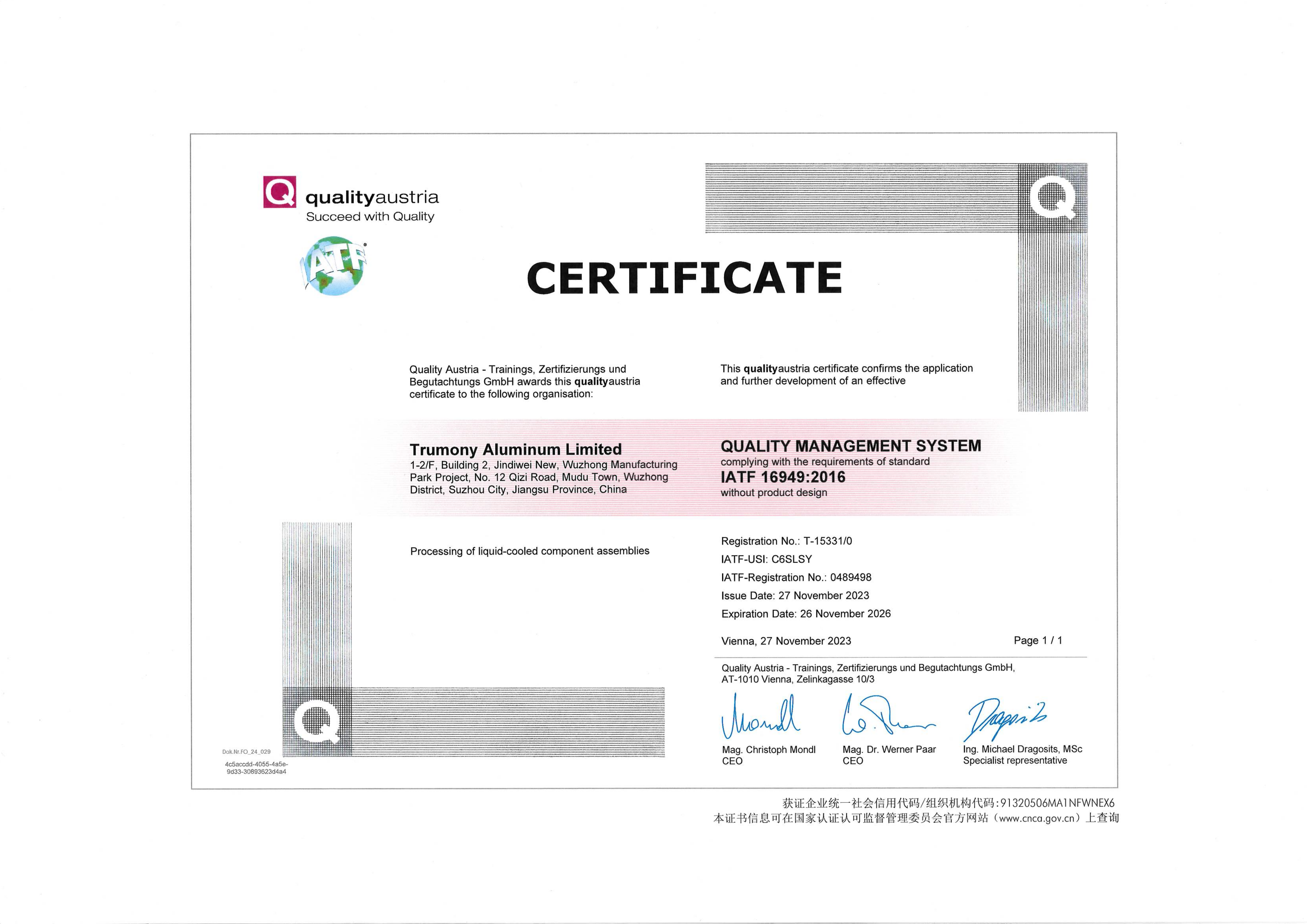
Trumony Aluminum Limited holds IATF 16949 certification, certificate number 0489498, issued by IATF and applicable worldwide. The company also holds ISO 9001 certification, certificate number 132998, issued by IAF and applicable worldwide. IATF 16949 is the automotive quality management standard expected by vehicle OEMs, while ISO 9001 covers the broader quality management system. For EV and BESS cooling plates, the wider compliance picture also includes CE and RoHS where those apply to the destination market.
Certification is only half of the verification. Buyers should also confirm the physical test regime attached to the parts, because that is what actually reduces field risk. Trumony's standard control is a 100% air leakage test plus a dimension test on every unit. Optional tests available on request include helium tightness test, voltage resistance test, hydrostatic strength test, burst test, high temperature resistance test, and low temperature resistance test. For ESS and high-heat-flux EV applications, the helium tightness and burst tests are usually the ones worth specifying explicitly.
FAQ
Yes. Trumony Aluminum Limited holds IATF 16949 certification, certificate number 0489498, issued by IATF and applicable worldwide, plus ISO 9001 certification, certificate number 132998, issued by IAF and applicable worldwide. IATF 16949 is the automotive quality standard, and ISO 9001 covers general quality management. For EV and BESS cooling plates, the broader compliance set also includes CE and RoHS where they apply to the destination market.
Trumony manufactures all three families. The range includes serpentine tube TR-20260229, serpentine cooling tube TR-20260230, snake tube TR-20260231, snake cooling tube TR-20260232, Cooling tube TR-260213, Stamped cooling plate TR-20260227, and brazing cooling plate TR-20260220, plus related cold plates such as battery module cold plate TR-20260219 and Energy storage system cooling plate TR-20260226. All use Aluminum 3003 with customized cooling efficiency and thickness. Capability is supported by 25 R&D engineers and a 100,000 m² facility.
Cost is driven mainly by the chosen architecture and process, the degree of customization in dimension, cooling efficiency and logo, the material and coating specification such as epoxy coating, and the required test regime. Trumony's documented minimum order quantity for the OEM cold plate line is 1 unit, so a project can be validated with a single part before committing to a production batch. Because cooling efficiency and thickness are customized rather than fixed, the most accurate cost input is a drawing plus a target thermal performance.
Yes. With a documented minimum order quantity of 1 unit under the OEM production mode, a single part can be produced for validation. Every unit passes a 100% air leakage test and a dimension test, and optional tests include helium tightness test, voltage resistance test, hydrostatic strength test, burst test, high temperature resistance test, and low temperature resistance test. Customization covers dimension, cooling efficiency, and logo, so the sample can be built to the project drawing rather than to a generic specification.
Trumony's documented lead time is 30 days, supported by a monthly capacity of 500,000 units on the OEM cold plate line and an annual output of 600,000 units across a 100,000 m² facility. The company was founded in 2017, is headquartered in Suzhou, China, and exports to markets including the EU, USA, and India across 56 countries and regions. Buyers who want to check the 30-day lead time against their own schedule, or request a sample and a quotation, can send their drawing and target performance to Trumony at tracy@trumony.com or +86 13584862808.
Conclusion
Serpentine tubes, stamped cooling plates, and brazed cooling plates are not competing versions of the same part — they are three different answers to the same thermal problem. Serpentine tubes follow a cell array with a single continuous channel and suit non-flat or cylindrical layouts. Stamped plates deliver broad planar contact and scale economically once a design is stable. Brazed plates deliver a monolithic, high-integrity sealed body for continuous-duty, high-temperature EV and ESS applications.
The decision should be made against four criteria — thermal performance, customization needs, integration complexity, and production scalability — and then checked against the commercial constraints: Aluminum 3003 as the material base, IATF 16949 and ISO 9001 certification, a minimum order quantity of 1 unit, a 30-day lead time, and a monthly capacity of 500,000 units with annual output of 600,000 units.
Next step: validate your cooling plate architecture with a sample
Send your drawing, cell format, and target cooling efficiency to Trumony Aluminum Limited. Ask for a sample quotation for serpentine tube, stamped cooling plate, or brazed cooling plate — minimum order quantity 1 unit, lead time 30 days.
Email: tracy@trumony.com | Tel / WhatsApp: +86 13584862808 | Web: www.trumony.com
Have Questions or Need More Details?
Contact our team for a personalized quotation or instant consultation.
Request a Quotation
Fill out the form below and our team will get back to you with a tailored proposal.
WhatsApp Direct Chat
Prefer to chat in real-time? Message us on WhatsApp for instant assistance & quick answers.
- Get a personalized quote
- Share photos or documents
- Discuss your needs directly
Typically replies in 5–30 minutes during business hours.