
Supplier Audit Essentials: Verifying Aluminum Cold Plate Manufacturers Serving the EU
Supplier Evaluation · EU Sourcing
An aluminum cold plate supplier audit for a European EV or BESS program should verify four things before a purchase order is issued: documented production capacity, a quality system that can be audited rather than quoted, export experience that can be evidenced, and a written acceptance procedure covering pre-shipment testing. Price and lead time belong after these four checks, not before them.
This article sets out a verification framework for aluminum cold plate manufacturers supplying the EU market — covering cooling plates, liquid cooling plates, battery cooling plates and stamped or brazed constructions — and shows what evidence each check should produce. Worked examples come from Trumony Aluminum Limited, a manufacturer founded in 2017 and headquartered in Suzhou, Jiangsu, China, which produces cold plates and cooling tubes for EV and BESS battery thermal management across 100,000 m² of standard workshops with 220 employees, approximately 600,000 units of annual capacity and a 40% export ratio.

Problem Definition: Why Cold Plate Audits Fail in Practice
Cold plate audits rarely fail because a supplier cannot make a part. They fail because the buyer cannot later prove — to an engineering team, a customer, or a warranty claim — what the supplier was actually able to do on the day the audit took place. Three failure modes account for most of the gap between an approved supplier and a reliable one.
- Capacity is quoted but never allocated. A supplier may state a large annual output while the specific line, press or brazing furnace your design depends on is already committed to other programs. Nameplate capacity and available capacity are different numbers.
- Certificates are shown but not scoped. A quality certificate displayed on a website does not identify the certified site, the product family in scope, the issuing body or the validity date. Certificate number, scope and site coverage are the auditable parts.
- Testing is promised but not specified. "100% tested" is a conclusion, not a procedure. An audit needs the test name, the sample basis, the pass/fail limit, the equipment and the record retention period.
For EU programs the exposure is higher than the general case, because a cold plate in a battery pack is not a replaceable accessory. Trumony's product documentation positions its cooling plates for EU battery pack thermal management projects operating under high temperature conditions with 24/7 operation — a duty profile in which small batch-to-batch variation becomes a warranty issue rather than a nuisance.
Industry Background: Why Cold Plate Capacity Is Being Audited More Closely
Demand-side context explains why audits have become more technical. Commercial research estimates place the global liquid cooling systems market at USD 14.4 billion by 2026 (Grand View Research), while the global EV battery cooling plate market was valued at USD 2.5 billion in 2024 (Global Market Insights). The same research house reports that aluminum-based cooling plates account for approximately 64% of all cooling plate installations, which is consistent with the material choice seen across commercial catalogs — Trumony, for example, states that its cooling plates are made of Aluminum 3003.
The stationary storage side is growing on a different curve. Liquid cooling for stationary BESS is projected to grow at a CAGR of 21.55% from 2024 to 2033 (Grand View Research). For a buyer, the practical consequence is not the headline growth rate but the queue behind it: presses, brazing furnaces and leak-test benches are scheduled well in advance, so an audit that confirms capability must also confirm availability.
Detailed Solution: A Four-Pillar Audit Framework
The framework below converts a supplier visit or a remote document review into four independent verdicts. Each pillar can be passed or failed on its own, which prevents a strong presentation in one area from carrying a weak answer in another.
Pillar 1 — Facility, Staffing and Real Capacity
Capacity is best verified as a chain of physical facts rather than a single number. Floor space, headcount by function, equipment count and shift pattern should all point toward the claimed output; if any link is missing, the claim cannot be relied on for planning.
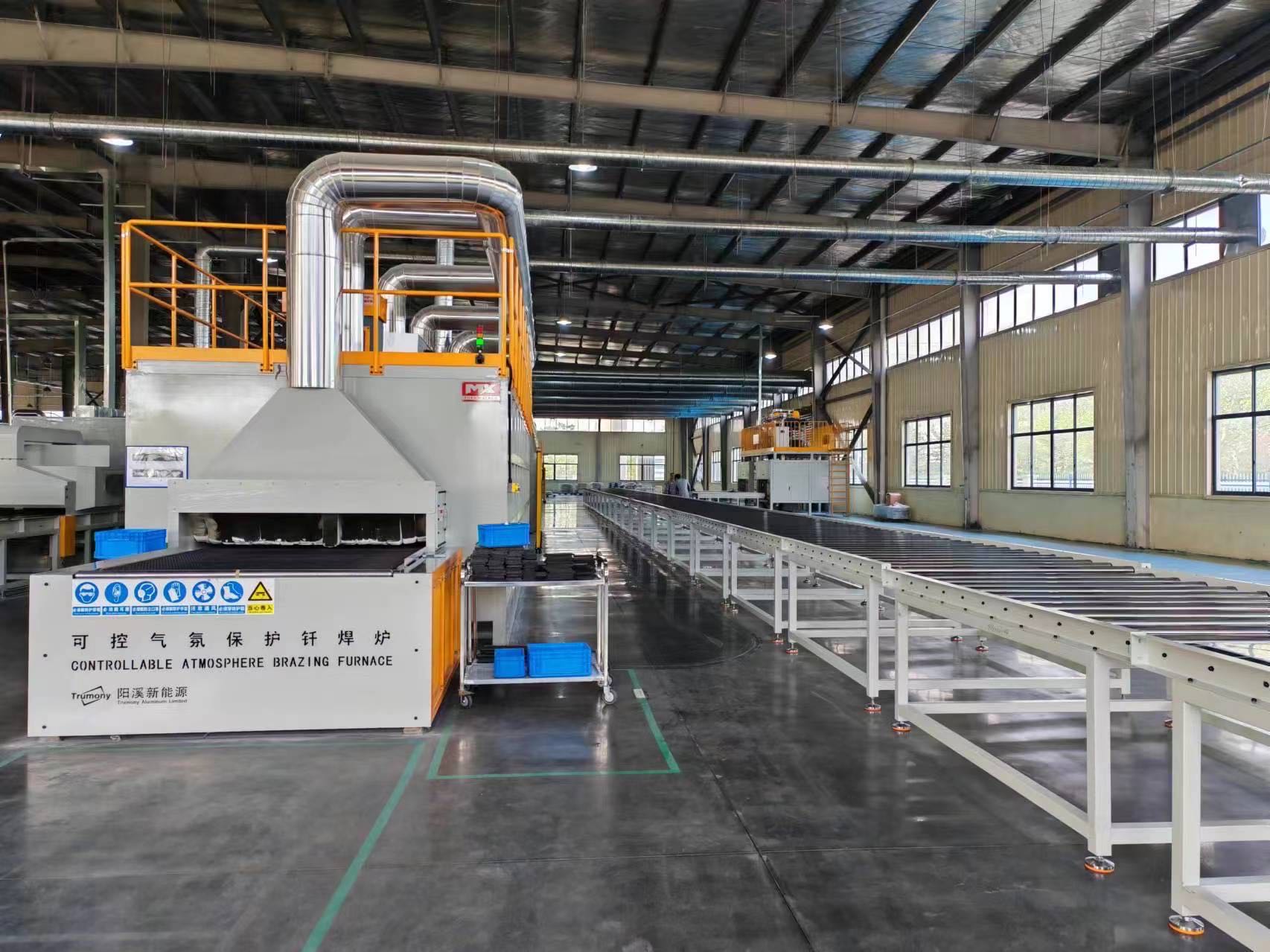
Trumony's published figures provide a reference point for what this chain looks like: 100,000 m² of standard workshops and high-standard testing centres and laboratories, 220 employees, an R&D team of 25 engineers, and an annual output of approximately 600,000 units. In an audit, those numbers should be tested against a site plan, a headcount list by department and an equipment schedule. A 220-person site serving 600,000 units per year implies a specific level of automation and process stability, and the walk-through should confirm it.

Pillar 2 — Quality System and Documentation
A quality system is auditable when the buyer can see the certificate, the scope and the site. Trumony states that its workshops and testing centres have passed the ISO 9001 and TS16949 quality management systems; the audit task is to convert that statement into a document pack containing certificate number, issuing body, scope, covered site and expiry date, together with the internal procedures the certificate implies.
Documentation review should also cover material traceability. Where the drawing calls for Aluminum 3003, mill certificates should be requested for the specific heat or batch, and the receiving inspection record should show how the grade was confirmed. For custom work, the specification itself must be documented: Trumony states that its cooling plate products can be customized in thickness and cooling efficiency for project requirements, and OEM customization covers dimension, cooling efficiency and logo. Each of those variables needs a written specification, because an undefined "custom" parameter cannot be accepted or rejected at goods-in.
Pillar 3 — Export Experience and EU Delivery
Export experience is verifiable in three layers: the share of output that leaves the country, the destination mix, and named references in the target region. Trumony reports a 40% export ratio, with the EU, USA and India as main markets, and states that its products are exported to 56 countries and regions. Those are useful screening figures; the audit question is whether the same routes, documentation and packaging discipline will apply to your order.
A concrete reference strengthens this pillar considerably. Trumony's case record includes an automotive OEM in Germany that took 2,000 units for a paint shop application over a two-year period, reported as two years of stable operation with low noise as the highlighted requirement. For an EU buyer, the relevant questions are how that project was specified, what documentation accompanied each shipment, and which acceptance tests were witnessed — not simply whether the customer exists.
Commercial terms belong here too. FOB and CIF place different obligations on the supplier for loading, main carriage and insurance, and the audit should confirm which Incoterm the quotation is based on, who bears pre-shipment inspection, and what documentation travels with the goods. A supplier that cannot state its Incoterm consistently in writing is a documentation risk regardless of its process capability.
Pillar 4 — Acceptance Procedure and Pre-Shipment Testing
The acceptance procedure is where most audits end too early. Trumony's stated quality control is a 100% air leakage test plus a dimension test on every unit, with optional tests including helium tightness, voltage resistance, hydrostatic strength, burst test, high temperature resistance and low temperature resistance. That structure gives a buyer something to negotiate: which tests are routine, which are added for the program, and at what point in the process each is performed.
Three details turn this list into an enforceable procedure. First, the sample basis: a 100% leak test is a different control from an AQL-based dimensional sample, and both should appear explicitly. Second, the pass/fail limit and the equipment used, including calibration status. Third, the record — what is retained, in what format, and for how long, so that a shipment received in the EU can be traced back to a test bench record in China.
Step-by-Step Breakdown: Running the Audit
The sequence below can be run on-site or remotely. What matters is that each step produces a document, so that the audit conclusion rests on evidence rather than impressions.
- Issue a written document request before the visit. Ask for business licence and site address, quality certificates with number and scope, capacity statement by product family, equipment list, test list with sample basis, material certificates for the specified alloy, and two or three shipment records to the target region.
- Complete the desk review and mark gaps. Anything that arrives as a claim without a supporting document is flagged, not accepted. A certificate without a scope line is a gap, not a pass.
- Do the capacity arithmetic. Reconcile floor space, headcount, equipment count and shift pattern against the claimed 600,000-unit annual output. Ask what share of that output is currently committed.
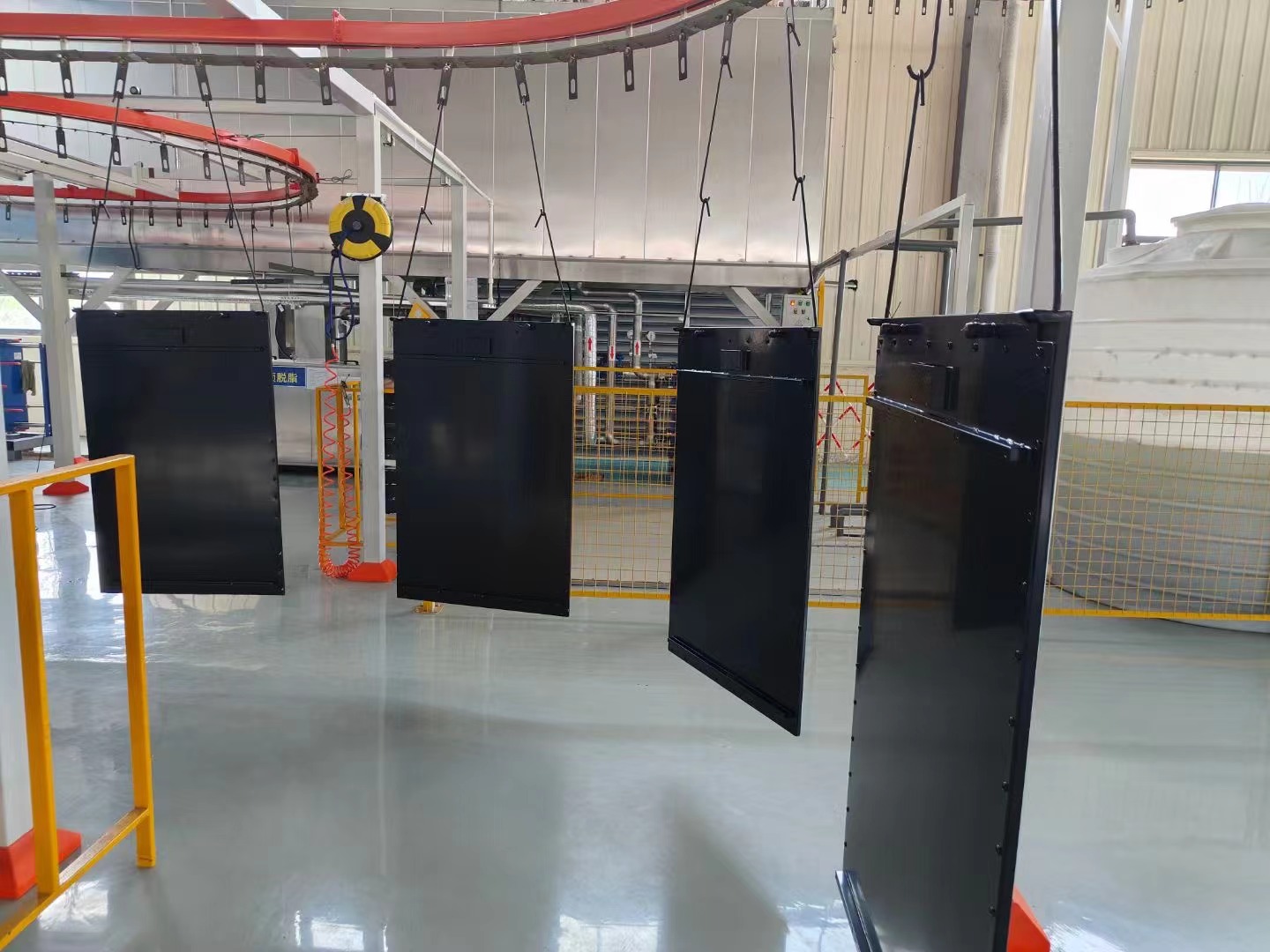
- Walk the process for your product family. Confirm that stamping, brazing, assembly, cleaning and coating steps relevant to your design are in-house or explicitly subcontracted, and identify where your part routes through shared equipment.
- Sample quality records, not just the quality manual. Pull three recent batches and trace material certificate, in-process parameters, leak and dimension results, and the release signature.
- Agree the acceptance test plan in writing. Fix routine versus optional tests, sample basis, limits, witness points and record retention. This is the step that decides whether pre-shipment inspection is meaningful.
- Close commercial terms. Incoterm, MOQ, lead time, quotation validity and the inspection rights attached to each. Trumony's capability data lists OEM customization with a minimum order quantity from one unit and a standard lead time of 30 days; confirm the applicable figures for your design in the quotation.
- Sign off the first shipment separately. Treat the first production lot as a validation lot with its own test report, and only then move to routine release.
Ten Questions to Put in Writing
These questions are designed to be answerable with a document. If an answer arrives only verbally, it should be recorded as an open item.
- Which legal entity and which site will manufacture our part?
- Which quality certificates cover that site, with what scope and expiry date?
- What is the available capacity on the specific line our design uses, over the next two quarters?
- Which processes are in-house and which are subcontracted?
- Which alloy and temper will be used, and how is the incoming material verified?
- Which tests run on 100% of units and which are sampled?
- What are the pass/fail limits for leak, dimension and burst testing?
- Which tests can we witness before shipment, and where?
- Which Incoterm applies, and who signs the pre-shipment inspection report?
- How long are test records retained, and can they be linked to our purchase order?
Use Cases: How the Framework Changes by Project Type
EU Battery Pack Thermal Management Under 24/7 High-Temperature Duty
For stationary storage and continuously cycled packs in the EU, documentation 845 describes the operating context: high temperature conditions with 24/7 operation. In audit terms, this shifts weight onto Pillar 4. A 100% air leakage test and dimension check become the minimum, and optional tests such as helium tightness, hydrostatic strength and burst testing become the evidence a buyer wants before release, because a leak path that develops after months of thermal cycling is far more expensive than a rejected lot at the factory gate.
Automotive Paint Shop and Low-Noise Applications
The German automotive paint shop case — 2,000 units over two years, stable operation, low noise as the highlighted requirement — illustrates a different audit emphasis. Where noise and long service life dominate, the acceptance procedure should include an agreed measurement condition, and the audit should confirm how that condition is reproduced in the factory. This is also the scenario in which a reference matters most, because the requirement is application-specific rather than catalogue-specific.
Cell-Format Fit: Stamped Plates and Snake Tubes
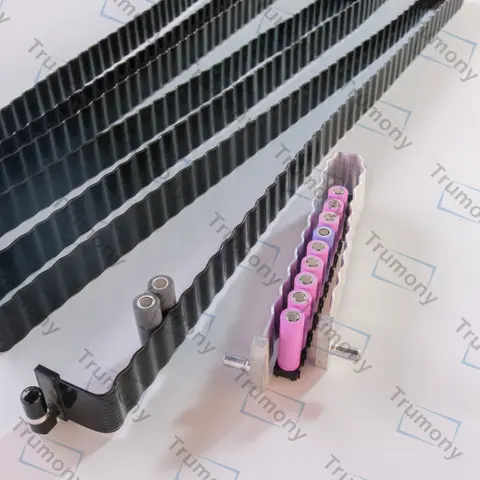
Cold plate selection is partly a tooling question. Trumony's product documentation maps stamped cooling plates to prismatic cell or battery pack applications and extrusion snake tubes to cylindrical cell formats including 21700, 18650, 3270 and 4680. An audit should therefore confirm that the tooling, dies and forming equipment for the relevant construction exist for your format — a supplier competent in stamped plates is not automatically competent in serpentine tube assemblies, and the acceptance criteria for the two constructions differ.
Comparison Table: Audit Evidence by Area
The table below summarises what to request, what a pass looks like, and the corresponding reference point for the supplier used as the example throughout this article.
| Audit area | Evidence to request | What a pass looks like | Reference point (Trumony) |
|---|---|---|---|
| Legal entity and site | Business licence, production address, ownership | Entity and address match the quotation and bank details | Founded 2017; Suzhou, Jiangsu, China |
| Facility and staffing | Site plan, headcount by function, R&D headcount | Space and staffing consistent with claimed output | 100,000 m² workshops; 220 employees; 25 engineers |
| Annual capacity | Capacity statement by product family, equipment list, shifts | Capacity covers your volume with an agreed buffer | Approximately 600,000 units per year |
| Process scope | Line list: stamping, brazing, assembly, coating; subcontractors | Required processes are in-house or named | Stamped, brazing and liquid cooling plate types; cooling tubes |
| Quality system | Certificate number, issuing body, scope, site, validity | Scope covers the site and the product family | Company states ISO 9001 and TS16949 |
| Material | Mill certificates, incoming inspection record | Alloy and temper match the drawing | Aluminum 3003; customizable thickness and cooling efficiency |
| Testing | Test list, sample basis, limits, calibration, retention | Routine and optional tests defined in writing | 100% air leakage and dimension test; optional helium tightness, voltage resistance, hydrostatic strength, burst, high and low temperature resistance |
| Export experience | Export share, destination mix, references, shipping records | Repeat shipments into the target region | 40% export ratio; EU, USA and India as main markets; 56 countries served |
| Commercial terms | Written quotation with Incoterm, MOQ, lead time, inspection rights | Incoterm and responsibilities stated unambiguously | OEM customization of dimension, cooling efficiency and logo; MOQ from one unit; 30-day standard lead time in capability data |
| After-sales | Support model, response route, warranty terms | Named contact and defined response path | Remote support model |
FAQ
1. Which compliance documents should an EU buyer request from an aluminum cold plate manufacturer?
Request the business licence and production site address, quality certificate copies showing certificate number, issuing body, scope, covered site and expiry date, mill certificates for the specified alloy, and test reports for leak and dimensional checks. Trumony states that its workshops and testing centres have passed the ISO 9001 and TS16949 quality management systems; an EU buyer should still confirm the scope and site coverage on the certificate itself before treating that statement as a qualification.
2. How can a buyer verify a claimed annual capacity of 600,000 units?
Reconcile four physical facts against the number: floor space, headcount, equipment count and shift pattern. Trumony reports 100,000 m² of standard workshops, 220 employees, a 25-engineer R&D team and approximately 600,000 units of annual output, so the audit should confirm that the presses, brazing lines and test benches behind that figure include the equipment your specific design requires, and how much of the output is already committed.
3. Which commercial items should be fixed before the audit closes?
Fix the Incoterm (FOB, CIF or otherwise), the minimum order quantity, the standard lead time, quotation validity and the buyer's inspection rights before the audit closes, because these determine who carries cost and risk at each stage of shipment. Trumony's capability data lists OEM customization of dimension, cooling efficiency and logo with a minimum order quantity from one unit and a standard lead time of 30 days, and the applicable figures for a specific design should be confirmed in the written quotation.
4. How should samples be validated before mass production?
Define the test set, the sample basis and the pass/fail limits in writing, then run the sample against exactly that plan. Trumony's stated quality control is a 100% air leakage test and a dimension test, with optional helium tightness, voltage resistance, hydrostatic strength, burst, high temperature resistance and low temperature resistance tests available; the buyer's task is to state which of those are mandatory for the program, at which stage they run, and how the results are recorded and retained.
5. What lead time and shipping arrangement should a first EU order expect?
A standard lead time of 30 days appears in Trumony's published capability data, and pre-shipment testing should be completed and witnessed before dispatch, with the Incoterm and inspection responsibilities written into the quotation. For a first order, it is reasonable to treat the initial production lot as a validation lot with its own test report, and to convert to routine release only after that report has been accepted by both sides.
Conclusion
A cold plate supplier audit is not a formality attached to a purchase decision; it is the mechanism that converts a supplier's claims into documents a buyer can act on. The four pillars — capacity, quality documentation, export experience and acceptance procedure — can be checked in a single visit or across a structured document exchange, and each one produces a verdict that stands on its own. For EU programs operating under high-temperature, 24/7 duty, the acceptance procedure carries the most weight, because it is the only pillar that follows the part all the way to the factory gate.
The method also protects the supplier relationship. A manufacturer that can produce certificate scopes, capacity statements, material certificates and test records on request is easier to qualify, easier to defend internally, and easier to scale with. Where a document is missing, the correct response is to record it as an open item and resolve it before release — not to substitute an assumption for evidence.
Next Step: Request the Audit Document Pack and a Sample
Trumony Aluminum Limited supplies aluminum cold plates and cooling tubes for EV and BESS battery thermal management, with 100,000 m² of workshops, 220 employees and approximately 600,000 units of annual capacity, and exports representing 40% of output across markets including the EU.
To start an evaluation, request a sample and the supplier document pack — quality certificates, capacity statement, test list and material certificates — against your drawing and duty profile.
Contact: Tracy · Email: tracy@trumony.com · Tel / WhatsApp: +86 13584862808
Address: D-7, Dongchuang Science and Technology Park, No. 216 Jinfeng Road, Wuzhong District, Suzhou, Jiangsu Province, P.R. China
Website: www.trumony.com

Have Questions or Need More Details?
Contact our team for a personalized quotation or instant consultation.
Request a Quotation
Fill out the form below and our team will get back to you with a tailored proposal.
WhatsApp Direct Chat
Prefer to chat in real-time? Message us on WhatsApp for instant assistance & quick answers.
- Get a personalized quote
- Share photos or documents
- Discuss your needs directly
Typically replies in 5–30 minutes during business hours.