
How to Apply Liquid Cooling Plates in 24/7 EU Battery Pack Thermal Management
Short answer: applying liquid cooling plates in a 24/7 EU battery pack thermal management project follows four decisions, in this order: define the continuous heat duty, match the plate construction to the cell format and pack architecture, specify Aluminum 3003 with the thickness and cooling efficiency the duty point requires, and lock the coating, quality documentation and delivery plan before production is released. Trumony Aluminum Limited supplies the plate models used throughout this guide — TR-20260224, TR-20260225 and TR-20260226 — in Aluminum 3003 with customized thickness and cooling efficiency, supported by epoxy coating, cooling-system integration, ISO 9001 and IATF 16949 quality management certification, and a 30-day production lead time.
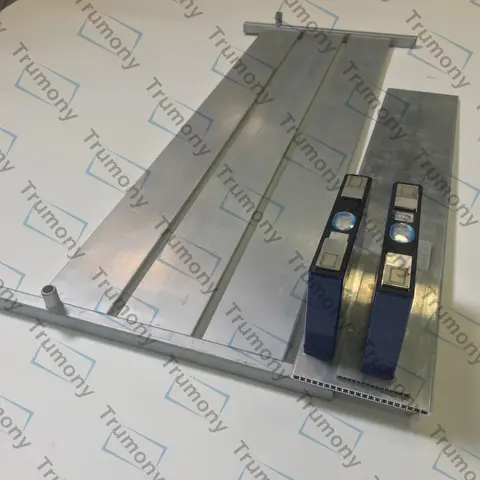
A liquid cooling plate is the continuously wetted heat-transfer component in a battery pack; in 24/7 duty its coating, documentation and delivery schedule matter as much as the plate drawing.
This guide is written for thermal engineers, pack architects and technical buyers at European EV and energy storage integrators who are specifying a plate for a site that never stops running. It is not a product catalogue. It is the working sequence that turns a thermal duty point into a released plate order: what to calculate first, which model family to open the discussion with, what to write into the RFQ, how to handle epoxy coating, which certificates to file, and how the 30-day production lead time has to sit inside a commissioning schedule.
Every product statement below is drawn from Trumony's published product and application data. Market figures are attributed to the research firms that published them. Where a number is not available — for example measured thermal resistance or pressure drop — this guide says so rather than estimating one.
The Problem: Continuous High-Temperature Duty Rewrites the Plate Specification
An intermittently operated pack and a 24/7 pack do not need the same cooling plate, even when the cell format and the pack outline are identical. In continuous duty the plate is never at rest. Coolant circulates through the flow channel path for the whole operating year, the plate sits permanently between the cells and the coolant loop, and the surface finish is exposed to a high-temperature environment without a cool-down window.
That shift moves the engineering question away from peak performance and toward sustained stability. Four things change:
- The specification becomes a steady-state specification. What matters is the temperature the pack holds hour after hour, not the best number the plate reached once on a test bench.
- Surface protection becomes a design element, not an accessory. In the high-temperature 24/7 project records Trumony publishes for European EV and energy storage battery pack thermal management, epoxy coating is listed as a special requirement alongside the cooling system.
- Documentation becomes part of the product. A European integrator usually has to hand a quality-system file to its own customer, so ISO 9001 and IATF 16949 evidence has to be gathered at the same time as the drawing, not after the first delivery.
- Delivery dates become commissioning dates. On a 24/7 site the installation window is planned around production shutdowns, so a 30-day production lead time is not an administrative detail — it is a constraint that has to be placed on the project calendar at the quotation stage.
The practical consequence is uncomfortable but simple: a plate that performs well on a bench test can still fail a 24/7 EU project if the coating decision, the certification file and the delivery plan are settled after the plate has been ordered. The sequence in this guide exists to prevent that.
Industry Background: Why Aluminum Liquid Cooling Plates Are the Default Choice
The direction of the market explains why most 24/7 EU battery pack projects arrive at a liquid-cooled aluminum plate rather than an alternative architecture. Published research gives the scale:
- The global liquid cooling systems market is estimated to reach USD 14.4 billion by 2026 (Grand View Research, 2026).
- The global EV battery cooling plate market was valued at USD 2.5 billion in 2024 (Global Market Insights, 2025).
- Aluminum-based cooling plates account for approximately 64% of all cooling plate installations (Global Market Insights, 2024).
- The liquid cooling market for stationary BESS is projected to grow at a CAGR of 21.55% from 2024 to 2033 (Grand View Research, 2026).
Two industry facts sit behind those numbers. First, cooling plates are treated as critical components of battery packs because they carry the temperature-uniformity function of the pack (U.S. Customs and Border Protection ruling NY N337670, 2024) — a regulatory acknowledgment that the plate is not a commodity accessory. Second, the material question is largely settled: aluminum dominates installation share, and Trumony's own range follows that convention, with its stamped, brazed and liquid cooling plates for EV and energy storage all made of Aluminum 3003.
For a European project team, the background matters for one reason. Because the demand trend for stationary storage cooling is growing quickly and the material choice is concentrated on aluminum, the practical risk in 2026 is not finding a plate concept — it is finding a plate supplier whose coating, documentation and delivery behaviour survives a 24/7 duty cycle.
The Solution Set: Plates, Material and Supporting Equipment for 24/7 EU Projects
Trumony Aluminum Limited is a manufacturer of thermal management components — battery cooling plates and cooling tubes for power battery packs and energy storage battery packs — founded in 2017 and headquartered in Suzhou, China. The company operates a 100,000 m² manufacturing facility with approximately 220 staff, including an R&D team of 25 engineers, and reports an annual output of 600,000 units. Around 40% of output is exported, and the company's main markets are the EU, the USA and India; its products reach 56 countries and regions.
Product options for EV packs and energy storage packs
For a 24/7 EU battery pack project, the model conversation usually starts with three plates in the Trumony range:
- Electric vehicle cooling plate TR-20260224 — made of Aluminum 3003, with customized thickness and cooling efficiency, intended for Engineering, EV, ESS and Powertrain applications.
- Liquid cooling plate for EV TR-20260225 — made of Aluminum 3003, with customized thickness and cooling efficiency, for the same application set.
- Energy storage system cooling plate TR-20260226 — made of Aluminum 3003, with customized thickness and cooling efficiency, for stationary battery pack cooling.
Adjacent models are used when the pack architecture or the module layout points elsewhere: liquid cooling plate for energy storage TR-20260228, stamped cooling plate TR-20260227, and cooling plate for power storage TR-20260223. Where the design is tube-based rather than plate-based, the range continues with serpentine tube TR-20260229, serpentine cooling tube TR-20260230, snake tube TR-20260231 and snake cooling tube TR-20260232 — all Aluminum 3003, all with customized thickness and cooling efficiency.
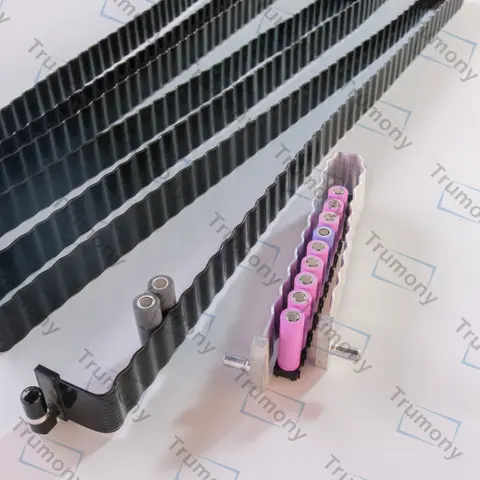
Plate options for EV and energy storage packs are all made of Aluminum 3003, with thickness and cooling efficiency customized to the project duty point.
Material and customization: Aluminum 3003 with project-specific thickness and cooling efficiency
Every model above is made of Aluminum 3003 and is customizable in thickness and cooling efficiency. For a 24/7 project that is the important part of the sentence: the plate is not bought from a fixed table. Thickness and cooling efficiency are set against the duty point the engineer calculates, which is why two projects with the same pack outline can carry different plate specifications.
Keeping one alloy across the model range has a documentation benefit as well. A European integrator submitting a material file to its own customer does not have to manage a mixed-alloy bill of materials when the EV plate, the ESS plate and the tube options share the same Aluminum 3003 base.
Supporting equipment: cooling system and epoxy coating
A plate is only half of a thermal management system. The application records Trumony publishes for high-temperature, 24/7 battery pack projects in Europe list two supporting elements explicitly: a cooling system as the matched equipment, and epoxy coating as the special requirement. Both belong in the specification from the beginning, because coating changes the surface state of the plate and the cooling system determines the flow conditions the plate will actually see on site.
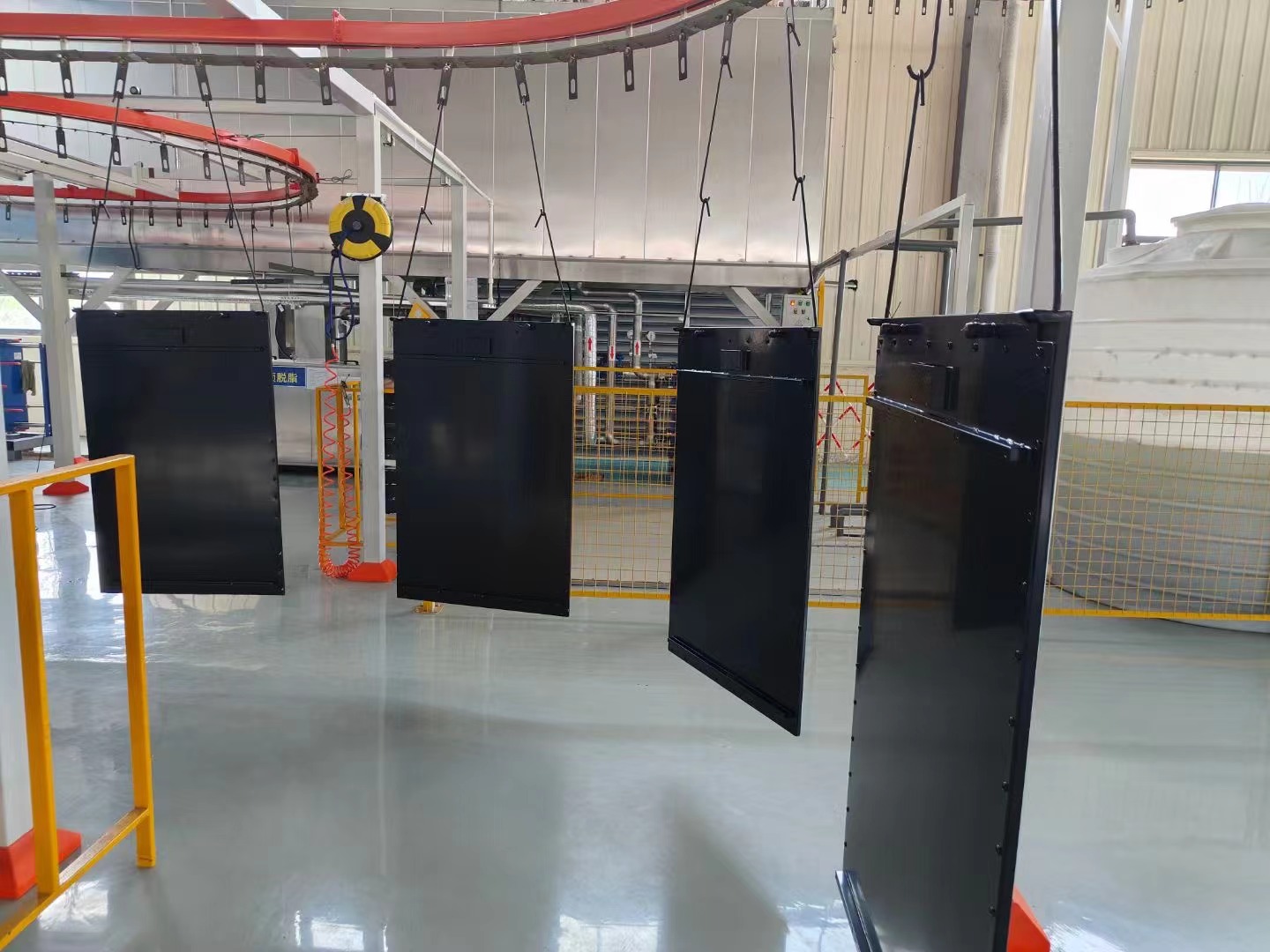
Epoxy coating appears as a special requirement in the high-temperature 24/7 EV and energy storage application records, alongside the cooling system.
Certifications, capacity and the 30-day production lead time
Trumony states that its quality management systems have passed ISO 9001 and IATF 16949. For European projects those two names do different jobs: ISO 9001 covers the general quality management system, while IATF 16949 is the automotive-sector quality management standard that vehicle programmes commonly ask a component supplier to hold.
Capacity and schedule are the other two planning numbers. The 100,000 m² facility and the reported annual output of 600,000 units indicate the scale available for a programme ramp, and Trumony states a 30-day production lead time, which is the figure a project planner should put into the commissioning calendar.
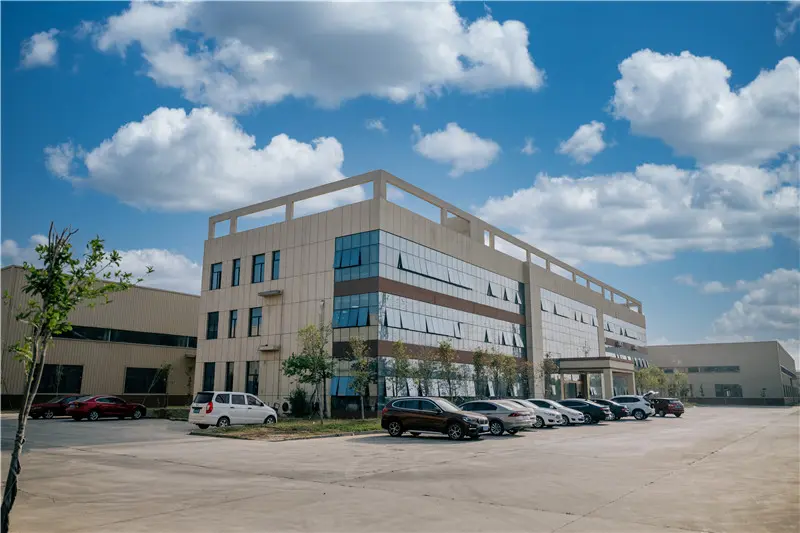
Trumony operates a 100,000 m² manufacturing facility with approximately 220 staff and a 25-engineer R&D team; quality management is stated as ISO 9001 and IATF 16949.
Step-by-Step: Applying a Liquid Cooling Plate in a 24/7 EU Project
The sequence below is the one that keeps a continuous-duty project from drifting. Each step produces a document or a decision that the next step depends on.
Step 1 — Fix the continuous duty point before choosing a plate
Start with the steady-state condition, not the peak. Record the temperature the pack must hold, the temperature of the environment the site runs in, the operating mode (24/7, not intermittent), and the heat the pack has to reject continuously. This is the input that makes thickness and cooling efficiency meaningful. Without it, every plate in the catalogue looks equally suitable, and the customization that Trumony offers on thickness and cooling efficiency has nothing to be customized against.
Step 2 — Match the plate construction to the cell format and pack architecture
Construction follows cell format. In Trumony's published product mapping, stamped cooling plates are used for prismatic cells and battery-pack builds, while extrusion snake tubes are used for cylindrical-cell formats. That mapping should decide whether the project opens with TR-20260227 (stamped cooling plate) or with a tube-based option such as TR-20260229 to TR-20260232, and whether the pack-level plate is TR-20260224, TR-20260225 or TR-20260226.
Two practical rules apply here. Do not select a construction on cost alone before the cell format is fixed, and do not carry a construction from a previous programme into a new pack without re-checking the mapping.
Step 3 — Write Aluminum 3003, thickness and cooling efficiency into the RFQ
The RFQ should state the alloy (Aluminum 3003), the required thickness, the cooling efficiency target, the plate envelope, the connection geometry and the coating requirement. Generic requests produce generic offers. Because Trumony customizes thickness and cooling efficiency per project, a precise RFQ is what converts the catalogue model into a plate that matches the duty point from Step 1.
Ask for the material identification for Aluminum 3003 in the same request. It is the document an EU integrator will be asked for later.
Step 4 — Design the plate as part of a cooling system, not as a standalone part
Trumony's high-temperature 24/7 application records pair the plate with a cooling system as matched equipment. That reflects how the plate actually behaves on site: the plate is the interface between the cells and the loop, and its performance depends on the loop it is connected to. Before the plate drawing is frozen, confirm the coolant, the flow arrangement, the connection points and the service access needed for maintenance on a site that cannot be shut down casually.
Step 5 — Decide on epoxy coating for high-temperature continuous duty
Epoxy coating is listed as a special requirement in the recorded high-temperature 24/7 EV and energy storage projects. Treat it as a specification decision with a date attached: decide before the plate is released, because adding coating later changes the surface state, the handling requirements and the delivery schedule. Write the coating requirement into the same RFQ as the alloy and thickness, and ask how the coated surface is protected during packing and transport.
Step 6 — Lock the quality documentation before tooling
ISO 9001 and IATF 16949 are claims until the paperwork is in your file. Request the certificate copies, the issuing body, the certified scope, the site covered and the validity dates, and route them through your own supplier-qualification process at the same time as the technical review. On a European programme this step usually runs in parallel with the drawing review, and delaying it is the most common reason a technically approved plate cannot be released to production.
Step 7 — Place the 30-day production lead time into the commissioning calendar
Trumony states a 30-day production lead time. Work backwards from the installation window: the 30 days sit between order confirmation and production completion, so the drawing approval, the coating decision and the certificate review all have to finish before that clock starts. On a 24/7 site the installation is usually tied to a planned outage, and an outage that moves because a plate is late is far more expensive than the plate.
Step 8 — Validate and plan maintenance for continuous operation
Before full release, run the plate through the qualification your programme requires and record the reference conditions. Then plan the maintenance routine for continuous operation: inspection intervals for the coated surface, access to connections, and a spare-part plan sized against the annual output available from the supplier. A 24/7 site has no natural moment to discover that no spare plate exists.
Use Cases: Two Recorded 24/7 European Application Profiles
Trumony's application data contains two European battery pack thermal management profiles that match the continuous-duty case described in this guide.
Electric vehicle battery pack thermal management, France
In this profile the industry is electric vehicle, the working condition is high temperature, the project type is battery pack thermal management and the function is battery pack heat dissipation. Operation mode is 24/7, the matched equipment is a cooling system and the special requirement is epoxy coating. The related components listed are cooling tube TR-260213 and cold plate TR-20260213.
What a project engineer should take from this profile is the combination rather than the country. Continuous operation, high ambient temperature, a cooling system and a coated plate appear together — which is exactly why Step 5 in the sequence above cannot be deferred.
Energy storage system battery pack thermal management, Europe
In the second profile the industry is energy storage system, the working condition is high temperature, the project type is battery pack thermal management and the function is battery pack heat dissipation. Operation mode is 24/7, matched equipment is a cooling system, and the special requirement is again epoxy coating. The same related components apply: cooling tube TR-260213 and cold plate TR-20260213.
For stationary storage the planning emphasis shifts slightly. An ESS container is expected to sit in place for years of continuous service, so the plate selection leans on the energy storage models — TR-20260226 and TR-20260228 — and on the coating and documentation being settled long before the container is shipped.
Model Comparison for 24/7 EU Battery Pack Thermal Management
The table below compares the plate models most often discussed for continuous-duty European projects. Thickness and cooling efficiency are customized per project on every model, so the columns show the customization rather than a fixed value.
| Model | Product | Material | Thickness | Cooling efficiency | Typical role in a 24/7 project |
|---|---|---|---|---|---|
| TR-20260224 | Electric vehicle cooling plate | Aluminum 3003 | Customized | Customized | EV battery pack thermal management under continuous high-temperature duty |
| TR-20260225 | Liquid cooling plate for EV | Aluminum 3003 | Customized | Customized | Liquid-cooled EV pack layouts requiring a customized flow path |
| TR-20260226 | Energy storage system cooling plate | Aluminum 3003 | Customized | Customized | Stationary battery pack cooling in 24/7 energy storage sites |
| TR-20260228 | Liquid cooling plate for energy storage | Aluminum 3003 | Customized | Customized | Energy storage systems with liquid-cooled modules |
| TR-20260227 | Stamped cooling plate | Aluminum 3003 | Customized | Customized | Prismatic-cell or battery-pack builds where a stamped construction fits |
| TR-20260223 | Cooling plate for power storage | Aluminum 3003 | Customized | Customized | Power storage battery cooling where the pack design follows the storage layout |
Read the table as a shortlist, not as a ranking. Model choice is determined by cell format, pack architecture and the duty point from Step 1; the coating, cooling system and certification file are then applied on top of the chosen model. Where the pack design is tube-based instead of plate-based, the serpentine and snake tube models TR-20260229 to TR-20260232 cover the same Aluminum 3003 and customization basis.
FAQ
Are Trumony's cooling plates certified for EU automotive and energy storage projects?
Trumony states that its quality management systems have passed ISO 9001 and IATF 16949. For a 24/7 EU programme, treat these as claims to verify rather than to assume: request the certificate copies, the issuing body, the certified scope, the production site covered and the validity dates, and file them inside your supplier-qualification package. The certificates address the quality-system part of a European audit. The plate-specific evidence — the drawing release, the Aluminum 3003 material identification and the epoxy coating specification — is confirmed project by project.
Can thickness and cooling efficiency be customized for a 24/7 high-temperature pack?
Yes. Every Trumony plate model relevant to this application — TR-20260224, TR-20260225, TR-20260226 and the wider range including TR-20260228, TR-20260227 and TR-20260223 — is made of Aluminum 3003 with customized thickness and customized cooling efficiency. The customization is defined against the continuous duty point you calculate in Step 1, which is why the same model number can be delivered to two projects at different thickness and efficiency settings. Trumony's 25-engineer R&D team supports the technical review behind that customization.
What determines the cost of a liquid cooling plate for a continuous-duty project?
Trumony does not publish list prices, and this guide will not estimate one. Commercially, a plate quotation is driven by the plate geometry and thickness, the cooling efficiency target, the epoxy coating requirement, the quantity per order and the documentation package requested for the European market. Because thickness and cooling efficiency are customized per project, two enquiries with the same model number can produce different quotations. The reliable route is to send the drawing and the duty point and request a project-specific quote.
Can we evaluate a sample plate before releasing volume production?
Sample and prototype evaluation is the normal way to de-risk a 24/7 project, and it is the step where coating, thickness and cooling efficiency are checked against your own duty point rather than against a catalogue description. To arrange a sample or prototype plate against your drawing, contact Trumony directly at tracy@trumony.com or +86 13584862808 (WhatsApp available on the same number) and include the Aluminum 3003 specification, the required thickness, the cooling efficiency target and the coating requirement so the evaluation plate matches what you intend to order.
How long does production take, and how should the 30-day lead time be planned?
Trumony states a 30-day production lead time. Plan it as a block that starts only after the drawing is approved, the coating decision is closed and the certificate review is complete, then work backwards from your installation window so the plate arrives before the planned outage rather than during it. Capacity supports that planning: the 100,000 m² facility and a reported annual output of 600,000 units give the programme room to scale after the first release. Send your drawing and duty point to tracy@trumony.com to confirm the schedule for your specific project.
Conclusion
Applying liquid cooling plates in a 24/7 EU battery pack thermal management project is a sequencing problem as much as a thermal one. The physics is settled early: Aluminum 3003 plates, customized thickness and cooling efficiency, matched to the cell format and pack architecture. The risk sits later — in the epoxy coating decision, the cooling-system integration, the ISO 9001 and IATF 16949 documentation file, and the 30-day production lead time that has to fit inside a planned outage rather than dictate it.
Work the eight steps in order and the plate specification, the coating, the certificates and the delivery date all arrive at the same point in the project. Skip them and the most common outcome is a technically sound plate that cannot be released, or a released plate that misses the installation window.
Next Step: Send the Drawing, Get a Project-Specific Answer
Share your pack duty point, cell format, required thickness, cooling efficiency target and coating requirement. Trumony will respond with the matching plate model from the TR-20260224 / TR-20260225 / TR-20260226 range, the Aluminum 3003 material detail, the certificate documentation and the 30-day production schedule for your project.
Sample requestProject quotationCertificate pack
Email: tracy@trumony.com | Tel / WhatsApp: +86 13584862808 | Website: www.trumony.com
Trumony Aluminum Limited, D-7, Dongchuang Science and Technology Park, No. 216 Jinfeng Road, Wuzhong District, Suzhou, Jiangsu Province, P.R. China.

Trumony Aluminum Limited, founded in 2017, supplies battery cooling plates and cooling tubes to the EU, USA and India from a 100,000 m² manufacturing facility in Suzhou, China.
Have Questions or Need More Details?
Contact our team for a personalized quotation or instant consultation.
Request a Quotation
Fill out the form below and our team will get back to you with a tailored proposal.
WhatsApp Direct Chat
Prefer to chat in real-time? Message us on WhatsApp for instant assistance & quick answers.
- Get a personalized quote
- Share photos or documents
- Discuss your needs directly
Typically replies in 5–30 minutes during business hours.