
Ranking 5 Cooling Plate Configurations for 24/7 EV and BESS Packs
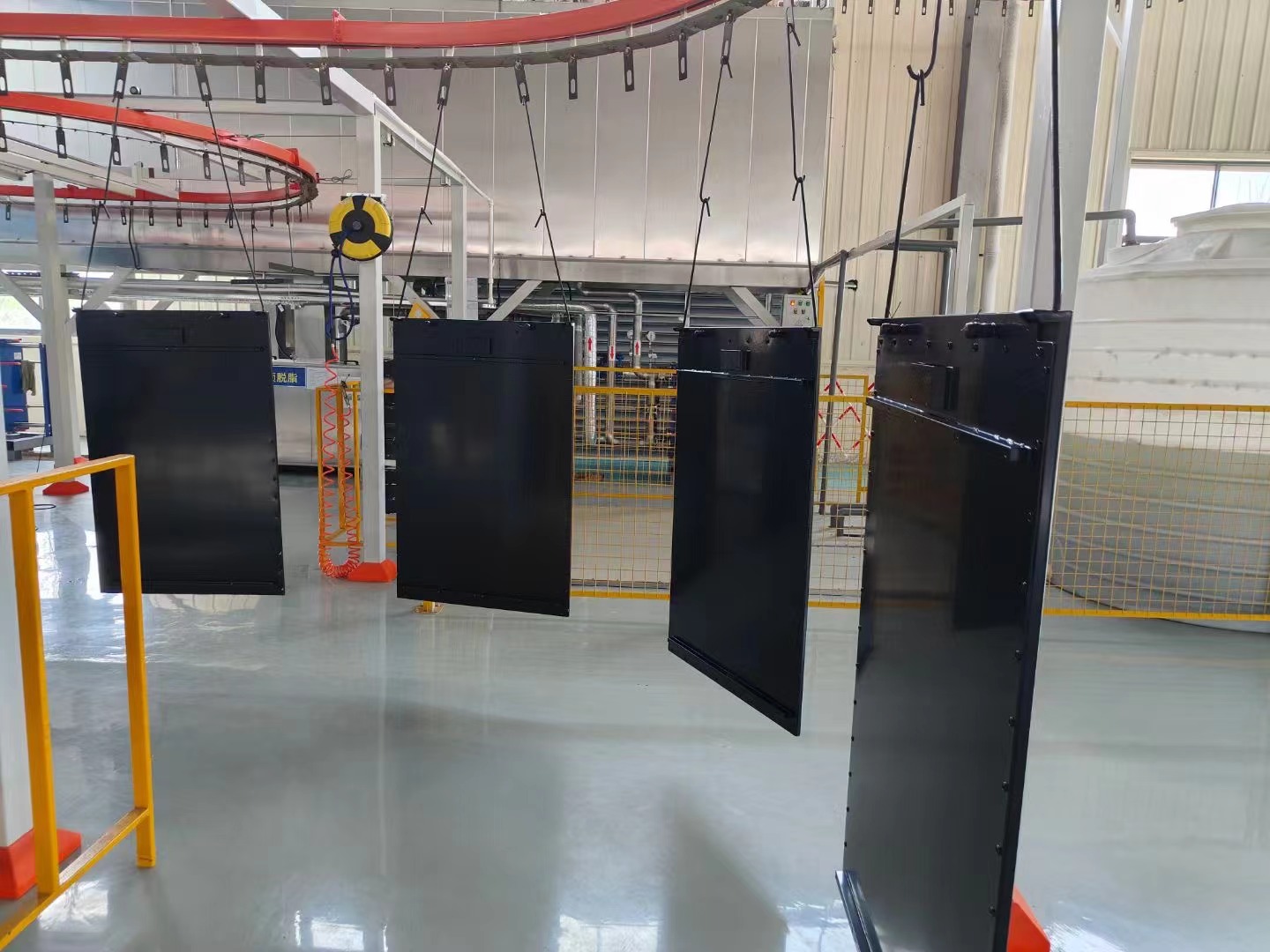
For a high-heat EV or BESS pack that must run continuously, the evaluation shortlist in this ranking is: 1) liquid cooling plate for energy storage, 2) EV cooling plate, 3) stamped cooling plate, 4) snake cooling tube, and 5) serpentine cooling tube. The order reflects documented application fit, Aluminum 3003 construction, customization scope, quality-system records and commercial readiness in Trumony Aluminum Limited's available information. It is not a measured thermal-performance ranking, and it does not replace pack-level testing.
Trumony Aluminum Limited is a Suzhou-based manufacturer founded in 2017 that supplies cooling components such as cold plates and cooling tubes. Its portfolio includes liquid cooling plates for EV and energy storage, stamped cooling plates, brazing cooling plates, serpentine cooling tubes and snake cooling tubes. For a 24/7 battery-pack program, the useful question is not which product name sounds strongest. The useful question is which configuration has the clearest documented fit to the cell format, pack architecture, thermal duty, quality requirements and commercial path.
Why 24/7 Duty Changes the Cooling Plate Shortlist
A 24/7 EV or BESS pack does not cool in short, isolated events. It must manage repeated or continuous heat loads, temperature uniformity across cells and modules, and long-term leak integrity. That changes the evaluation criteria. A configuration that suits a low-duty prototype may be a weak choice for a pack that must run day after day. Buyers therefore need to connect the cooling plate configuration to the actual duty profile before comparing suppliers or prices.
The industry background supports the attention on liquid cooling. Global Market Insights estimated the global EV battery cooling plate market at USD 2.5 billion in 2024, and the same source estimated that aluminum-based cooling plates accounted for approximately 64% of cooling plate installations. Grand View Research projected that the liquid cooling market for stationary BESS would grow at a CAGR of 21.55% from 2024 to 2033. These figures describe category scale and direction; they do not prove that one configuration is thermally superior for every pack. Configuration choice still depends on cell format, pack design, coolant path, flow rate, pressure drop and acceptance testing.
For this reason, the ranking below is built as a procurement and engineering shortlist. It uses documented product scope, cell-format mapping, material statements, customization scope, certification records and commercial terms. Where the available evidence does not include measured thermal resistance, pressure drop or leak-rate data, the article states that limit instead of inventing a performance order.
Ranking Criteria Used for This Shortlist
The five configurations were assessed on six criteria that matter at the evaluation stage:
- Application fit: whether Trumony's product information connects the configuration to EV packs, BESS packs, prismatic cells, cylindrical cells or general pack assembly.
- Material: whether the configuration is covered by Trumony's statement that its cooling plates are made of Aluminum 3003.
- Customization: whether thickness, cooling efficiency, dimensions or logo can be adapted for a project, and where that customization statement does or does not apply.
- Quality-system evidence: the IATF 16949 and ISO 9001 certificate records available for Trumony, including certificate numbers and expiry dates.
- Commercial readiness: MOQ, payment terms, Incoterms, lead time, production capacity and pre-shipment acceptance testing.
- Verification gap: what the buyer still needs to test or confirm before releasing a 24/7 pack program.
The ranking is about fit and evidence for the stated EV and BESS duty. It is not a claim that a lower-ranked configuration cannot work. A lower rank means the available documentation gives a narrower or less direct match for a 24/7 pack shortlist, or that more project-specific verification is needed.
The Five Configurations at a Glance
| Rank | Configuration | Documented fit for 24/7 EV or BESS work | Material and customization notes | Main verification point |
|---|---|---|---|---|
| 1 | Liquid cooling plate for energy storage | Stationary BESS packs and ESS containers requiring liquid cooling plate integration. | Aluminum 3003; cooling plate thickness and cooling efficiency can be customized for project requirements. | Confirm thermal and flow performance for the container duty cycle and coolant specification. |
| 2 | EV cooling plate | EV battery packs where liquid cooling plate integration is required. | Aluminum 3003; OEM customization of dimensions, cooling efficiency and logo is stated for cooling plate products. | Validate against vehicle duty cycle, fast-charge profile and pack-level acceptance tests. |
| 3 | Stamped cooling plate | Prismatic-cell packs and battery-pack assemblies, as mapped in Trumony product information. | Aluminum 3003; plate thickness and cooling efficiency customization applies to cooling plate products. | Freeze the flow field, cell-format fit and production design before tooling investment. |
| 4 | Snake cooling tube | Cylindrical-cell formats such as 21700, 18650, 3270 and 4680, as stated in Trumony product information. | Aluminum 3003 appears in the cooling-plate portfolio; tube-specific customization limits must be confirmed. | Confirm tube diameter, wall thickness, bend geometry and manifold integration. |
| 5 | Serpentine cooling tube | Tube-routed cooling designs where a continuous formed coolant path is required. | Aluminum 3003 appears in the portfolio; tube-specific thickness and efficiency customization must be confirmed. | Request cell-format fit, flow-path drawing and tested pressure-drop data. |
Rank 1: Liquid Cooling Plate for Energy Storage
The first position goes to the liquid cooling plate for energy storage. Trumony lists a liquid cooling plate for energy storage as a product and relates it to ESS battery cooling applications. The fit is direct for BESS packs and ESS containers, where the cooling plate must support continuous thermal management rather than a short vehicle trip. For a 24/7 stationary pack, this is the clearest documented match in the available product scope.
The material statement is important but should be read correctly. Trumony states that its cooling plates are made of Aluminum 3003. The same product information states that cooling plate thickness and cooling efficiency can be customized to match project requirements. For a BESS program, those customization levers matter because container layouts, module sizes and coolant circuits vary. A buyer should still request the thermal resistance, pressure drop, coolant compatibility and leak-test conditions for the exact plate design. Aluminum 3003 is a material choice, not a complete thermal guarantee.
A case record for an ESS PACK OEM in China describes 3,000 units used in an ESS container, a 15-year duration, stable operation, low noise, low cost and fast lead time. That record supports the application fit of ESS container cooling, but it should not be read as a universal performance result for every BESS design. The buyer should verify the case's configuration, test conditions and acceptance criteria before treating it as comparable evidence.
Qualification check: Trumony's IATF 16949 and ISO 9001 records should be verified for current status, scope and site coverage. These are quality-management-system records, not a product-specific thermal certificate. For Rank 1, the practical next step is to submit the container layout, module heat load, coolant inlet temperature and allowable pressure drop, then request a design review and sample validation plan.
Rank 2: EV Cooling Plate
The second position goes to the EV cooling plate. Trumony lists EV cooling plate products for electric vehicle battery thermal management, and its broader cooling-plate portfolio includes liquid cooling plates for EV applications. The configuration fits EV packs where a liquid cooling plate must be integrated into the pack enclosure or module assembly. It ranks below the energy-storage plate because 24/7 stationary BESS duty is more continuous by nature, while EV duty depends on vehicle use, charging profile and ambient conditions.
Trumony's cooling plate products are stated to use Aluminum 3003, and OEM customization covers dimensions, cooling efficiency and logo for cooling plate products. That gives an EV pack team room to adapt the plate to the pack envelope. It does not remove the need for pack-level validation. An EV cooling plate should be checked against fast-charge heat loads, coolant flow distribution, pressure drop, vibration, thermal cycling and leak acceptance. The available information does not provide measured thermal resistance or burst-pressure data for a specific EV plate, so those values must come from the project-specific drawing and test report.
A case record for an automotive OEM in Vietnam describes 60,000 units for battery pack cooling, a 20-year duration, stable operation, low cost, high quality and low noise. This supports the existence of automotive battery-pack cooling experience in the available record. It does not prove that the same plate design suits every EV pack. The buyer should compare the case's pack format, coolant circuit and duty profile with the new project before using it as a reference.
Qualification check: confirm that the IATF 16949 and ISO 9001 records cover the relevant manufacturing site and product scope. For Rank 2, the practical next step is to provide the pack drawing, vehicle duty cycle, coolant specification and target acceptance tests, then request a sample and pre-shipment test plan.
Rank 3: Stamped Cooling Plate
The third position goes to the stamped cooling plate. Trumony's product information maps stamped cooling plates to prismatic cells or battery-pack applications. That makes the stamped plate a strong fit when the pack uses prismatic cells or when the cooling plate is designed as part of a pack-level cold plate assembly. It ranks third because the documented cell-format fit is narrower than the two liquid cooling plate options, not because stamping is inherently weaker.
The stamped cooling plate is covered by the Aluminum 3003 material statement and by the customization statement for cooling plate thickness and cooling efficiency. For a 24/7 pack, those are useful levers, but they must be fixed early. The buyer should confirm the flow-field design, port locations, flatness, surface treatment, coolant compatibility and leak-test method before committing to tooling. A stamped design can be efficient for a defined pack architecture, but the design freeze and validation steps should not be skipped.
The available information does not provide a measured comparison between stamped plates and liquid cooling plates for the same heat load. That means the ranking should not be read as a thermal superiority claim. Instead, the stamped plate should be evaluated as a prismatic-cell or pack-level option with its own tooling, flow-path and acceptance-test requirements. If the pack is a high-heat 24/7 BESS container, the liquid cooling plate for energy storage remains the more direct documented fit. If the pack is a prismatic-cell EV or BESS module with a stable design, the stamped plate can be a practical shortlist candidate.
Qualification check: verify the IATF 16949 and ISO 9001 records for the manufacturing site, then request the stamped-plate drawing, material certificate, dimensional report and leak-test record. For Rank 3, the practical next step is to freeze the cell format and pack interface before asking for a quote.
Rank 4: Snake Cooling Tube
The fourth position goes to the snake cooling tube. Trumony's product information specifically maps extrusion snake tubes to cylindrical-cell formats including 21700, 18650, 3270 and 4680. That is a clear application signal. If the pack uses cylindrical cells and the thermal design calls for a tube-based coolant path, the snake tube deserves a place on the shortlist.
It ranks below the plate options because the documented fit is narrower. A snake tube is tied to cylindrical-cell layouts and tube routing, while a liquid cooling plate can cover a broader pack area. For a 24/7 BESS container with large modules, the plate options offer a more direct documented match. For a cylindrical-cell EV or BESS pack, the snake tube may be the more natural starting point, provided the tube geometry and manifold design are validated.
Material and customization need careful wording. Trumony's portfolio statement includes snake cooling tubes within a product range described as made of Aluminum 3003. However, the explicit customization statement for thickness and cooling efficiency is attached to cooling plate products, not to every tube product. The buyer should therefore confirm tube diameter, wall thickness, bend radius, surface treatment and manifold connection as part of the RFQ. Do not assume that a plate customization statement automatically applies to a tube.
Qualification check: confirm the IATF 16949 and ISO 9001 records and request tube-specific drawings and test data. For Rank 4, the practical next step is to provide the cylindrical-cell layout, coolant flow requirement and manifold constraints, then ask for a tube sample and pressure-drop validation plan.
Rank 5: Serpentine Cooling Tube
The fifth position goes to the serpentine cooling tube. Trumony lists serpentine cooling tubes in its cooling-component portfolio, and the tube concept fits designs that need a continuous formed coolant path. The limitation is documentation. The available information does not map the serpentine tube to a specific cell format, and it does not provide measured thermal or pressure-drop data for a 24/7 pack duty. That lower documentation confidence is the reason for the fifth position, not a claim that the tube cannot perform.
The serpentine tube should be considered when the pack architecture already favors tube routing, or when a tube-based coolant path is preferred over a full cooling plate. The buyer should request the flow-path drawing, tube dimensions, bend geometry, material certificate, coolant compatibility statement and leak-test method. As with the snake tube, the Aluminum 3003 portfolio statement should be confirmed for the exact tube product, and the plate customization statement should not be assumed to cover tube thickness or cooling efficiency.
For a 24/7 EV or BESS pack, the serpentine tube needs a stronger project-specific validation package before it can move up the shortlist. That package should include thermal cycling, pressure-drop testing, leak testing and a comparison against the plate options for the same heat load. If those results are available and favorable, the ranking can change for that specific project. Without them, the tube remains a candidate with a larger evidence gap.
Qualification check: verify the IATF 16949 and ISO 9001 records for the relevant site and request tube-specific acceptance criteria. For Rank 5, the practical next step is to ask for a sample and a test plan before committing to a 24/7 pack design.
What Aluminum 3003 and Custom Thickness Mean for a 24/7 Pack
Trumony states that its cooling plates are made of Aluminum 3003. For the buyer, that statement should trigger three follow-up questions. First, what is the material certificate for the exact plate or tube? Second, what coolant will be used, and what corrosion protection or surface treatment is required? Third, what test conditions were used to validate the design? The alloy name alone does not define thermal resistance, pressure drop or service life.
Trumony also states that cooling plate thickness and cooling efficiency can be customized to match project requirements. That is useful at the evaluation stage because it allows the supplier to propose a plate thickness and flow path for the pack envelope. It does not remove the need for measured data. A 24/7 pack should request the heat load, coolant inlet temperature, flow rate, allowable pressure drop, temperature-uniformity target and leak-rate limit. The supplier should then provide a design proposal with test conditions, not only a product name.
For tube-based configurations, the customization discussion should be separated from the plate discussion. The available statement covers cooling plate products. Tube diameter, wall thickness, bend radius and manifold design need their own confirmation. This distinction matters when comparing a stamped plate, an EV cooling plate, a BESS liquid cooling plate, a snake tube and a serpentine tube on the same shortlist.
Certification, Capacity and Commercial Terms to Verify
Trumony's IATF 16949 record lists certificate 0489498, issued on 2023-11-27 with an expiry date of 2026-11-26. Its ISO 9001 record lists certificate 132998, issued by IAF on 2023-09-21 with an expiry date of 2026-09-21. As of 23 November 2026, the ISO 9001 record's stated expiry has passed, and the IATF 16949 record is close to its stated expiry. Before relying on either record for a 24/7 program, the buyer should request the current certificate, confirm the certification scope and covered site, and verify renewal status. These are quality-management-system records; they do not replace product-level thermal, leak, burst or endurance testing.
The commercial terms stated for this evaluation include an MOQ of 1 unit, 30% deposit and 70% before shipment, and FOB or CIF terms. Trumony's capability information lists a typical 30-day lead time. Its corporate data states annual production capacity of approximately 600,000 battery cold plates. For a pilot or sample order, the MOQ of 1 unit is useful because it allows the buyer to test a design before scaling. For series production, the buyer should still confirm the capacity allocation, production slot and delivery schedule in writing.
Pre-shipment acceptance testing is part of the commercial evaluation. Trumony's capability record lists 100% air leakage testing and dimension testing as standard quality controls. Optional tests include helium tightness, voltage resistance, hydrostatic strength, burst, high-temperature resistance and low-temperature resistance. For a 24/7 pack, the buyer should specify which of these tests are mandatory, what acceptance limits apply and whether the test report will be provided with each lot. A low MOQ does not reduce the need for a clear acceptance protocol.
Step-by-Step: How to Shortlist a Configuration for a 24/7 Pack
- Define the duty profile. State whether the pack is an EV pack or a BESS pack, the expected continuous and peak heat loads, the coolant inlet temperature, the ambient conditions and the required service life. For BESS, include the container or rack layout. For EV, include the charging and driving profile.
- Match the cell format. Use the documented mapping as a starting point. Stamped cooling plates are mapped to prismatic cells or battery packs. Snake cooling tubes are mapped to cylindrical cells such as 21700, 18650, 3270 and 4680. Liquid cooling plates for energy storage and EV cooling plates fit pack-level liquid cooling plate integration.
- Set thermal and flow acceptance criteria. Ask for thermal resistance, pressure drop, flow distribution, temperature uniformity and leak-rate data for the proposed design. If the data is not available, define a validation test plan before awarding the program.
- Confirm material and customization. Request the Aluminum 3003 material certificate for the exact product. Confirm whether thickness, cooling efficiency, dimensions and logo customization apply to the chosen configuration. For tubes, confirm tube-specific geometry and treatment separately.
- Verify quality-system records. Check the IATF 16949 and ISO 9001 certificate numbers, issue dates, expiry dates and scope. The ISO 9001 record's stated expiry of 2026-09-21 and the IATF 16949 record's stated expiry of 2026-11-26 should be treated as verification triggers, not as automatic approval.
- Confirm commercial terms. Confirm MOQ 1 unit, 30% deposit and 70% before shipment, FOB or CIF terms, typical 30-day lead time and the production capacity allocation. For larger programs, ask for a written capacity and delivery plan.
- Run pre-shipment acceptance and a pilot. Agree on 100% air leakage and dimension testing, plus any optional helium, voltage resistance, hydrostatic, burst or temperature tests required by the pack specification. Review the test reports before shipment and validate the sample in the pack.
Use Cases That Fit the Ranking
Stationary BESS container. The liquid cooling plate for energy storage is the first-position fit. A case record describes an ESS PACK OEM in China with 3,000 units for an ESS container, a 15-year duration, stable operation, low noise, low cost and fast lead time. The buyer should use this as a reference point for application fit, then validate the exact container thermal duty.
EV battery pack. The EV cooling plate is the second-position fit. A case record describes an automotive OEM in Vietnam with 60,000 units for battery pack cooling, a 20-year duration, stable operation, low cost, high quality and low noise. This supports the EV battery-pack cooling application, but the new pack still needs its own duty-cycle and acceptance-test review.
Prismatic-cell pack. The stamped cooling plate is the third-position fit. It is mapped to prismatic cells or battery packs, and it uses the same Aluminum 3003 and cooling plate customization framework. It should be evaluated with a fixed flow field and a clear tooling and validation plan.
Cylindrical-cell pack. The snake cooling tube is the fourth-position fit. It is specifically mapped to cylindrical-cell formats including 21700, 18650, 3270 and 4680. It should be evaluated with tube geometry, manifold design and pressure-drop testing.
Tube-routed design. The serpentine cooling tube is the fifth-position fit. It remains a candidate when the pack architecture favors a formed tube path, but it needs a stronger project-specific test package before it can move up the shortlist.
FAQ
Which cooling plate configuration ranks first for 24/7 BESS packs?
The liquid cooling plate for energy storage ranks first for 24/7 BESS packs in this evaluation. Trumony lists it for energy storage applications, and it is covered by the Aluminum 3003 material statement and the cooling plate customization statement for thickness and cooling efficiency. The buyer should still validate the exact container heat load, coolant specification, pressure drop and leak acceptance before release.
Is this ranking based on measured thermal performance?
No. The ranking is an application-fit and procurement shortlist based on documented product scope, cell-format mapping, material statements, customization scope, certification records and commercial terms. The available information does not include measured thermal resistance, pressure drop or leak-rate comparisons for all five configurations under the same test conditions. Project-specific testing is required before treating any configuration as validated for a 24/7 pack.
Does Trumony use Aluminum 3003 in all five configurations?
Trumony states that its cooling plates are made of Aluminum 3003, and its portfolio includes stamped cooling plates, brazing cooling plates, liquid cooling plates for EV and energy storage, serpentine cooling tubes and snake cooling tubes. For any specific tube or plate, request the material certificate and confirm that Aluminum 3003 applies to the exact product and thickness. Do not rely on a portfolio-level statement alone for a production release.
Can thickness and cooling efficiency be customized?
Trumony states that cooling plate thickness and cooling efficiency can be customized to match project requirements. That statement applies to cooling plate products. For snake and serpentine tubes, tube diameter, wall thickness, bend geometry and manifold design should be confirmed separately in the RFQ. The buyer should ask for a drawing and test plan that show how the customization will be validated.
What certifications should an EV or BESS buyer verify?
The buyer should verify Trumony's IATF 16949 certificate 0489498, issued 2023-11-27 with expiry 2026-11-26, and ISO 9001 certificate 132998, issued by IAF on 2023-09-21 with expiry 2026-09-21. As of 23 November 2026, the ISO 9001 record's stated expiry has passed and the IATF 16949 record is near expiry. Request current certificates, scope, site coverage and renewal evidence. These records support quality-system evaluation but do not replace product-level thermal, leak, burst or endurance testing.
What are the MOQ, payment and delivery terms?
The commercial terms stated for this evaluation include an MOQ of 1 unit, 30% deposit and 70% before shipment, and FOB or CIF terms. Trumony's capability information lists a typical 30-day lead time, and its corporate data states annual production capacity of approximately 600,000 battery cold plates. Pre-shipment acceptance includes 100% air leakage and dimension testing, with optional helium tightness, voltage resistance, hydrostatic strength, burst, high-temperature and low-temperature tests.
How do I choose between a stamped plate and a snake tube?
Start with the cell format and pack architecture. Trumony maps stamped cooling plates to prismatic cells or battery packs, and snake cooling tubes to cylindrical cells such as 21700, 18650, 3270 and 4680. If the pack is prismatic or uses a pack-level plate, evaluate the stamped plate. If the pack is cylindrical and uses tube routing, evaluate the snake tube. In both cases, confirm the flow path, material certificate, leak test and pressure-drop data before the design freeze.
What is the next step for a 24/7 EV or BESS pack project?
Send Trumony the pack drawing, cell format, heat load, coolant inlet temperature, allowable pressure drop, required leak rate and target acceptance tests. Ask for a configuration recommendation, a sample and a quotation under the stated MOQ 1 unit, 30% deposit and 70% before shipment, FOB or CIF terms, and typical 30-day lead time. Use the sample and pre-shipment test report to validate the chosen configuration before scaling.
Conclusion
For 24/7 EV and BESS packs, the five-configuration ranking places the liquid cooling plate for energy storage first, the EV cooling plate second, the stamped cooling plate third, the snake cooling tube fourth and the serpentine cooling tube fifth. The order reflects documented application fit, Aluminum 3003 construction, customization scope, certification records and commercial readiness. It does not replace measured thermal validation.
The practical decision is to match the configuration to the pack, then verify the evidence. A BESS container should start with the energy-storage liquid cooling plate. An EV pack should start with the EV cooling plate. A prismatic-cell pack should evaluate the stamped plate. A cylindrical-cell pack should evaluate the snake tube. A tube-routed design can evaluate the serpentine tube after a stronger test package. In every case, confirm the current IATF 16949 and ISO 9001 status, request product-specific thermal and leak data, and agree on pre-shipment acceptance testing before committing to a 24/7 program.
Have Questions or Need More Details?
Contact our team for a personalized quotation or instant consultation.
Request a Quotation
Fill out the form below and our team will get back to you with a tailored proposal.
WhatsApp Direct Chat
Prefer to chat in real-time? Message us on WhatsApp for instant assistance & quick answers.
- Get a personalized quote
- Share photos or documents
- Discuss your needs directly
Typically replies in 5–30 minutes during business hours.