
How to Evaluate a Cooling Plate Supplier's Capacity, MOQ, and Acceptance Terms
A cooling plate program rarely fails at the drawing stage. It fails in the handover between quotation and purchase order, when a capacity figure turns out to be monthly rather than annual, an MOQ applies to the material batch rather than the part, or "100% tested" turns out to mean a visual check with no record attached.
This guide sets out a verification sequence for the three items buyers most often accept on trust: capacity and lead time, MOQ and commercial terms, and acceptance testing. Trumony Aluminum Limited is used as the worked example because its published terms are specific enough to audit — a stated annual output, an MOQ of 1 unit, a 30-day production lead time, 30% deposit with 70% before shipment, FOB or CIF delivery, and pre-shipment testing — and because those are exactly the terms a buyer should learn to test rather than believe.
Trumony Aluminum Limited is a Suzhou-based manufacturer of cooling components, principally cold plates and cooling tubes, founded in 2017. Company information lists 100,000 m² of standard workshops with high-standard testing centres and laboratories, 220 employees, a 25-engineer R&D team, an annual output of 600,000 units, and exports to 56 countries and regions.
The short version of the method: verify the basis of every number, convert every promise into a named document, and do not release a purchase order until the acceptance protocol names the test, the sample and the record.
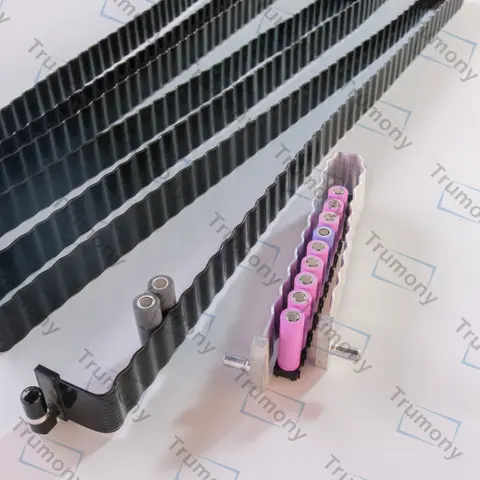
Why capacity, MOQ and acceptance are the three numbers that break a program
A purchase order usually goes wrong in one of three places, and none of them is technical.
Capacity is quoted on a basis nobody wrote down. A monthly figure gets compared against a buyer's annual forecast. A plant-wide total includes lines that will never touch the part. A number that refers to stamped plates is read as if it covered brazed assemblies. The digits are correct and the comparison is meaningless.
MOQ is quoted per part but applied per batch. A minimum of one unit for a standard plate is not the same commitment as a minimum run for a custom alloy, a coating batch or a bespoke port configuration. Buyers discover the difference when a single-unit sample request becomes a purchase of sheet metal.
Acceptance is described instead of specified. "100% tested" is a statement about coverage, not about method. It does not tell you which test, at what pressure or duration, on which units, with which record, or what happens when a lot fails.
Each of these is cheap to resolve during evaluation and expensive to resolve after tooling has been cut. That is why the checklist below is built around documents rather than assurances.
What is changing in cooling plate sourcing
Three documented shifts explain why supplier-evaluation questions have become more detailed in EV and stationary storage procurement.
Aluminum is the default substrate. Global Market Insights put aluminum-based cooling plates at approximately 64% of all cooling plate installations in 2024 and valued the global EV battery cooling plate market at USD 2.5 billion in that year. Trumony states that its cooling plates are made of Aluminum 3003 across stamped, brazing and liquid cooling plate models, so material-grade confirmation is now a standard line item in an RFQ rather than a differentiator.
Stationary storage runs on a different order rhythm. Grand View Research projects the liquid cooling market for stationary BESS at a CAGR of 21.55% from 2024 to 2033. BESS buyers typically order in program blocks tied to container builds, while automotive buyers order against a longer, flatter schedule. The same supplier can be a good fit for one and a scheduling risk for the other, and the capacity question has to be asked in the buyer's own order rhythm.
Constructions are not interchangeable. Stamped plates, brazed plates, liquid cooling plates and snake or serpentine tubes use different tooling, different joining processes and different test regimes. A supplier's throughput on one construction says very little about another. This is the single most common reason a capacity claim that looked strong in a brochure fails at the audit.
A three-track verification framework
A cooling plate supplier evaluation is complete when three tracks are each backed by a document you can file.
Track 1 — Capacity and lead time. What the supplier can make, on which line, in what time, with which constraint named. Output: a capacity statement plus a milestone schedule.
Track 2 — Commercial terms. MOQ, price basis, payment schedule, Incoterm, named port, packaging and tooling ownership. Output: a signed quotation or proforma invoice.
Track 3 — Acceptance. The tests performed, the sampling rule, the records supplied and the failure procedure. Output: an acceptance protocol appended to the purchase order.
The decision rule is deliberately blunt: if any track is supported only by a conversation, it is a placeholder, not evidence. Verbal answers are useful for direction and dangerous as a contractual basis.
Step 1: Verify capacity and lead time against their own basis
Start with the arithmetic, then test the arithmetic.
Trumony's company information states an annual output of 600,000 units from 100,000 m² of standard workshops, supported by 220 employees and a 25-engineer R&D team. That is an annual figure for a defined product scope. Before comparing it with any other supplier's claim, convert every quote you hold to the same basis: units per year, per product family, per manufacturing site.
Questions that convert a number into evidence
- Which unit definition? A "unit" can mean a finished plate, a plate assembly with fittings, or a module-level cold plate. Ten thousand units of one definition is not ten thousand of another.
- Which product family? Ask for output by construction — stamped, brazed, liquid, tube — because that is how your part will actually be scheduled.
- Which line, and which operation is the bottleneck? For brazed plates the constraint is usually the furnace and its cycle; for stamped plates it is press time and tool life. Naming the constraint tells you whether the supplier has understood its own process.
- What is the shift pattern behind the figure? A capacity number quoted on a single-shift basis leaves expansion room; the same number quoted on three shifts leaves none.
- What does the lead time include? Trumony states a typical production lead time of 30 days. Your job is to establish when that clock starts — at drawing release, at tooling sign-off, or at material arrival — and whether it includes first-article inspection, pre-shipment testing and packing.
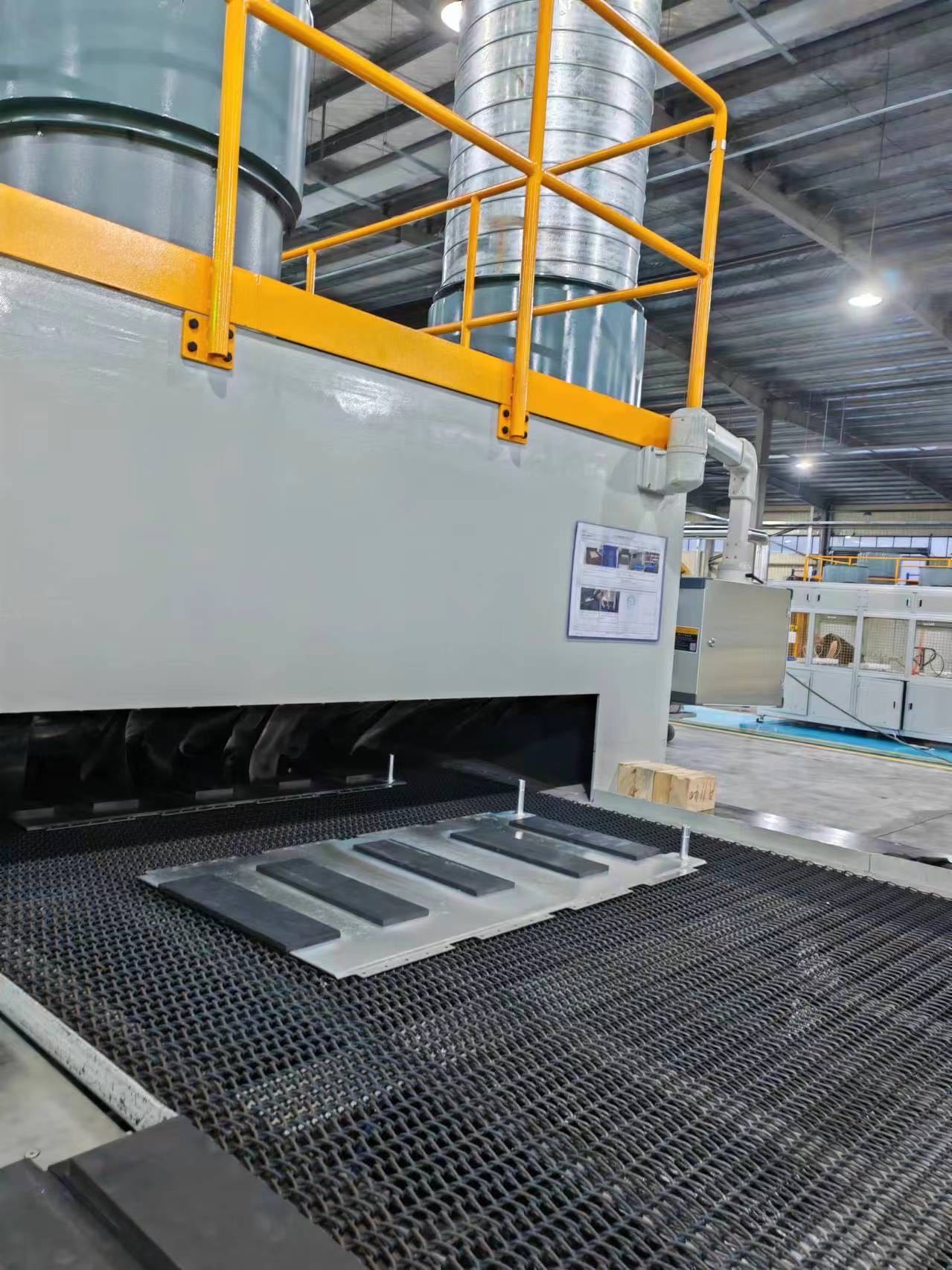
Run a peak-month test
Take the highest month in your own forecast rather than the annual average. If your program peaks at, say, 20,000 plates in a single month, ask the supplier to confirm in writing that the monthly capability behind the quotation covers that peak without displacing another customer's schedule. A supported answer references a line, a shift pattern and a tooling count. An unsupported answer references the brochure.
Red flag: a capacity figure that changes basis between two documents from the same supplier — annual in the company profile, monthly in the capability sheet. That is not automatically a misrepresentation; it is a conversion you must perform before comparing. Ask the supplier to restate every capacity claim on one basis in the quotation.
Step 2: Lock MOQ and commercial terms in the quotation
Commercial terms are where small-volume and first-program buyers have the most negotiating room and the least documentation.
MOQ: confirm the unit of the minimum
Trumony's capability information states an MOQ of 1 unit, with OEM production and customization of dimension, cooling efficiency and logo. A one-unit minimum matters because it decouples prototyping from production: you can validate a design change, a coating or a fitting arrangement without committing to a batch.
Three clarifications turn that number into something usable:
- Minimum per part number versus minimum per material. Ask whether the minimum applies to the finished plate or to the raw material and coating batch that feeds it.
- Minimum with customization. Dimension, cooling efficiency and logo changes may each carry their own threshold and their own tooling implication.
- Written confirmation per model. MOQ is a per-product term. Ask for it on the quotation line, not in a general statement, and re-confirm it when the drawing revision changes.
Payment: 30% deposit, 70% before shipment
Trumony's purchasing terms specify a 30% deposit with 70% payable before shipment, on FOB or CIF delivery terms, with pre-shipment testing as the acceptance criterion. This is a common structure in aluminum component supply, and it is workable provided three things are agreed in advance:
- What releases the 70%. Tie the balance to receipt of the pre-shipment test report, not to a calendar date or to loading.
- Which documents accompany the balance request. Test report, dimensional record, packing list and commercial invoice should arrive before or with the payment request.
- What happens on a failed lot. The payment schedule should not leave you with no leverage after a rejection. Agree re-test rights and cost allocation before the first shipment.
Delivery terms: FOB, CIF and the risk transfer point
FOB and CIF place different obligations on each side. Under FOB, you nominate and pay the forwarder and take control of the movement; under CIF, the supplier arranges carriage and insurance to the named destination port. Ask which named port applies, what insurance cover is included under CIF, and where risk transfers. For import documentation, classification is settled case by case rather than by product name — a U.S. Customs and Border Protection ruling, NY N337670 dated 14 February 2024, addressed classification of a battery cooling plate item — so confirm the HS code with your broker before the first shipment rather than after it.
Step 3: Write the acceptance protocol before the first shipment
Acceptance is the part of the evaluation most often left to the last week, which is also the week it is hardest to negotiate.
Trumony's quality-control statement is unusually specific for a public capability page, which makes it a useful template. Every unit receives a 100% air leakage test and a dimension test. Beyond that, the following tests are available as options: helium tightness test, voltage resistance test, hydrostatic strength test, burst test, high-temperature resistance test and low-temperature resistance test.
| Test | What it screens | Status in the Trumony record |
|---|---|---|
| Air leakage test | Leakage in the coolant channel after assembly | Standard, 100% of units |
| Dimension test | Fit to the mating surface, port positions and overall envelope | Standard, 100% of units |
| Helium tightness test | Smaller leak rates than an air test can resolve | Optional |
| Voltage resistance test | Electrical isolation of the coolant circuit | Optional |
| Hydrostatic strength test | Structural behaviour of the plate under internal pressure | Optional |
| Burst test | Pressure at which the assembly fails | Optional |
| High-temperature resistance test | Behaviour of the assembly and any coating at elevated temperature | Optional |
| Low-temperature resistance test | Behaviour at low ambient or operating temperature | Optional |
Four items to add to the protocol
- Sampling rule. State whether a test is applied to 100% of units or to a sample, and how the sample is drawn. "100% air leakage and dimension test, plus sample-based destructive testing" is a protocol; "fully tested" is not.
- Record format. Ask for the test report template before ordering, and confirm it carries the part number, drawing revision, batch or serial reference, test parameters and pass/fail result.
- Witness option. For a first article or a high-value program, agree in advance whether your engineer or a third-party inspector may attend the pre-shipment test.
- Failure procedure. Define who pays for re-test, rework, replacement and freight on a rejected lot, and whether a third-party laboratory result can break a deadlock.
The certificates to request — and how to read them
For battery thermal components, the two certificates most often requested are ISO 9001 for the quality management system and IATF 16949 for automotive quality management. Trumony's certificate records list ISO 9001 certificate 132998, issued 21 September 2023 with an issuing authority recorded as IAF, and IATF 16949 certificate 0489498, issued 27 November 2023 and valid until 26 November 2026.

A certificate is evidence only after four checks:
- Registry verification. Look up the certificate number with the issuing body rather than relying on the PDF, since certificates can be reissued, suspended or withdrawn.
- Scope. Confirm the certificate covers the product and the manufacturing site that will actually make your plates. A group certificate that covers a different plant is not evidence for your line.
- Validity dates. Both records above are date-bound: the IATF 16949 certificate runs to 26 November 2026, and the ISO 9001 record carries a validity end date of 21 September 2026. Ask for the current reissued copy of any certificate before filing it in a supplier dossier, and diarise the renewal date so the dossier does not silently go stale.
- What the certificate does not cover. A quality-system certificate says nothing about leak rate, thermal performance, dimensional tolerance or delivery reliability. Those come from the acceptance protocol and the capacity evidence, not from the certificate.
How the checklist shifts by program type
The same three tracks are weighted differently depending on the order pattern. Three documented project profiles show why.
A German automotive paint shop project, 2,000 units. A smaller, higher-mix order for an automotive OEM, reported as two years of stable operation with low noise as a stated highlight. Here MOQ and customization flexibility matter more than raw throughput, and the acceptance protocol should include whatever acoustic or application-specific criterion the end user has specified — noise was named as a highlight in this project, so it belongs in the specification, not in the marketing copy.
A Vietnamese automotive battery pack cooling program, 60,000 units. A volume program where the highlights recorded were low cost, high quality and low noise. At this scale, capacity evidence and lead-time reliability dominate: a two-week slip on a 30-day cycle compounds across the build schedule, and the peak-month test described in Step 1 becomes the central question.
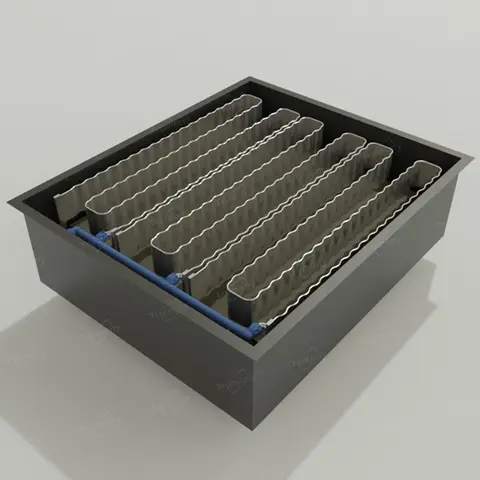
A Chinese ESS container program, 3,000 units. An ESS PACK OEM order for container applications, reported as stable operation with low noise, low cost and fast lead time highlighted. Mid-volume storage orders reward a supplier who can hold a 30-day production lead time while running multiple container builds; the acceptance protocol should define how units are batched and traced per container rather than per shipment.
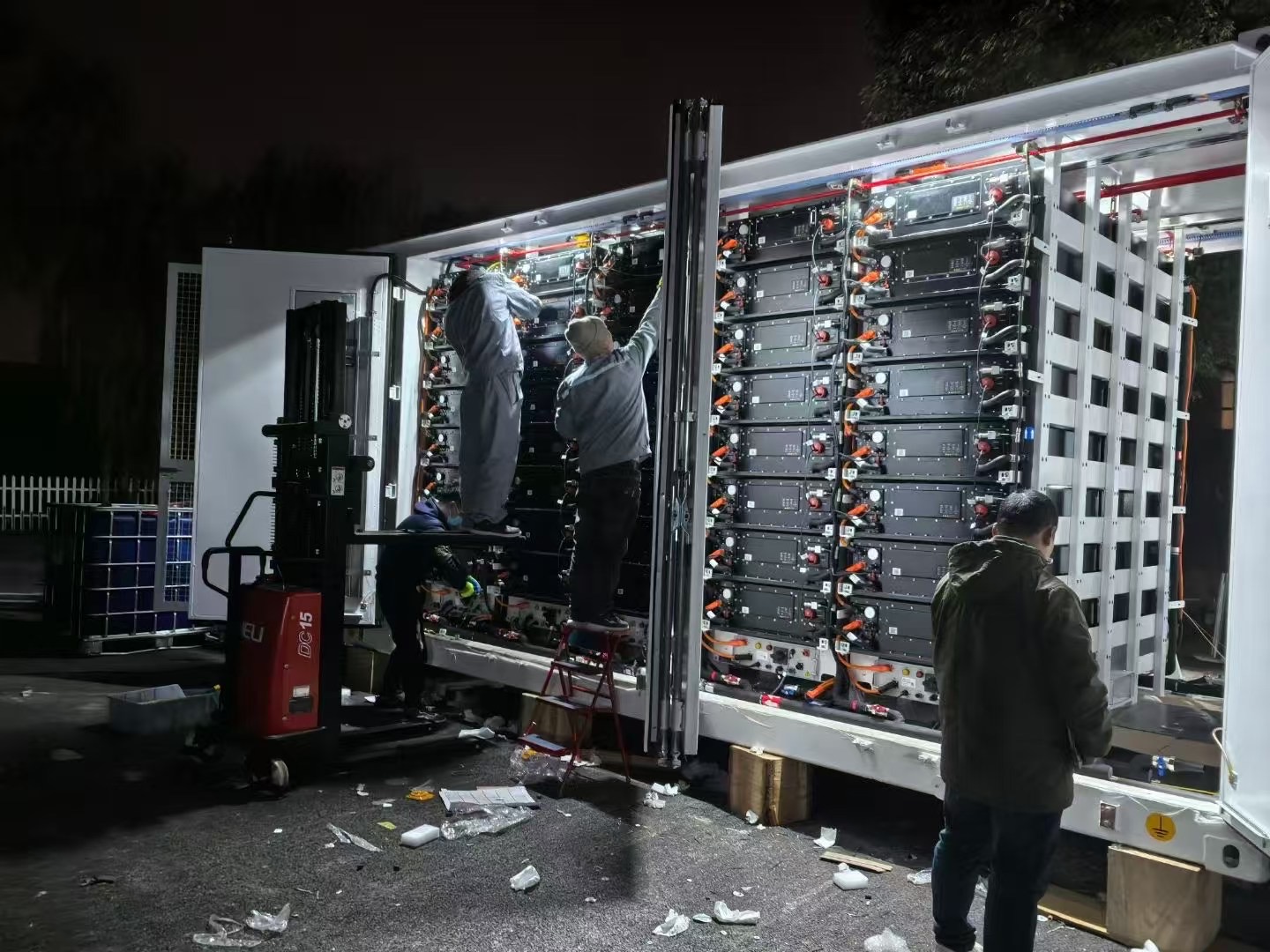
Supplier evaluation table: what to request and what to hold
| Area | What the supplier should state | Reference point (Trumony record) | Document to hold |
|---|---|---|---|
| Quality system | Certificate number, issuing body, scope, validity | ISO 9001 certificate 132998; IATF 16949 certificate 0489498 | Current certificate copies plus registry check |
| Capacity | Output per year, per product family, per site | 600,000 units annual output; 100,000 m² of workshops | Capacity statement or audit note |
| MOQ | Minimum per model and per material batch | 1 unit | Quotation line item |
| Payment | Deposit percentage and balance trigger | 30% deposit, 70% before shipment | Proforma invoice |
| Delivery | Incoterm and named port | FOB / CIF | Sales contract |
| Acceptance | Tests, sampling rule, records, failure procedure | Pre-shipment test; 100% air leakage and dimension test; optional helium, voltage resistance, hydrostatic, burst and temperature tests | Acceptance protocol and test report template |
| Lead time | Days, plus start and end point of the clock | 30 days typical production lead time | Milestone schedule |
| Customization and support | OEM scope and after-sales model | Dimension, cooling efficiency and logo customization; remote after-sales support | Specification sheet and service terms |
Frequently asked questions
Which certifications should I request from a cooling plate supplier, and how do I verify them?
Request ISO 9001 and, for automotive programs, IATF 16949. Trumony's records list ISO 9001 certificate 132998 and IATF 16949 certificate 0489498, with the IATF certificate valid until 26 November 2026. Verify three things independently: the certificate number in the issuing body's registry, the scope covering both the product and the manufacturing site that will make your plates, and the current validity date. A certificate confirms a quality management system; it does not confirm leak rate, thermal performance or on-time delivery, which have to be evidenced separately.
What capacity evidence actually proves a supplier can meet my volume?
Output stated on a defined basis — units per year or per month, for a named product family, at a named site — plus the constraint that limits it. Trumony's company information states an annual output of 600,000 units supported by 100,000 m² of workshops, 220 employees and a 25-engineer R&D team. Convert that to your peak month, ask which line and which operation limits throughput, and ask for the shift pattern behind the figure. A capacity claim you cannot convert into a monthly figure for your own part is not yet evidence.
Can I order a small quantity with OEM customization?
Yes, where the supplier sets the minimum at the part rather than the batch. Trumony's capability information states an MOQ of 1 unit with OEM production and customization of dimension, cooling efficiency and logo. Two cautions apply: confirm on the quotation that the minimum applies to the finished plate rather than to a material or coating batch, and re-confirm it whenever a drawing revision changes the part. Unit pricing and tooling treatment at one unit will differ from a production volume, so budget for both.
What payment and delivery terms should I expect on a cooling plate order?
Trumony's purchasing terms specify a 30% deposit with 70% payable before shipment, on FOB or CIF delivery terms, with pre-shipment testing as the acceptance criterion. Tie the 70% balance to receipt of the pre-shipment test report rather than to a loading date, agree which documents accompany the balance request, and confirm the named port and the point at which risk transfers under your chosen Incoterm. Agree the rejection and re-test procedure before the first shipment, while you still have leverage.
How should a pre-shipment acceptance test be structured?
Start from the standard tests and add only what your application justifies. In the Trumony record, every unit receives a 100% air leakage test and a dimension test, with helium tightness, voltage resistance, hydrostatic strength, burst, high-temperature resistance and low-temperature resistance available as options. Specify the sampling rule, the record format and the failure procedure in the purchase order, and ask for the report template before ordering so you know exactly what will arrive with the goods.
What lead time should I plan for, and what delays it?
Trumony states a typical production lead time of 30 days. Whether that is 30 days from drawing release or 30 days from material arrival is the question that decides your build schedule, so ask for a milestone schedule showing tooling, first article, production, pre-shipment test and packing. Additional optional testing, design revisions, coating requirements and peak-season loading can all extend the cycle, and the milestone schedule is where those are priced in rather than discovered. If you want to test this sequence against your own drawing, the practical next step is to send the drawing and request a sample together with a written quotation that states MOQ, payment terms, delivery term and acceptance test on the same page.
Validate the terms before you validate the tooling
A cooling plate supplier should be able to put capacity, MOQ, payment, delivery term and acceptance testing on one quotation page. If any of those items needs a second document, ask for it now — the cost of asking is a day, and the cost of not asking is a re-cut tool.
Conclusion
Evaluating a cooling plate supplier's capacity, MOQ and acceptance terms is a documentation exercise, not an instinct test. Ask for output on a stated basis and convert it to your own peak month. Ask for the MOQ on the quotation line and check whether the minimum applies to the part or to the material batch. Ask for the acceptance protocol with named tests, a sampling rule, a record format and a failure procedure, then attach it to the purchase order.
The reference points in this guide — an annual output of 600,000 units from 100,000 m² of workshops, an MOQ of 1 unit, a 30-day production lead time, 30% deposit with 70% before shipment, FOB or CIF delivery, pre-shipment testing with 100% air leakage and dimension checks, and ISO 9001 and IATF 16949 certificates on file — show what a verifiable answer looks like. They are the start of the evaluation, not the end of it. The evaluation ends when each of those claims is supported by a document you can file, re-check and enforce.
Have Questions or Need More Details?
Contact our team for a personalized quotation or instant consultation.
Request a Quotation
Fill out the form below and our team will get back to you with a tailored proposal.
WhatsApp Direct Chat
Prefer to chat in real-time? Message us on WhatsApp for instant assistance & quick answers.
- Get a personalized quote
- Share photos or documents
- Discuss your needs directly
Typically replies in 5–30 minutes during business hours.