
Cooling Plate Thickness, Flow Path & Serpentine Tube Design: A Technical Specification Guide for EV and ESS Programs
Cooling Plate Thickness, Flow Path & Serpentine Tube Design: A Technical Specification Guide for EV and ESS Programs
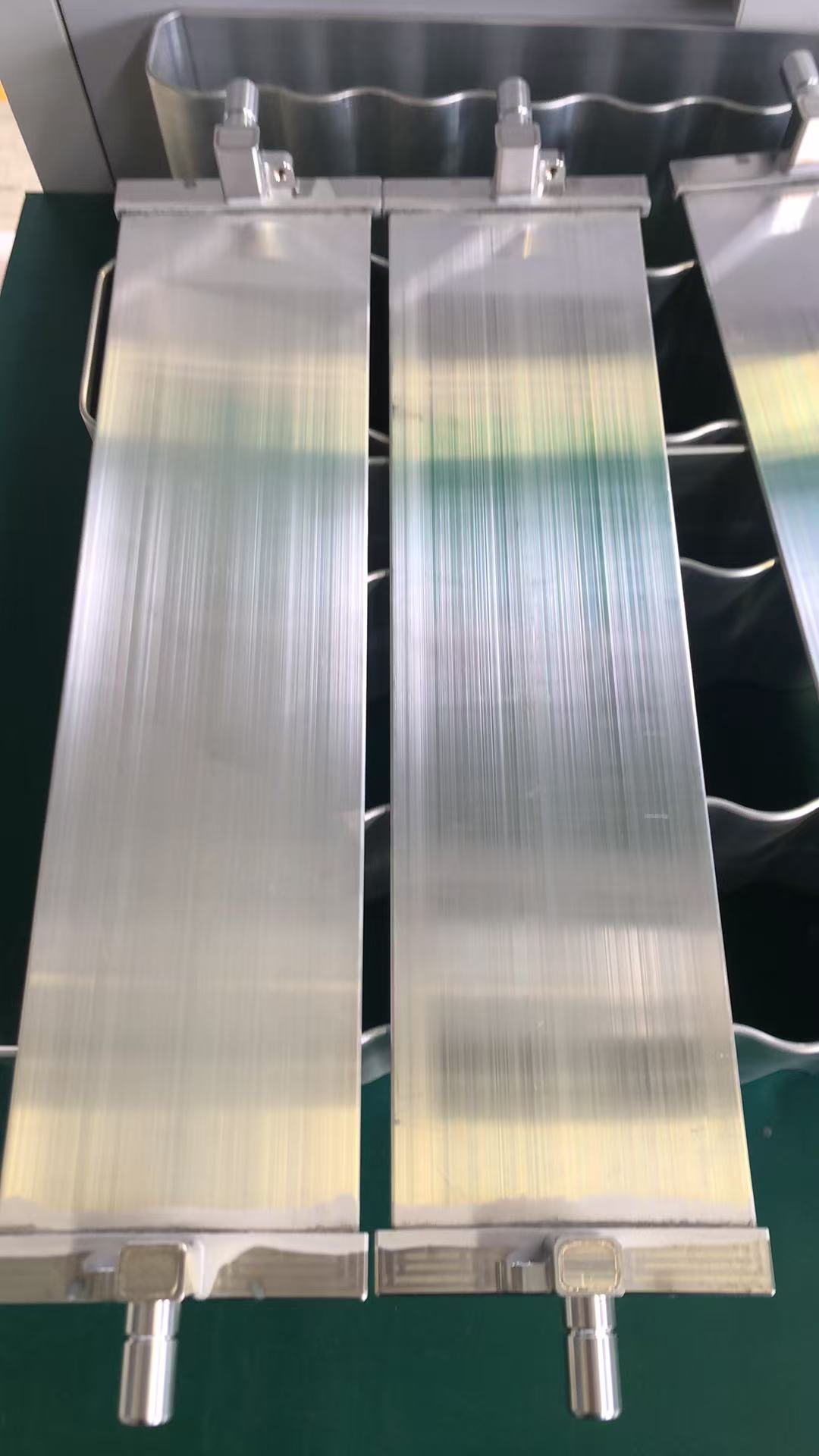
Direct answer: Three variables decide whether an EV or ESS cooling plate meets its thermal target and can still be built at volume — the plate thickness that carries the coolant channel, the flow path geometry that spreads coolant across the cell footprint, and the serpentine (snake) tube route used to reach cylindrical cells. These three must be specified together, against the real duty cycle (including continuous 24/7 energy-storage operation), before tooling is released.
This guide is written for the engineers who have to convert a thermal target into a drawing that a supplier can quote, tool and repeat. It covers how thickness, flow path and tube routing are derived, how Aluminum 3003 stamped and brazed plates differ from serpentine tube constructions, and how model numbering, leak testing and lead time connect a design decision to a multi-year supply program.
Problem Definition: Why Thickness and Flow Path Are Usually Decided Too Late
The cooling plate is typically one of the last components released in a battery pack program, and the pressure to lock a drawing pushes engineers toward a catalogue-style choice: pick a plate of a convenient thickness, sketch a channel field, and leave the detail to the supplier. That sequence produces four recurring problems.
- Thickness fixed before channel depth is known. The wall remaining under the coolant channel becomes the real constraint. When the thermal team later asks for a deeper channel, plate stiffness, flatness and the joining cycle all change at the same time.
- Flow path drawn in CAD without a forming check. A parallel channel field that looks balanced on screen can distribute coolant unevenly across the cell footprint if rib widths, pass count and port positions are not designed for the actual flow rate.
- Tube route drawn without bend and contact rules. Serpentine tubes for cylindrical cells depend on cell pitch, contact arc and bend radius — not only on the centreline path in the model.
- Verification language left vague. "Leak tested" is not a specification. The method and the acceptance criterion belong on the drawing, otherwise two suppliers can both claim compliance while testing differently.
- Duty cycle treated as automotive only. A plate that runs continuously in a stationary storage container at high ambient has a different steady-state requirement from a vehicle pack that cycles and soaks.
Fixing these points after tooling exists means requalification: new samples, new leak data, and a new approval cycle. Fixing them at specification stage costs a design review.
Industry Background: One Material Family, Two Very Different Duty Profiles
Aluminum dominates the category. Global Market Insights reported that aluminum-based cooling plates account for approximately 64% of all cooling plate installations, and that the global EV battery cooling plate market was valued at USD 2.5 billion in 2024. Grand View Research projects the liquid cooling market for stationary BESS to grow at a CAGR of 21.55% from 2024 to 2033. Those two segments pull design in opposite directions: vehicle packs are constrained by mass, stack height and vibration, while stationary systems are constrained by continuous duty, ambient temperature and serviceability.
Trumony Aluminum Limited is a Suzhou, China-based manufacturer of thermal management components for battery packs, founded in 2017, operating 100,000 m² of workshops with 220 employees, a 25-engineer R&D team and an annual output of 600,000 units; approximately 40% of output is exported to the EU, USA and India. Its portfolio covers stamped cooling plates, brazing cooling plates, liquid cooling plates for EV and energy storage, and serpentine or snake cooling tubes — all made of Aluminum 3003, with thickness and cooling efficiency customized to project requirements.
Aluminum 3003 is a manganese-alloyed aluminum with good formability, moderate strength and good corrosion behaviour, which is why it is widely used for stamped and brazed liquid cooling plates in battery thermal management.
The Three Design Variables Engineers Actually Specify
1. Plate thickness is a system decision, not a sheet-metal choice
Thickness determines four things at once: the depth available for the coolant channel, the stiffness of the plate under stack pressure, the flatness on which the thermal interface depends, and the mass and material cost carried by the pack. Because Trumony customizes thickness rather than publishing a fixed thickness catalogue, the practical approach is to derive thickness from the channel and the mechanical load, then have the supplier confirm feasibility against its own forming and joining process.
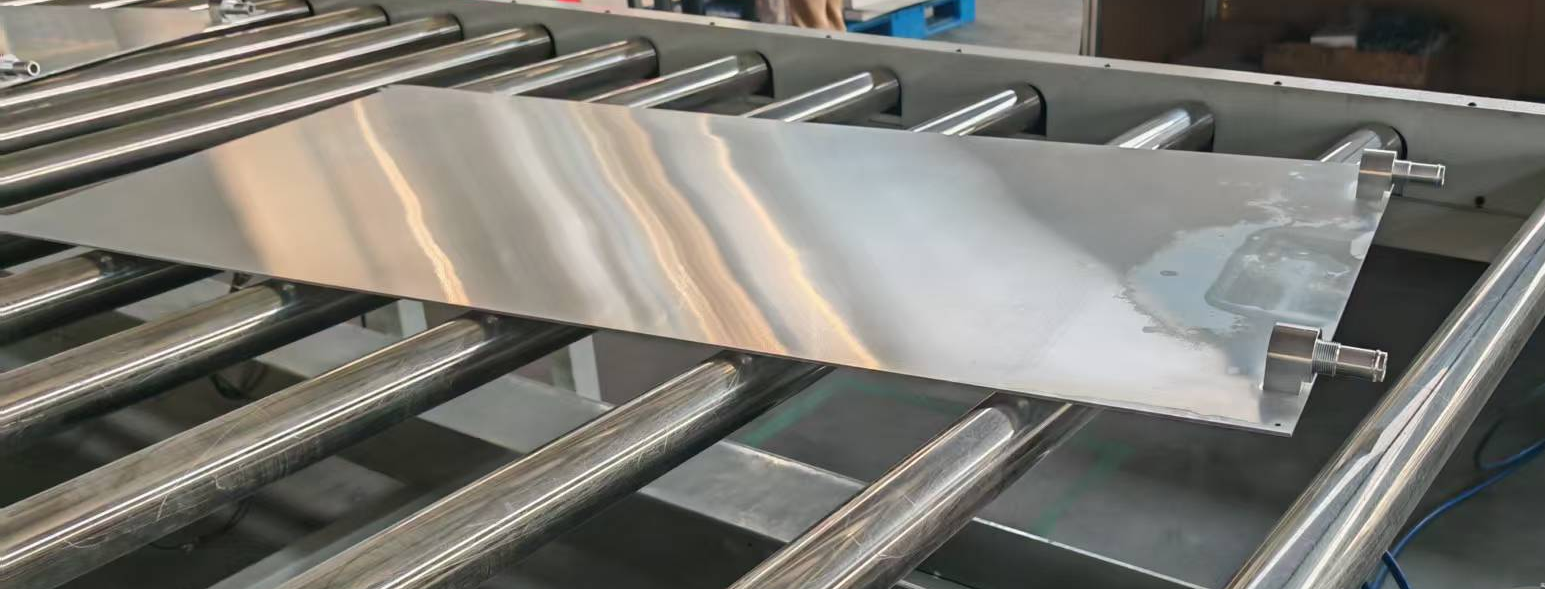
The drivers that should set thickness, in the order they usually bind:
- Channel depth plus minimum wall. The coolant channel depth and the wall left beneath it define the minimum sheet thickness that can survive forming and the joining cycle.
- Stack pressure and flatness. A thinner plate deflects more under module compression, which changes thermal interface contact across the footprint.
- Port and fitting geometry. Inlet and outlet bosses need local material thickness; this often sets the thickness floor more firmly than the channel does.
- Mass and cost targets. For vehicle packs, every millimetre of plate is multiplied across the pack; for stationary systems, mass matters less than repeatability.
2. Flow path geometry controls distribution and pressure drop
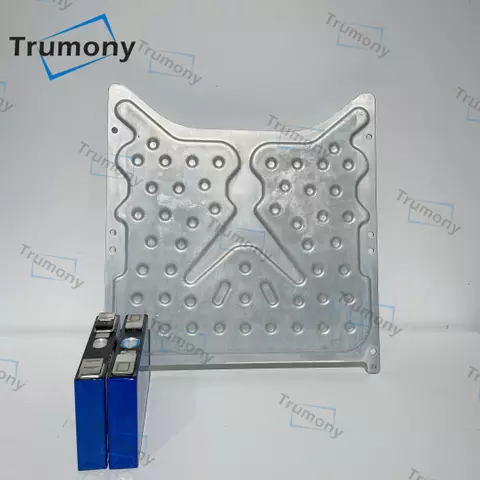
The flow path is the coolant route between the inlet and outlet port, defined by channel width, rib width, number of parallel passes and port position. Two families dominate battery cooling plate design, and the trade-off between them is predictable.
A parallel multi-channel field keeps pressure drop low and can carry a higher flow rate, but it depends on a balanced manifold: if the inlet plenum feeds short and long paths unequally, the far end of the plate runs warmer. A serpentine path forces coolant through a longer effective length, raising local velocity and heat-transfer coefficient in exchange for higher pressure drop and a larger pumping requirement. Neither is universally better; the choice follows the pressure-drop budget and the temperature-uniformity target for the specific module.
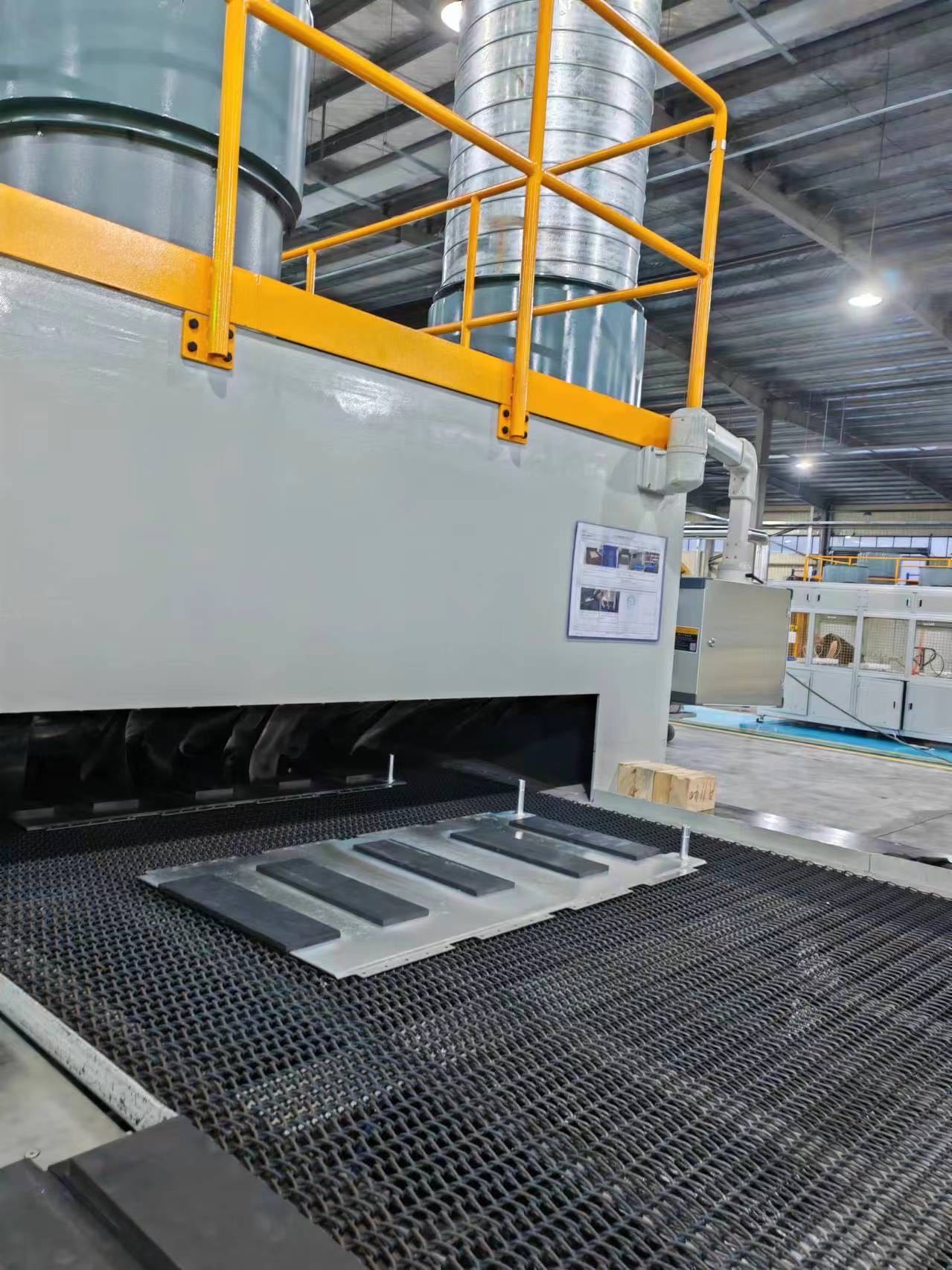
On stamped plates the flow field is formed directly into the sheet, which couples the channel design to tooling. Trumony's own process comparison positions stamping as an efficiently produced route for battery pack thermal management, with production time reduced by about 60% compared with CNC-machined cold plates. For the designer, the consequence is practical: the flow path has to be released early enough to be cut into the tool, because a late channel change is a tooling change.
3. Serpentine and snake tube routing is a contact problem
For cylindrical cells, Trumony supplies extrusion snake tubes matched to 21700, 18650, 3270 and 4680 formats, and stamped cooling plates for prismatic cells and battery packs. The tube route is defined by cell pitch, the contact arc between tube and cell can, the number of passes, the bend radius and whether the tube is supplied straight, formed or coated.
Coating is easy to overlook. A coated cooling tube adds a defined surface condition between aluminum and the cell or the module structure, which matters where condensation, coolant chemistry or electrical isolation is part of the requirement. Specify the coating as a drawing requirement, not as a purchasing note.

Tube-to-plate bonding and the flatness of the contact surface decide real performance more than the tube diameter does. A snake tube pressed into a plate performs as a system: tube spacing, contact length per cell, and the compression that holds the assembly together all belong to the same specification.
Step-by-Step: How to Freeze a Cooling Plate Specification
The sequence below is the order in which the three variables should be locked, so that each decision is made with the data it depends on already fixed.
- Define the duty envelope. Record continuous heat load, coolant inlet temperature, ambient conditions, allowable pressure drop and whether operation is cyclic or 24/7. Stationary storage that runs continuously needs a steady-state margin, not a peak-load margin.
- Select the construction from the cell format. Prismatic cells and pack-level cooling point to a stamped cooling plate; cylindrical formats such as 21700, 18650, 3270 and 4680 point to an extrusion snake tube.
- Fix thickness from the channel, the wall and the flatness requirement. Set channel depth first, add the minimum wall, then check stack deflection. Confirm the achievable thickness with the supplier as part of the RFQ rather than assuming a standard sheet.
- Design the flow path against the pressure-drop budget. Choose parallel or serpentine routing, then set channel width, rib width, pass count and port position. Check that the manifold feeds the whole footprint before the drawing is released.
- Design the tube route against contact, not just length. Set cell pitch, contact arc, bend radius and coating condition, and state whether the tube is delivered straight, pre-formed or bonded into a plate.
- Define the thermal interface and mechanical interface. Surface treatment, flatness, mounting points and compression all change the effective performance of the plate.
- Write the verification method into the drawing. Trumony applies 100% air tightness testing with helium leak testing as a leakage-control method; the acceptance criterion should match what the process can demonstrate, and pre-shipment testing should be stated explicitly.
- Freeze the specification and assign a model identifier. Trumony's current cooling plate model numbering runs from TR-20260223 to TR-20260232; request the datasheet for the specific model that corresponds to your design, and record the revision that was approved.
Design Input Checklist for the RFQ Package
| Design input | Why it changes the plate | What to confirm in the RFQ |
|---|---|---|
| Continuous heat load and coolant temperature rise | Sets required channel area and coolant flow rate | Flow rate and allowable pressure drop |
| Cell format and cell pitch | Chooses stamped plate versus extrusion snake tube | Construction and tube spacing |
| Available stack height | Limits overall plate thickness | Thickness feasibility with the required channel depth |
| Flatness and contact pressure | Controls thermal interface contact resistance | Flatness value and surface treatment |
| Duty profile (cyclic versus 24/7) | Drives temperature-uniformity margin | Thermal protection and temperature sensor provision |
| Leak acceptance criterion | Defines the test method | 100% air tightness and helium leak test |
| Program life and annual volume | Drives tooling and model control | Model identifier, lead time and change notification |
Use Cases: Matching Construction to Battery Pack Conditions
Prismatic-cell EV pack
A stamped cooling plate in Aluminum 3003 suits prismatic-cell and pack-level cooling, where the flow field is formed into the sheet and cooling efficiency and thickness are customized to the pack envelope. The design priority is flatness across the cell footprint and a manifold that feeds the full plate.
Cylindrical-cell module
For 21700, 18650, 3270 and 4680 cells, an extrusion snake tube places coolant in contact with the cell can along a defined path. The specification work is contact geometry: tube spacing matched to cell pitch, contact length per cell, bend radius, and coating if the environment requires it.
ESS running 24/7 at high temperature
Stationary storage that operates continuously in a high-ambient container is a steady-state problem rather than a peak-load problem. A liquid cooling plate specified for that duty needs a temperature-uniformity margin across the full footprint and a defined thermal protection arrangement — Trumony lists temperature sensors as its thermal-protection measure against overheating, and 100% air tightness testing against leakage.
High heat flux and industrial equipment
Where heat flux density is higher than in a standard pack, the liquid cooling plate becomes the primary heat exchanger and the pressure-drop budget is the binding constraint. Here the serpentine-versus-parallel decision is made by the pump curve, not by packaging convenience.
Construction Comparison for EV and ESS Design Reviews
The table compares constructions within the same Aluminum 3003 product family, on the criteria that actually change between programs. It is a design-selection aid, not a performance benchmark: published thermal resistance, pressure drop and burst data are not part of the available specification set for these products, so those values must be established through the RFQ and qualification test.
| Construction | Cell / format fit | Thickness and cooling-efficiency customization | Verification evidence | Typical program use |
|---|---|---|---|---|
| Stamped cooling plate | Prismatic cells or battery pack | Customizable thickness and cooling efficiency | 100% air tightness test; helium leak test available | High-volume pack and module cooling |
| Brazing cooling plate | EV and energy storage liquid cooling plate applications | Customizable thickness and cooling efficiency | 100% air tightness test; helium leak test available | Larger plate formats and brazed assemblies |
| Serpentine / snake cooling tube (extrusion) | Cylindrical cells: 21700, 18650, 3270, 4680 | Tube route, coating and contact geometry specified per module | Air tightness testing of the assembled circuit | Cylindrical-cell modules |
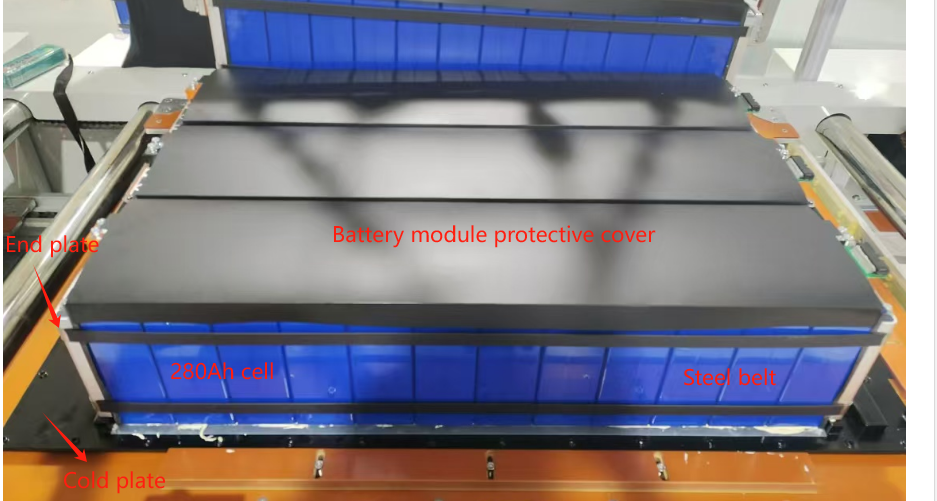
| Battery module cold plate (liquid cooling plate) | Module-level integration | Customizable thickness and cooling efficiency | 100% air tightness test; helium leak test available | Module thermal management, EV and ESS |
Designing for Long-Term Supply: Model Numbers, Repeat Orders and Change Control
A technical specification only becomes a supply program when it can be repeated identically. That is where the execution-stage details matter, and where a design review should confirm commercial and quality parameters rather than only geometry.
- Capacity and lead time. Trumony reports an annual output of 600,000 units and a typical production lead time of 30 days — useful for planning pilot builds and series ramp.
- Order entry. Minimum order quantity is 2 units, with FOB or CIF delivery terms, pre-shipment testing as the acceptance criterion, and 30/70 payment terms.
- Quality management. Trumony states that its workshops and testing centres operate under ISO 9001 and IATF 16949 quality management systems.
- Model control. The TR-20260223 to TR-20260232 series identifies current cooling plate configurations; the approved model and revision should be recorded in the purchase specification so that a repeat order reproduces the validated design.
- Export experience. Around 40% of output is exported to the EU, USA and India, which is relevant when the program requires documentation for multiple markets.
Frequently Asked Questions
Which quality management certifications apply to Trumony cooling plate production, and what should we verify?
Trumony states that its operations are covered by ISO 9001 and IATF 16949 quality management systems, and it applies 100% air tightness testing with helium leak testing as a leakage-control method. Before approving a supplier for a series program, verify certificate copies for the issuing body, scope, covered production site and validity, and confirm that the leak-test method and acceptance criterion written on your drawing match what the supplier's process can demonstrate.
Can plate thickness, flow path and tube routing be customized to our drawing?
Thickness and cooling efficiency are customizable per project, and the construction is matched to the cell format: stamped cooling plates for prismatic cells or battery packs, and extrusion snake tubes for cylindrical cells in 21700, 18650, 3270 and 4680 formats. All are made of Aluminum 3003. Customization is supported by a 25-engineer R&D team within 100,000 m² of manufacturing space, and the flow path or tube route is confirmed against the supplier's forming and joining process during the RFQ.
What are the minimum order quantity, payment and delivery terms?
The minimum order quantity is 2 units, with FOB or CIF delivery terms, pre-shipment testing as the acceptance criterion, and 30/70 payment terms. Because thickness, flow path and tube route are design-specific, tooling and process questions should be raised together with the quantity in the same RFQ rather than negotiated afterwards.
Can we validate a sample before freezing the design?
Yes — the minimum order quantity of 2 units supports a pilot build, and pre-shipment testing is the stated acceptance criterion. A typical production lead time of 30 days applies, so a sample round can be scheduled inside a normal development cycle. Sample evaluation should test the same parameters that will be accepted in series: leak tightness, flatness, and temperature uniformity across the footprint at the design flow rate.
What lead time and capacity should we plan for in a multi-year program?
Trumony reports an annual output of 600,000 units and a typical production lead time of 30 days, with around 40% of output exported to the EU, USA and India. For repeat orders, the approved model from the TR-20260223 to TR-20260232 series and its revision should be recorded in the purchase specification, so that change control is explicit. To start a specification review, send the drawing and duty envelope to tracy@trumony.com or request a sample through WhatsApp.
Conclusion: Specify the Three Variables Together
Thickness, flow path and tube route are not independent choices. A deeper channel changes the minimum thickness; a serpentine path changes the pressure-drop budget; a different cell pitch changes the tube route and therefore the plate that holds it. Programs that lock all three against a documented duty envelope — and then record the approved model, revision and verification method — avoid the requalification cycle that follows a late change.
For background reading before the design review, see the cooling plate basics guide for EV and BESS buyers and the scenario-based selection guide; manufacturer and product information is available at trumony.com.
Next Step: Send the Drawing, Not the Catalogue Number
Share the cell format, stack height, continuous heat load, allowable pressure drop and cell pitch. Trumony will confirm the construction — stamped cooling plate, brazing cooling plate, liquid cooling plate or extrusion snake tube — together with the thickness and flow path that its Aluminum 3003 process can hold, and quote sample units against the 2-unit minimum order quantity.
Email: tracy@trumony.com | Tel / WhatsApp: +86 13584862808
Trumony Aluminum Limited, D-7, Dongchuang Science and Technology Park, No. 216 Jinfeng Road, Wuzhong District, Suzhou, Jiangsu Province, P.R. China
Have Questions or Need More Details?
Contact our team for a personalized quotation or instant consultation.
Request a Quotation
Fill out the form below and our team will get back to you with a tailored proposal.
WhatsApp Direct Chat
Prefer to chat in real-time? Message us on WhatsApp for instant assistance & quick answers.
- Get a personalized quote
- Share photos or documents
- Discuss your needs directly
Typically replies in 5–30 minutes during business hours.