
How to Navigate Cooling Plate Compliance: IATF 16949, ISO 9001, and Regional Requirements for EV & ESS
How to Navigate Cooling Plate Compliance: IATF 16949, ISO 9001, and Regional Requirements for EV & ESS
Cooling plate compliance is a document-verification process, not a trust exercise. For EV and ESS programs, a buyer has to verify three separate things: which management system the supplier actually runs, which factory and product range that system covers, and what product-level test evidence exists for the specific battery cooling plate being quoted. This guide breaks the process into seven verifiable steps, using Trumony Aluminum Limited's IATF 16949 and ISO 9001 certificates as a worked example of what a compliant supplier profile looks like on paper.
Most buyers meet this problem the same way. A quotation arrives, a logo file follows, and somewhere in the attachment bundle is a scanned certificate. The claim is usually true. The difficulty is that a true claim can still be the wrong evidence for your project.
U.S. Customs and Border Protection has already treated battery cooling plates as critical components of battery packs in classification terms, issuing ruling NY N337670 (source: U.S. Customs and Border Protection, SRC-0003). That is a useful reminder that compliance for a liquid cooling plate is never a single document. It is a chain: quality system, factory scope, product test data, and import classification.
Problem Definition: Why Cooling Plate Compliance Looks Simple on Paper and Fails in Practice
Three structural gaps explain most compliance problems in EV and BESS cooling plate sourcing. None of them are about dishonest suppliers. They are about mismatched evidence.
Gap 1 — Certificates describe systems, not products
A cooling plate certificate is evidence about a management system. It is not evidence that a specific battery cooling plate met a specific thermal, leak, or dimensional specification. ISO 9001 and IATF 16949 both certify how an organisation controls quality. Neither certifies the performance of an individual aluminum cold plate.
This distinction matters most at the evaluation stage. A procurement team that accepts a system certificate as product evidence will still need a separate conversation about leak testing, dimensional inspection, and coolant-channel integrity.
Gap 2 — Certificate scope and site coverage are narrower than assumed
A certificate covers a defined scope at a defined manufacturing site. A group with several plants may hold certification for one workshop and not another. A cooling plate product line added later may sit outside the original scope until the next surveillance audit.
For a battery pack cooling plate program, the operative question is not "is the company certified" but "is the site that will produce my part certified, for this product category."
Gap 3 — Regional requirements stack on top of the quality system
An EV cooling plate shipped to a European OEM, a US integrator, and an Indian battery pack assembler may come off the same line, but the documentary envelope differs. Customer quality agreements, import classification, and project-specific test protocols are added by market and by customer, not by the certificate.
Industry Background: Why Compliance Pressure on Cooling Plates Is Rising
The commercial context explains why documentation discipline has become a procurement issue rather than an administrative one.
The global EV battery cooling plate market was valued at approximately USD 2.5 billion in 2024 (source: Global Market Insights, SRC-0002). The liquid cooling market for stationary battery energy storage is projected to grow at a compound annual growth rate of 21.55% between 2024 and 2033 (source: Grand View Research, SRC-0001). Both figures describe the same underlying pressure: more programs, more suppliers, and more parallel qualification tracks.
Aluminum dominates the material picture. Aluminum-based cooling plates account for approximately 64% of all cooling plate installations (source: Global Market Insights, SRC-0002). That concentration means most EV and BESS buyers are comparing aluminum liquid cooling plates against each other, with Aluminum 3003 as a common baseline grade across stamped, brazed, and formed constructions.
A wider supplier base also means wider variance in quality-system maturity. Some manufacturers hold certificates with traceable numbers, named issuing bodies, and defined scopes. Others publish a badge with no number at all. The differentiation is not marketing — it is whether the buyer can independently verify the claim.
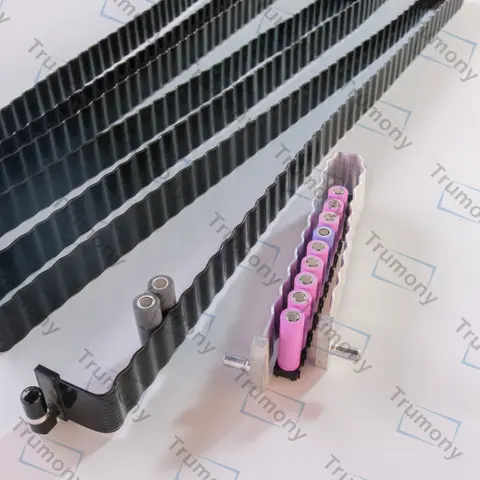
Product variety adds a second layer. A cooling plate portfolio that spans stamped cooling plates, brazing cooling plates, aluminum liquid cooling plates, water cooling plates, and serpentine or snake cooling tubes involves different forming and joining processes, and therefore different process controls inside the same quality system. A single certificate covers the system; the process controls under it still have to be checked.
Detailed Solution: What IATF 16949 and ISO 9001 Actually Prove for a Cooling Plate Supplier
ISO 9001 is the general quality management system standard, applicable to organisations in any industry. IATF 16949 is the automotive quality management system standard used across the automotive supply chain, and it is built on top of ISO 9001. For an EV battery cooling plate program, both normally appear on the supplier qualification checklist. For a BESS cooling plate program, ISO 9001 is commonly the baseline, with customer-specific requirements layered on by the project.
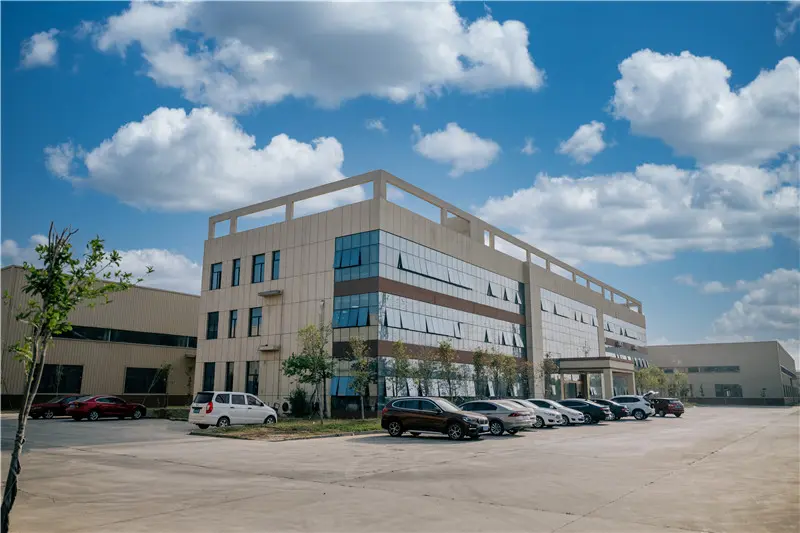
Trumony Aluminum Limited, a Suzhou-based manufacturer of cooling components (cold plates and cooling tubes) founded in 2017, holds both. The company operates 100,000 m² of standard workshops and high-standard testing centres and laboratories, and reports an annual output of 600,000 units. Its certificates provide a concrete example of what verifiable evidence looks like.
| Attribute | IATF 16949 | ISO 9001 |
|---|---|---|
| Standard type | Automotive quality management system, built on ISO 9001 | General quality management system |
| Certificate number | 0489498 | 132998 |
| Issuing body | IATF | IAF |
| Covered market | Worldwide | Worldwide |
| Issue date | 2023-11-27 | 2023-09-21 |
| Typical project fit | EV battery pack cooling plates and automotive OEM programs | BESS and energy storage system cooling plates, non-automotive industrial buyers |
Certificate details as published by Trumony. Buyers should always confirm current validity and scope directly with the issuing body before contract award.
The point of the table is not that two numbers exist. The point is that every field is independently checkable. A certificate number without an issuing body cannot be looked up. An issuing body without a scope statement cannot tell you whether your product is inside it. An issue date without a validity check cannot tell you whether the certificate is current.
What a certificate does not tell you
An IATF 16949 certificate on a cooling plate supplier's letterhead does not confirm that helium leak testing is routine, that burst pressure has been validated, or that the coolant channel in your aluminum cold plate will hold pressure across the operating temperature range. Those are product-level questions, answered by test records and inspection protocols.
Likewise, an ISO 9001 certificate held by a BESS cooling plate manufacturer does not confirm the factory that will run your order is the factory named on the certificate. Site coverage has to be stated explicitly.
Step-by-Step Breakdown: A Seven-Step Compliance Verification Workflow
The workflow below is written for a buyer at the research-to-evaluation stage who has a shortlist of aluminum cold plate suppliers and needs to convert claims into verifiable evidence.
Step 1 — Set the lead standard by project type
Decide before you contact suppliers whether the program requires IATF 16949, ISO 9001, or both. Automotive battery pack cooling plate programs normally require IATF 16949. Energy storage system cooling plate programs typically start from ISO 9001 and add customer-specific quality agreements. Writing this down first prevents the common drift where a supplier's existing certificate quietly becomes the requirement.
Step 2 — Verify the certificate number against the issuing body
Request the certificate number, the issuing body, the standard, and the validity period. Then check them at the source. Trumony's two certificates provide a practical example of complete identifiers: IATF 16949 certification number 0489498 issued by IATF, applicable worldwide; and ISO 9001 certification number 132998 issued by IAF, applicable worldwide.
If a supplier cannot supply a certificate number, the claim is not verifiable and should not enter the shortlist as a pass.
Step 3 — Confirm the site and product scope
Match the certificate scope to the actual production site and to the product family being quoted. A stamped cooling plate line, a brazing cooling plate line, and a serpentine tube line may run in different buildings under one organisation. Ask for written confirmation that the quoted manufacturing site is inside the certified scope, and that the product category is covered.
Step 4 — Request product-level evidence beyond the system certificate
Certification is the floor. The product evidence is what protects the program. Trumony applies 100% air leakage testing and dimension testing as standard quality control on its cooling plate output. Optional tests available on request include helium tightness testing, voltage resistance testing, hydrostatic strength testing, burst testing, high temperature resistance testing, and low temperature resistance testing.
Two implications for buyers. First, the standard inspection package (leak and dimension) is not the whole menu — the optional tests exist because different EV and BESS programs need different assurance levels. Second, when comparing suppliers, confirm that both quotations include the same test scope, otherwise the comparison is not like for like.
Step 5 — Layer regional requirements on top of the quality system
Once the system and product evidence is settled, map the destination market. This step is covered in detail in the next section for the EU, USA, and India.
Step 6 — Close the common compliance gaps
Five gaps account for most failures at this stage of evaluation:
- Scope gap. The certificate exists but does not name the product family or the site.
- Validity gap. The certificate has passed its validity date and no renewal evidence is supplied.
- Evidence gap. A system certificate is offered in place of product test records.
- Version gap. A marketing graphic is offered instead of the issued certificate copy.
- Market gap. Import classification and destination-market documentation are left to the freight forwarder without型号-level confirmation.
Each gap has a single remedy: ask for the primary document, not a summary of it.
Step 7 — Write compliance into the supply agreement
Compliance verified at the sample stage has to survive into serial production. Three clauses carry most of the weight: a change-notification obligation covering process, material, and production site; an audit right that lets the buyer inspect the certified site; and a disclosure obligation if a certificate lapses, is suspended, or its scope is reduced. For long-running BESS and EV programs, these clauses matter more than the certificate itself, because they determine what happens after the certificate is issued.
Regional Requirements: EU, USA, and India in Practice
Regional differences in cooling plate compliance are less about the quality standard and more about what sits around it. The table below sets out the verification items a buyer should close out per market.
| Verification item | EU project | USA project | India project |
|---|---|---|---|
| Quality system certificate | IATF 16949 or ISO 9001, with scope covering the producing site | IATF 16949 or ISO 9001, with scope covering the producing site | IATF 16949 or ISO 9001, with scope covering the producing site |
| Import classification | Confirm classification treatment with the importer of record for the specific cooling plate model | Reference exists: U.S. Customs and Border Protection ruling NY N337670 addresses battery cooling plates as critical components of battery packs | Confirm classification treatment with the importer of record for the specific model |
| Customer quality agreement | Project-specific, layered on the system certificate | Project-specific, layered on the system certificate | Project-specific, layered on the system certificate |
| Product-level test records | 100% air leakage and dimension testing as baseline; optional helium, voltage resistance, hydrostatic strength, burst, high and low temperature tests | Same baseline and optional test set | Same baseline and optional test set |
| Export experience evidence | Supplier's stated export coverage should be confirmed in writing | Same | Same |
For context, Trumony reports a 40% export ratio with main markets in the EU, USA, and India, and states that its products are exported to 56 countries and regions. Those figures are company-reported and are best used as a starting point for a reference conversation rather than as a substitute for one.
The US line in the table deserves particular attention. The existence of ruling NY N337670 means classification for battery cooling plates has been addressed at the customs level, which is a stronger position than an assumption. Buyers importing EV battery cooling plates into the United States should confirm the model-level classification with their customs broker before the first shipment, not after it.
Use Cases: How the Verification Workflow Changes Real Procurement Decisions
Automotive OEM paint shop project, Germany
A German automotive OEM required 2,000 cooling units for a paint shop application. The program has run stably for two years, with low noise named as a key performance characteristic. In compliance terms, the relevant verification was the automotive quality system: an OEM program at this level expects IATF 16949 as the qualification baseline, plus product-level confirmation on the acoustic and leak behaviour that the application depends on. A system certificate alone would not have answered the noise question.
Automotive battery pack cooling, Vietnam
A Vietnamese automotive OEM ordered 60,000 units for battery pack cooling, with stable operation reported and low cost, high quality, and low noise cited as the deciding factors. Volume at this scale shifts the emphasis from certificate existence to certificate coverage: the site that produces 60,000 units has to be the certified site, and the process controls behind the aluminum liquid cooling plate have to hold across a long production run.
ESS container project, China
A Chinese ESS PACK OEM ordered 3,000 units for an ESS container application, reporting stable operation with low noise, low cost, and fast lead time as the highlights. Energy storage programs frequently begin from ISO 9001 rather than IATF 16949, which makes the scope statement and the product test record the decisive documents. This is also the segment where lead time pressure is highest, which is why compliance evidence is best collected before the RFQ closes rather than during production ramp.
Comparison Table: Matching the Evidence to the Project Type
The table below converts the standards discussion into a procurement comparison. It uses only documented certificate attributes and stated quality-control practice.
| Evaluation dimension | Evidence expected for EV battery cooling plate programs | Evidence expected for BESS cooling plate programs |
|---|---|---|
| Lead quality standard | IATF 16949 | ISO 9001, with customer-specific additions |
| Trumony certificate reference | IATF 16949, certificate number 0489498, issued by IATF, worldwide | ISO 9001, certificate number 132998, issued by IAF, worldwide |
| Material baseline to confirm | Aluminum 3003 | Aluminum 3003 |
| Common product forms | Stamped cooling plate, brazing cooling plate, EV cooling plate, serpentine cooling tube | Liquid cooling plate for energy storage, energy storage system cooling plate, water cooling plate |
| Standard quality control | 100% air leakage test and dimension test | 100% air leakage test and dimension test |
| Optional test set | Helium tightness, voltage resistance, hydrostatic strength, burst, high temperature resistance, low temperature resistance | Same optional test set available on request |
| Customization available | Dimensions, cooling efficiency, logo | Dimensions, cooling efficiency, logo |
One honest limitation should be stated plainly. Certificate attributes confirm system governance, not thermal performance. Neither column in this table tells a buyer the thermal resistance, pressure drop, or burst margin of a specific cooling plate design. Those values have to come from the supplier's test records for the actual part, and any buyer comparing aluminum cold plate designs on performance alone is comparing an incomplete data set.
FAQ: Cooling Plate Compliance Questions Buyers Ask Before Award
What is the difference between IATF 16949 and ISO 9001 for a cooling plate supplier?
ISO 9001 is the general quality management system standard and applies to organisations in any industry. IATF 16949 is the automotive quality management system standard, built on top of ISO 9001 and used across the automotive supply chain. For EV battery pack cooling plate programs, IATF 16949 is normally the qualification baseline. For BESS cooling plate programs, ISO 9001 is commonly the starting point, with customer-specific quality agreements layered on by the project. Some suppliers, including Trumony, hold both: IATF 16949 certificate number 0489498 issued by IATF and applicable worldwide, and ISO 9001 certificate number 132998 issued by IAF and applicable worldwide.
How can I verify that a cooling plate manufacturer's certificate is genuine and current?
Request four data points in writing: the certificate number, the issuing body, the scope statement, and the validity period. Then check them against the issuing body's own records rather than against a supplier PDF. After that, confirm two further points: that the certificate scope names the product family you are buying, and that the manufacturing site producing your order is inside the certified scope. A certificate number alone is not sufficient — for example, IATF 16949 certification number 0489498 issued by IATF is only meaningful when paired with the scope and site confirmation that Trumony supplies alongside it.
Does certification status change the cost of a liquid cooling plate order?
Certification itself is not a pricing line item. The cost drivers that sit behind compliance are the test scope, the customization level, and the order volume. Trumony's standard quality control on cooling plate output is 100% air leakage testing and dimension testing; helium tightness testing, voltage resistance testing, hydrostatic strength testing, burst testing, and high and low temperature resistance testing are optional and therefore change the work content of an order. When comparing quotations for an aluminum liquid cooling plate, confirm both suppliers are pricing the same test scope, otherwise the comparison reflects different inspection levels rather than different prices.
Can I request samples before committing to a compliant volume order?
Yes. Sample validation is a normal stage in cooling plate procurement, and it should be used to check the items a certificate cannot cover: dimensions, leak tightness, and cooling behaviour against your project requirement. Trumony supports OEM customization of dimensions, cooling efficiency, and logo, with a minimum order quantity starting from 1 unit, which allows a sample or prototype stage to run before a volume commitment. Sample approval is also the right moment to lock the test scope that will apply in serial production.
What lead time should I plan for a customized compliant cooling plate order?
Trumony quotes a 30-day lead time for OEM cooling plate orders. Plan the timeline from RFQ rather than from purchase order, because the compliance steps — certificate verification, scope confirmation, and agreement on the optional test package — consume calendar time before production can start. Buyers who complete verification during the quotation stage typically avoid the schedule slip that occurs when a scope gap is discovered after the order is placed. To start that process, send your drawing, target application, and destination market to tracy@trumony.com and request the certificate copies plus a sample or quotation package.
Conclusion: Compliance Is a Chain, Not a Certificate
Cooling plate compliance for EV and ESS programs resolves into a short sequence of verifiable actions. Confirm which standard the project actually requires. Verify the certificate number against the issuing body. Match the scope to the site and the product family. Collect product-level test evidence covering leak, dimension, and any optional test your application needs. Then layer the regional and customer-specific requirements on top, and write the whole set into the supply agreement so it survives into serial production.
Trumony's own certificate set — IATF 16949 number 0489498 issued by IATF, and ISO 9001 number 132998 issued by IAF, both applicable worldwide — is useful mainly because it is checkable. That is the standard any EV or BESS buyer should apply: not whether a supplier holds a certificate, but whether every element of that certificate can be independently confirmed before the first cooling plate ships.
Request Certificate Copies, Samples, or a Quotation
Trumony Aluminum Limited supplies aluminum cooling plates and cooling tubes for EV battery packs and energy storage systems, with OEM customization of dimensions, cooling efficiency, and logo.
Email: tracy@trumony.com | Tel / WhatsApp: +86 13584862808 | Website: www.trumony.com
Address: D-7, Dongchuang Science and Technology Park, No. 216 Jinfeng Road, Wuzhong District, Suzhou, Jiangsu Province, P.R. China
Send your drawing, target application, and destination market, and request the IATF 16949 and ISO 9001 certificate copies together with a sample or quotation package.
Have Questions or Need More Details?
Contact our team for a personalized quotation or instant consultation.
Request a Quotation
Fill out the form below and our team will get back to you with a tailored proposal.
WhatsApp Direct Chat
Prefer to chat in real-time? Message us on WhatsApp for instant assistance & quick answers.
- Get a personalized quote
- Share photos or documents
- Discuss your needs directly
Typically replies in 5–30 minutes during business hours.