
Ranking Cooling Plates for EV & ESS: Serpentine vs. Stamped vs. Liquid
Ranking Cooling Plates for EV & ESS: Serpentine vs. Stamped vs. Liquid
Short answer: For EV and ESS battery thermal management, the liquid cooling plate ranks first for high heat flux and containerized energy storage, the stamped cooling plate ranks second for thin, space-constrained battery packs, and the serpentine cooling tube ranks third as a flexible routing solution for custom and lower-volume builds. All three are produced from Aluminum 3003 with customized thickness and cooling efficiency, and all three sit inside Trumony Aluminum Limited's IATF 16949 and ISO 9001 quality systems.
This ranking is written for buyers in the evaluation stage: thermal engineers, battery pack architects, ESS integrators and procurement managers who must freeze a cooling plate geometry before tooling and pack design are locked. All three candidates come from the same product line, Trumony Aluminum Limited's battery cooling components, which means they can be compared against identical material, certification and manufacturing facts instead of incomparable vendor claims.
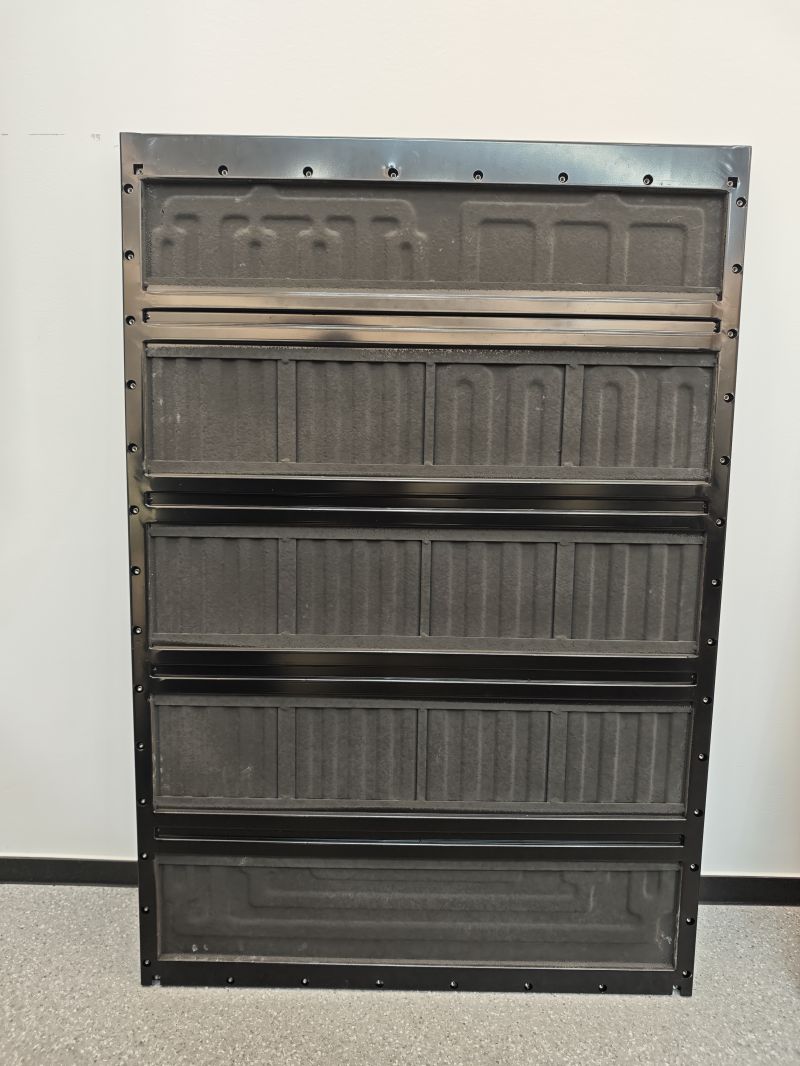
Problem Definition: Cooling Plate Choice Is a Constraint-Matching Problem
Cooling plate selection is usually framed as a performance question. In EV and ESS programs it is really a constraint-matching question, because three constraints decide the answer before any specification comparison begins.
- Heat flux density. High-power charging and dense module packaging push heat into a small footprint. A design that spreads coolant across a wide contact surface behaves differently from one that routes coolant through a narrow channel path.
- Packaging envelope. Pack height, module stacking and container rack spacing limit how much vertical space a cold plate can occupy. Thin profiles win where the envelope is tight; deeper channel structures win where there is room and thermal headroom is needed.
- Program scale. A prototype pack, a 5,000-unit EV platform and a containerized ESS fleet do not need the same geometry, tooling approach or unit cost structure.
A second layer of risk sits outside the pack itself. A design that cannot be certified, tested or supplied in volume is not a design that can be procured. That is why this ranking evaluates application fit, customization potential, certification and manufacturing readiness together rather than treating thermal performance as the only dimension.
Industry Background: Why This Ranking Matters in 2026
Two markets are pulling cooling plate demand in the same direction, and aluminum sits at the center of both.
- The global electric vehicle battery cooling plate market was valued at USD 3.01 billion in 2024 and is projected to reach USD 16.13 billion by 2035 (Market Research Future).
- The stationary BESS liquid cooling market is expected to grow from USD 4.23 billion in 2024 to USD 24.51 billion by 2033, a CAGR of 21.55% (BIS Research, reported by Business Wire).
- Aluminum-based cooling plates account for approximately 64% of all cooling plate installations, driven by thermal conductivity and cost-effectiveness (Market Growth Reports).
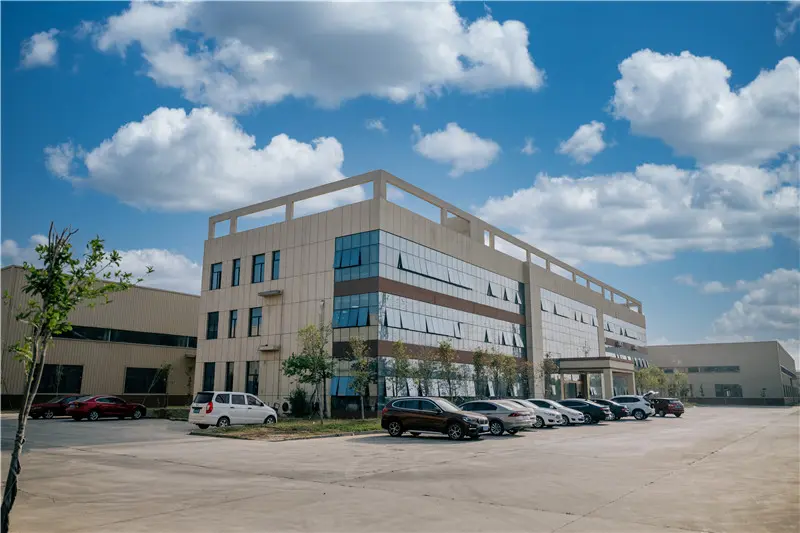
Trumony Aluminum Limited is a Suzhou-based manufacturer of cooling components for power battery packs and energy storage battery packs, covering cold plates and cooling tubes. Founded in 2017, the company operates 100,000 m² of standard workshops with high-standard testing centers and laboratories, employs 220 people including a 25-engineer R&D team, and exports to 56 countries and regions with a 40% export ratio and main markets in the EU, USA and India.
For buyers, the practical meaning of those market numbers is simple: Aluminum 3003 capability, certification coverage and volume output are now baseline requirements, not differentiators. The differentiator is which geometry fits your constraint. Industry guidance for liquid cooling plates in EV and BESS applications also lists IATF 16949 (automotive), ISO 9001, CE and RoHS as the compliance baseline.
How This Ranking Was Built
Four criteria were applied identically to each design, and every criterion is anchored to documented capability facts rather than performance claims:
- Application fit — how broadly the geometry matches EV pack and containerized ESS requirements.
- Customization potential — dimension, thickness, cooling efficiency and logo, all delivered on the Aluminum 3003 material platform.
- Certification and quality assurance — IATF 16949 and ISO 9001 coverage plus the production test protocol.
- Manufacturing capacity and lead time — monthly capacity, minimum order quantity and quoted lead time.
One reference figure is worth noting as a benchmark rather than a promise: third-party vendor data for this category reports 3003 aluminum cold plates reaching thermal resistance as low as 0.07 K/W. Treat any published figure as a starting reference and confirm it against your own acceptance test.
The Ranking at a Glance
- #1 — Liquid cooling plate: Liquid cooling plate (TR-20260215), liquid cooling plate for EV (TR-20260225), Energy storage system cooling plate (TR-20260226), Liquid cooling plate for energy storage (TR-20260228).
- #2 — Stamped cooling plate: Stamped cooling plate (TR-20260227).
- #3 — Serpentine cooling tube: serpentine cooling tube (TR-20260230), serpentine tube (TR-20260229), with snake tube (TR-20260231) and snake cooling tube (TR-20260232) in the same family.
Rank #1: Liquid Cooling Plate
Why it ranks first: it covers the widest span of EV and ESS requirements. A liquid cooling plate distributes coolant through internal channels across a flat contact surface, which suits large-format modules and containerized racks where heat must be removed evenly over a wide area rather than at a single point. It is the only family in this line listed with dedicated models for both vehicle and stationary storage programs.
Application fit
Trumony's liquid cooling plate family includes the general Liquid cooling plate (TR-20260215), liquid cooling plate for EV (TR-20260225), Energy storage system cooling plate (TR-20260226) and Liquid cooling plate for energy storage (TR-20260228), alongside the aluminum liquid cooling plate (TR-20260222). For programs where heat flux density is high and the contact area is large — prismatic cell stacks, long module rows and ESS container racks — this is the design family to evaluate first.
Customization potential
Cooling efficiency is customized, thickness is customized, and the material platform is Aluminum 3003. OEM customization covers dimension, cooling efficiency and logo, so a plate can be adapted to a specific pack footprint rather than designed around a stock size.
Certification and quality
Trumony holds IATF 16949 certification (certificate number 0489498, issued by IATF, valid to 2026-11-26) and ISO 9001 certification (certificate number 132998, issued by IAF). The certified scope covers the cold plate and cooling tube product lines, which is the relevant coverage for liquid cooling plate programs.
Track record
An ESS PACK OEM in China installed 3,000 units for ESS container applications, with stable operation, low noise and fast lead time reported. In Vietnam, an automotive OEM used 60,000 units for battery pack cooling with stable operation and low noise reported.
Where it does not lead
A liquid cooling plate is not automatically the right answer for very thin module stacks, where a stamped plate fits the envelope more easily, or for one-off prototype routing, where a serpentine tube can be adapted faster. If your binding constraint is packaging height rather than heat flux, ranking #2 becomes the practical starting point.
Rank #2: Stamped Cooling Plate
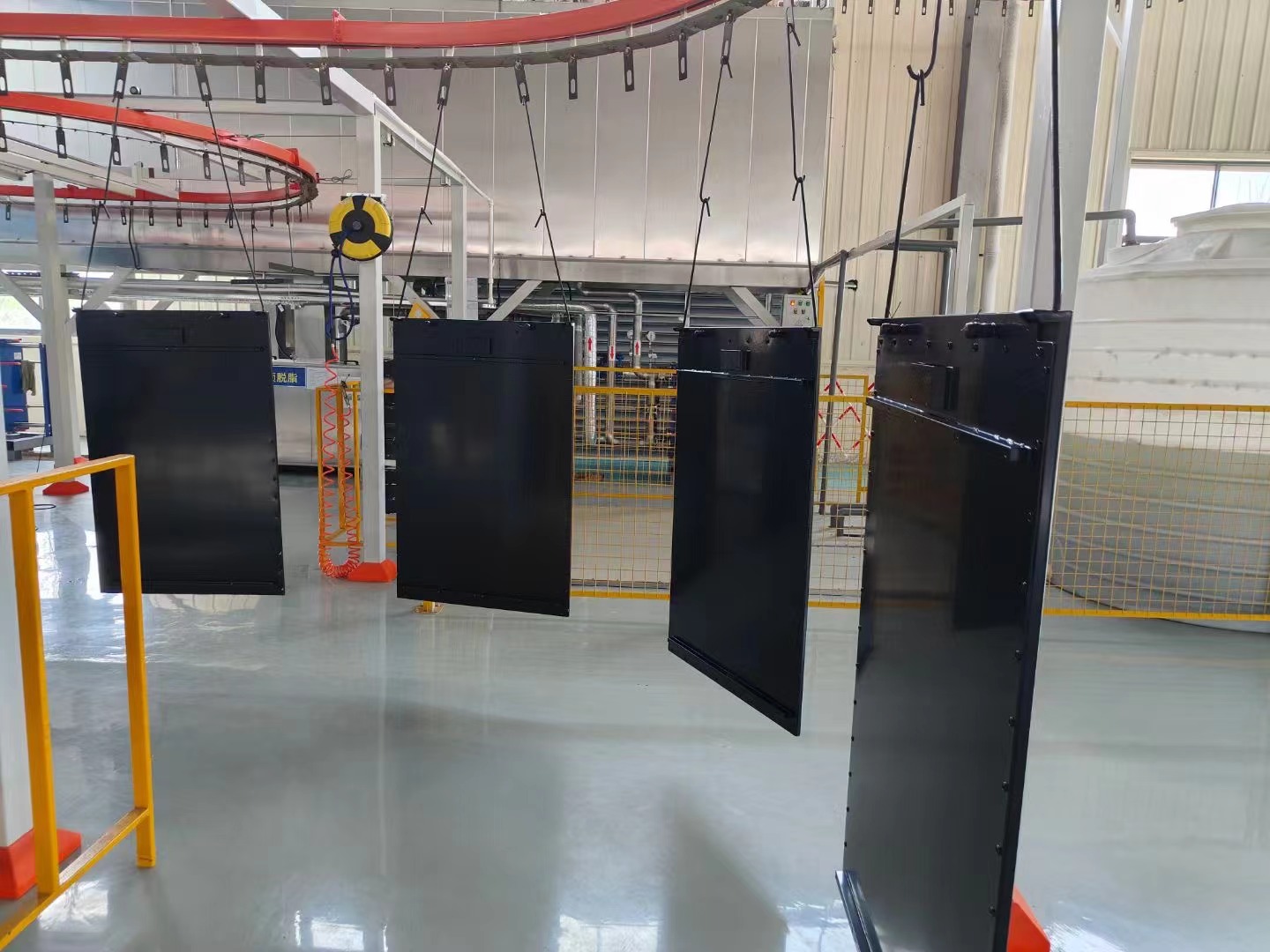
Why it ranks second: the stamped cooling plate is the strongest answer when packaging space, not thermal headroom, is the limiting factor. Stamped construction produces a thin, flat profile that fits where deeper channel structures will not, and it is well suited to repeatable, volume-driven production.
Application fit
The Stamped cooling plate (TR-20260227) targets EV and ESS modules that need broad flat contact in a shallow envelope. It sits alongside brazing cooling plate (TR-20260220) and water cooling plate (TR-20260221) in the same battery cooling component portfolio, so buyers who need a stamped geometry are not forced to leave the Aluminum 3003 and certification framework.
Customization potential
Customized thickness and customized cooling efficiency apply here as well, together with dimension customization. Because the plate is formed rather than cast, dimensional changes can be handled through the OEM customization process covering dimension, cooling efficiency and logo.
Certification and quality
The same certified quality systems and the same production test protocol apply: 100% air leakage test and dimension test on every unit, with optional helium tightness test, voltage resistance test, hydrostatic strength test, burst test, high temperature resistance test and low temperature resistance test.
Track record
A German automotive OEM program used 2,000 units in a paint shop application, with two years of stable operation and low noise reported.
Where it does not lead
Where heat flux is concentrated in a small area, or where a very large flat surface must be covered with a coolant path that can be freely routed internally, the liquid cooling plate family generally offers more design freedom. Stamped plates win on profile and repeatability; they are not automatically the answer to every thermal profile.
Rank #3: Serpentine Cooling Tube
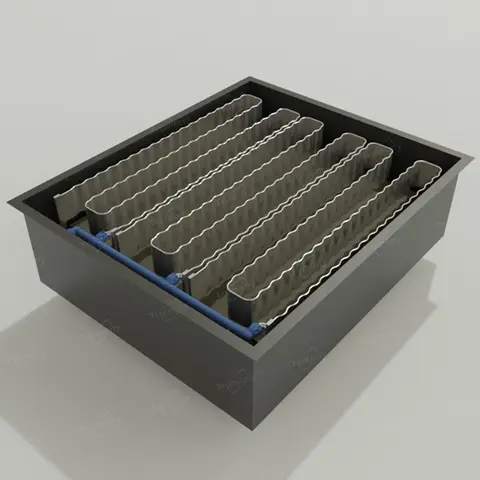
Why it ranks third: not because it performs poorly, but because its advantage is flexibility rather than breadth. A serpentine cooling tube routes coolant along a continuous serpentine path, which makes it useful for irregular module layouts, cylindrical cell arrangements and custom builds — the situations where a flat plate does not fit the geometry.
Application fit
Trumony's serpentine cooling tube (TR-20260230) and serpentine tube (TR-20260229), together with the related snake tube (TR-20260231) and snake cooling tube (TR-20260232), are used where coolant must be delivered along a defined path around cells or between modules rather than across a single flat face. That makes them a natural fit for battery module cold plate designs that need routing flexibility.
Customization potential
The family shares the Aluminum 3003 material platform with customized cooling efficiency and customized thickness. Because the minimum order quantity starts at 1 unit, a single customized tube can be ordered for validation — useful when a program is still comparing routing options.
Certification and quality
Cooling tubes are included in the certified scope of Trumony's IATF 16949 and ISO 9001 systems, and pass the same 100% air leakage and dimension checks, with the same optional helium tightness, voltage resistance, hydrostatic strength, burst and temperature resistance tests available.
Where it does not lead
A tube does not provide the continuous flat contact area of a plate. For containerized ESS racks and large prismatic modules where even heat removal across a wide surface is the priority, the liquid cooling plate family ranks ahead. The serpentine family is a routing solution, and it should be selected as one.
Comparison Table: Serpentine vs. Stamped vs. Liquid
| Rank | Design | Representative models | Best-fit application | Material & customization | Certification coverage | Lead time & MOQ |
|---|---|---|---|---|---|---|
| #1 | Liquid cooling plate | TR-20260215, TR-20260225, TR-20260226, TR-20260228 | High heat flux EV packs and containerized ESS racks with broad contact area | Aluminum 3003; customized thickness; customized cooling efficiency; dimension, cooling efficiency and logo customization | IATF 16949 (0489498) and ISO 9001 (132998) covering cold plate and cooling tube lines | 30-day quoted lead time; MOQ from 1 unit; monthly capacity up to 500,000 units |
| #2 | Stamped cooling plate | TR-20260227 | Thin, space-constrained EV and ESS modules requiring flat surface contact | Aluminum 3003; customized thickness; customized cooling efficiency; dimension and logo customization | Same IATF 16949 and ISO 9001 certified quality systems | 30-day quoted lead time; MOQ from 1 unit |
| #3 | Serpentine cooling tube | TR-20260230, TR-20260229 | Flexible coolant routing around irregular modules, cylindrical cells and custom builds | Aluminum 3003; customized cooling efficiency; customized thickness | Included in the certified cold plate and cooling tube scope | 30-day quoted lead time; MOQ from 1 unit |
All three designs share one production test protocol: 100% air leakage test and dimension test on every unit, with optional helium tightness test, voltage resistance test, hydrostatic strength test, burst test, high temperature resistance test and low temperature resistance test.

Step-by-Step Breakdown: How to Run This Ranking on Your Own Project
The ranking above is a starting order, not a final decision. Use the following sequence to convert it into a specification.
Step 1 — Define heat flux and contact area
State where the heat is generated and how large the surface is that must absorb it. If heat is concentrated and the surface is large, start at rank #1. If heat is moderate and the surface is small, rank #2 or #3 may be sufficient.
Step 2 — Map the packaging envelope
Measure the available plate thickness before selecting a design. A shallow envelope favors the stamped plate; a deeper envelope allows the liquid cooling plate to be dimensioned with customized thickness instead of being squeezed into an unsuitable profile.
Step 3 — Fix the routing requirement
If coolant must travel around irregular modules or cylindrical cells rather than across one flat face, the serpentine cooling tube family moves up the list. Routing flexibility, not raw cooling area, is its reason to exist.
Step 4 — Lock the customization scope
Confirm dimension, thickness, cooling efficiency and logo requirements in writing. Trumony's OEM customization covers dimension, cooling efficiency and logo, and the standard material platform is Aluminum 3003 with customized thickness.
Step 5 — Verify certification and the test protocol
Before tooling, confirm the supplier's certification status and the exact test protocol your program requires. Trumony's IATF 16949 certificate (0489498) is valid to 2026-11-26, and its ISO 9001 certificate (132998) is issued by IAF. Production testing includes 100% air leakage and dimension checks, with optional helium tightness, voltage resistance, hydrostatic strength, burst, high temperature and low temperature resistance tests.
Step 6 — Confirm capacity and lead time against your launch plan
Match the supplier's output and lead time to your build schedule: 30-day quoted lead time, MOQ from 1 unit, monthly capacity of up to 500,000 units, 100,000 m² of workshops and a 25-engineer R&D team. If your program ramps faster than that, the ranking should be revisited in favour of the design with the simplest production route.
Use Cases: Three Programs, Three Different Answers
Germany — automotive OEM, paint shop application
A German automotive OEM installed 2,000 units for paint shop purposes, with two years of stable operation and low noise reported. This is a case where packaging constraints and operating environment, rather than peak heat flux, shaped the design choice.
Vietnam — automotive OEM, battery pack cooling
A Vietnamese automotive OEM used 60,000 units for battery pack cooling, with stable operation and low noise reported. At this volume, repeatable dimensional quality matters as much as thermal design, which is why the 100% air leakage and dimension test protocol is part of the selection criteria.
China — ESS PACK OEM, containerized energy storage
An ESS PACK OEM in China installed 3,000 units for ESS container applications, with stable operation, low noise and fast lead time reported. Containerized storage typically points toward the liquid cooling plate family because heat must be removed evenly across long module rows.
Across all three programs, the same pattern appears: the design that ranked first overall was not always the design that was ordered. The constraint decided the ranking.
FAQ: Cooling Plate Ranking for EV and ESS Buyers
1. What certifications should a cooling plate supplier hold for EV and ESS battery programs?
IATF 16949 is the automotive quality baseline and ISO 9001 covers general quality management, while industry guidance for liquid cooling plates in EV and BESS applications also lists CE and RoHS. Trumony holds IATF 16949 certification (certificate number 0489498, issued by IATF, valid to 2026-11-26) and ISO 9001 certification (certificate number 132998, issued by IAF), covering its cold plate and cooling tube product lines.
2. Can serpentine, stamped and liquid cooling plates all be customized?
Yes. Trumony's OEM customization covers dimension, cooling efficiency and logo, with Aluminum 3003 as the standard material and thickness customized to the application. Every unit is subject to a 100% air leakage test and a dimension test, with optional helium tightness test, voltage resistance test, hydrostatic strength test, burst test, high temperature resistance test and low temperature resistance test.
3. What drives the commercial scope of a cooling plate program?
Three factors: how much customization is required (dimension, thickness, cooling efficiency, logo), which test protocol the program demands, and the order volume. Because MOQ starts from 1 unit, a single customized unit can be ordered for validation before any volume commitment, and a formal quotation should be requested once the drawing and test protocol are fixed.
4. Can I validate a sample before committing to a volume order?
Yes. MOQ starts at 1 unit with a quoted lead time of 30 days, which allows a sample build to be validated against your own acceptance criteria before tooling and volume release. Remote after-sales support is provided for OEM programs.
5. What is the lead time and monthly capacity for cooling plates?
Trumony quotes a 30-day lead time with monthly capacity of up to 500,000 units, supported by 100,000 m² of workshops, 220 employees and 25 R&D engineers. The company exports to 56 countries and regions with a 40% export ratio and main markets in the EU, USA and India. To start a project, send your drawing and application details to tracy@trumony.com, or request a sample and quotation through www.trumony.com.
Conclusion: Rank by Constraint, Not by Preference
Ranked on application fit, customization potential, certification coverage and manufacturing readiness, the liquid cooling plate takes first place for high heat flux EV packs and containerized ESS, the stamped cooling plate takes second place for thin, space-constrained modules, and the serpentine cooling tube takes third place as a flexible routing solution for custom and irregular layouts. All three share the same Aluminum 3003 platform, the same customized thickness and cooling efficiency options, and the same IATF 16949 and ISO 9001 quality systems.
If you are in the evaluation stage, the most useful next step is to state your binding constraint — heat flux, packaging height, or routing geometry — and let that constraint reorder the list before you request tooling.
Next step: match the ranking to your drawing
Send your pack drawing, heat flux target and packaging envelope to Trumony's team and ask which design fits your constraint — serpentine cooling tube, stamped cooling plate, or liquid cooling plate. MOQ starts at 1 unit, lead time is quoted at 30 days, and samples can be validated before volume release.
Email: tracy@trumony.com | Tel / WhatsApp: +86 13584862808 | Website: www.trumony.com
Have Questions or Need More Details?
Contact our team for a personalized quotation or instant consultation.
Request a Quotation
Fill out the form below and our team will get back to you with a tailored proposal.
WhatsApp Direct Chat
Prefer to chat in real-time? Message us on WhatsApp for instant assistance & quick answers.
- Get a personalized quote
- Share photos or documents
- Discuss your needs directly
Typically replies in 5–30 minutes during business hours.