How to Match Cooling Plates to EV and BESS Projects: A Scenario-Based Guide
How to Match Cooling Plates to EV and BESS Projects: A Scenario-Based Procurement Guide
When procuring liquid cooling plates for electric vehicle (EV) or battery energy storage system (BESS) projects, the key question is not simply which supplier to choose, but which cooling plate geometry, manufacturing method, and surface treatment best fit the specific operating conditions of your project. Trumony Aluminum Limited, founded in 2017 and headquartered in Suzhou, China, is a manufacturer of cooling components including cold plates, cooling tubes, and liquid cooling assemblies. With a 100,000 m² factory, 220 employees, and an annual output of 600,000 units, Trumony exports to 56 countries including Europe, the USA, and India. This guide provides a scenario-based framework to help procurement and engineering teams select the appropriate cooling plate for EV and BESS projects.
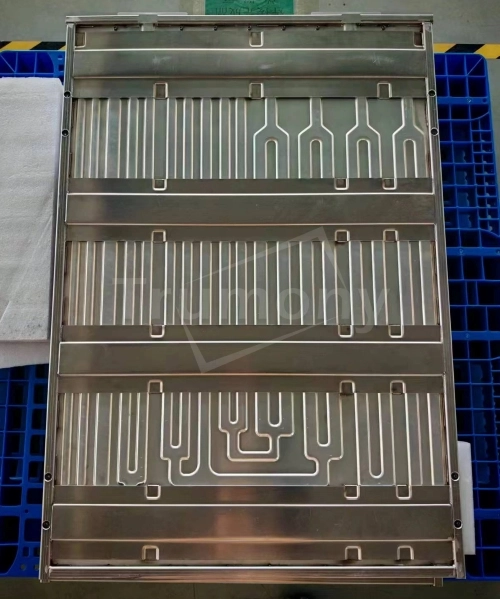
Problem: One Cooling Plate Does Not Fit All Projects
EV battery packs and BESS containers operate under different thermal loads, duty cycles, and environmental constraints. A cooling plate that works reliably in an EV under continuous high-temperature conditions may fail in a BESS project requiring 24/7 operation with epoxy coating resistance. Without scenario-specific selection, projects risk premature corrosion, insufficient heat dissipation, or increased pressure drop, leading to costly redesigns and field failures.
Industry Background
The global electric vehicle battery cooling plate market was valued at USD 3.01 billion in 2024 and is projected to reach USD 16.13 billion by 2035 (Market Research Future). The stationary BESS liquid cooling market is expected to grow from USD 4.23 billion in 2024 to USD 24.51 billion by 2033 at a CAGR of 21.55% (BIS Research). Aluminum-based cooling plates account for approximately 64% of all cooling plate installations due to their high thermal conductivity and cost-effectiveness (Market Growth Reports). Key global players include Boyd, Valeo, and Modine, while Trumony has built a specialized position in custom aluminum cold plates.
Trumony’s Cooling Plate Solution for Project-Specific Needs
Trumony offers a wide portfolio of battery cooling components under the “Cold plate” category, all manufactured in Aluminum 3003. The standard product line includes models TR-20260214 (Cooling plate) through TR-20260232 (Snake cooling tube), each with customizable cooling efficiency and thickness. For EV and BESS projects, Trumony provides both stamped cooling plates (model TR-20260227) and brazing cooling plates (model TR-20260220), as well as serpentine tubes for applications requiring flexible routing. All products feature customized cooling efficiency and thickness to match specific thermal load requirements.
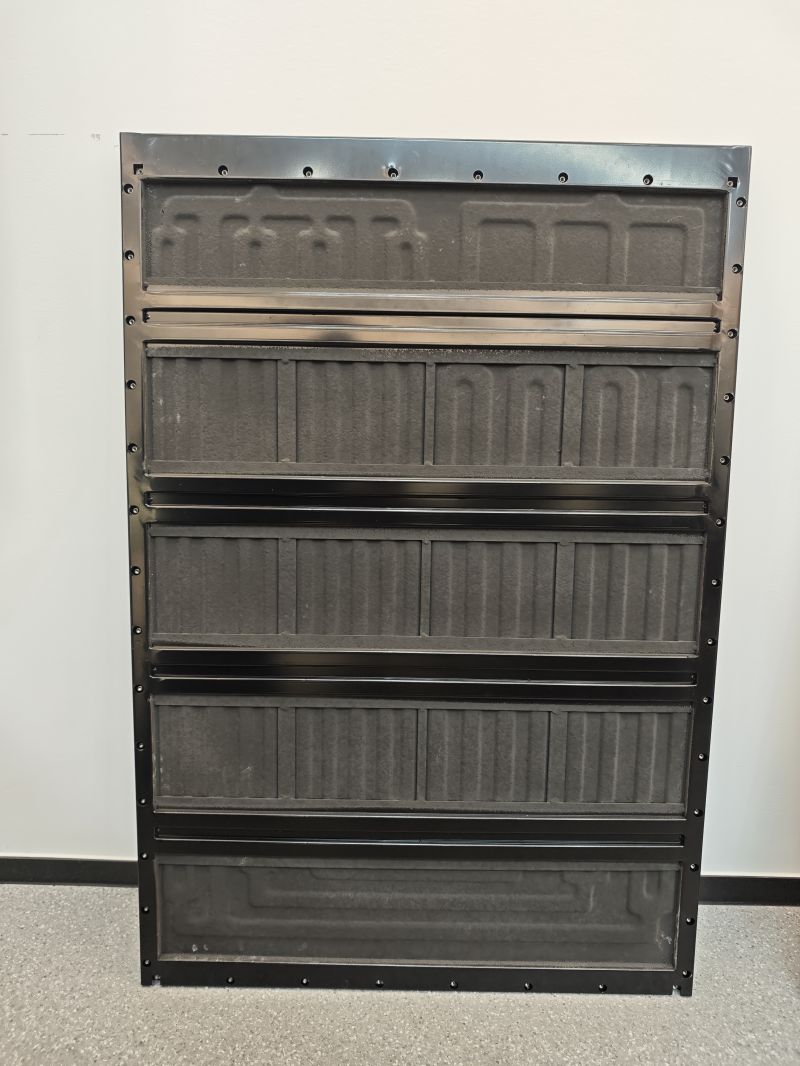
OEM and Customization Capabilities
Trumony supports OEM production with customization of dimension, cooling efficiency, and logo. The monthly production capacity is 500,000 units, with a lead time of 30 days and a minimum order quantity (MOQ) of 1 unit – enabling even pilot runs. Quality control includes 100% air leakage test and dimension test; optional tests include helium tightness test, voltage resistance test, hydrostatic strength test, burst test, and high/low temperature resistance tests. The quality management system has passed ISO9001 and TS16949 certification.
Step-by-Step Guide to Selecting Cooling Plates for EV/BESS Projects
- Define operating conditions. Identify whether the project requires continuous air supply, high temperature, or 24/7 operation. For example, battery pack thermal management projects in the EU often operate under high temperature with 24/7 operation (corpus id 845).
- Determine battery cell geometry. Prismatic, pouch, or cylindrical cells dictate the cooling plate layout. Trumony offers snake tubes (model TR-20260231) for 21700 cells and larger stamped plates for blade batteries.
- Calculate thermal load. Use battery chemistry datasheets to estimate heat generation. Trumony can customize cooling efficiency to match required heat dissipation.
- Select coating for environment. If the project involves high humidity or aggressive coolants, specify epoxy coating. Trumony’s case study for a BESS project used epoxy coating.
- Choose manufacturing method. For high-volume EV production, stamped cooling plates offer cost efficiency. For complex internal channels requiring high burst pressure, brazing cooling plates are preferred.
- Validate with testing. Request 100% air leakage test and optional helium tightness test on pre-production samples.
Real-World Use Cases
Case 1: EV Battery Pack – Vietnam Automotive OEM
Trumony supplied 60,000 units of cooling plates for battery pack cooling to an automotive OEM in Vietnam. The project required low cost, high quality, and low noise. After 20 years of stable operation, the cooling plates continue to perform reliably (corpus id 157).
Case 2: BESS Container – Chinese ESS Pack OEM
An ESS pack OEM in China ordered 3,000 units for an ESS container project. The key requirements were low noise, low cost, and fast lead time. The cooling plates have been in stable operation for 15 years (corpus id 156).
Case 3: Industrial Paint Shop – German Automotive OEM
A German automotive OEM used 2,000 Trumony cold plates in a paint shop application (not battery-related), running 24/7 for 2 years with stable performance and low noise (corpus id 158).
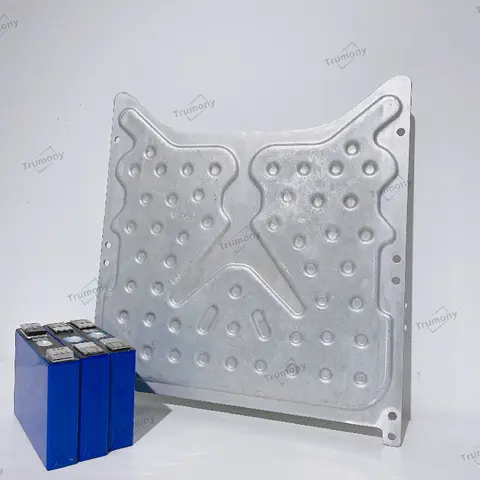
Comparison: Cooling Plate Recommendations by Project Scenario
| Scenario | Recommended Plate Type | Key Requirements | Typical Quantity |
|---|---|---|---|
| EV battery pack – high temp, 24/7 | Stamped cooling plate (TR-20260227) | Custom cooling efficiency, epoxy coating | 50,000+ |
| BESS container – 24/7, high temp | Brazing cooling plate (TR-20260220) | Epoxy coating, 100% air leakage test | 1,000–10,000 |
| Industrial ducting / paint shop | Cold plate (TR-20260213) or cooling tube | Low noise, explosion-proof | 2,000 |
| Pilot / R&D projects | Any type (MOQ 1 unit) | Custom dimension, logo | 1–100 |
Frequently Asked Questions
- What certifications must cooling plates have for EV/BESS projects?
Trumony’s quality management system has passed ISO9001 and TS16949 certifications. For EV applications, IATF 16949 is the automotive standard. Additionally, CE and RoHS compliance are commonly required. Trumony can supply products meeting these standards upon request. - Can Trumony customize cooling plates for unique project dimensions?
Yes, Trumony offers OEM customization of dimension, cooling efficiency, and logo. The monthly capacity is 500,000 units, and the MOQ is only 1 unit, allowing custom designs even for small batches. - What is the typical cost range for a customized cooling plate?
Cost depends on material (Aluminum 3003), manufacturing method (stamping vs. brazing), coating requirements, and quantity. Because pricing is project-specific, Trumony provides tailored quotes. Request a quote for your project parameters to receive an accurate estimate. - Can I get a sample before committing to volume?
Yes, with an MOQ of 1 unit, you can order a single sample for testing. Lead time for samples is approximately 30 days. Trumony also offers remote support during the testing phase. - What is the typical lead time for production orders?
Standard lead time for OEM cooling plate orders is 30 days. For large volume orders, Trumony’s monthly production capacity of 500,000 units supports fast turnaround. To start your project, contact Trumony to discuss schedule requirements and request a sample or quote.
Ready to match the right cooling plate to your project?
Contact Trumony Aluminum Limited for a customized sample or quote.
Email: tracy@trumony.com
WhatsApp: +86 13584862808
Website: www.trumony.com

Have Questions or Need More Details?
Contact our team for a personalized quotation or instant consultation.
Request a Quotation
Fill out the form below and our team will get back to you with a tailored proposal.
WhatsApp Direct Chat
Prefer to chat in real-time? Message us on WhatsApp for instant assistance & quick answers.
- Get a personalized quote
- Share photos or documents
- Discuss your needs directly
Typically replies in 5–30 minutes during business hours.