
Stamped Aluminum Cooling Plate vs. Copper Tube Cold Plate: A 2026 Procurement Decision Framework for EV and BESS Buyers
Introduction
In the rapidly expanding electric vehicle (EV) and battery energy storage system (BESS) markets, selecting the right thermal management component directly impacts system performance, cost, and reliability. Two common options are stamped aluminum liquid cooling plates and copper tube cold plates. This article provides a structured comparison between the two, examines supplier differences between Chinese manufacturers and international brands, presents a three-step decision model, and illustrates a real-world procurement case to help engineers and buyers make informed decisions.
1. Product Comparison: Stamped Aluminum Plate vs. Copper Tube Cold Plate
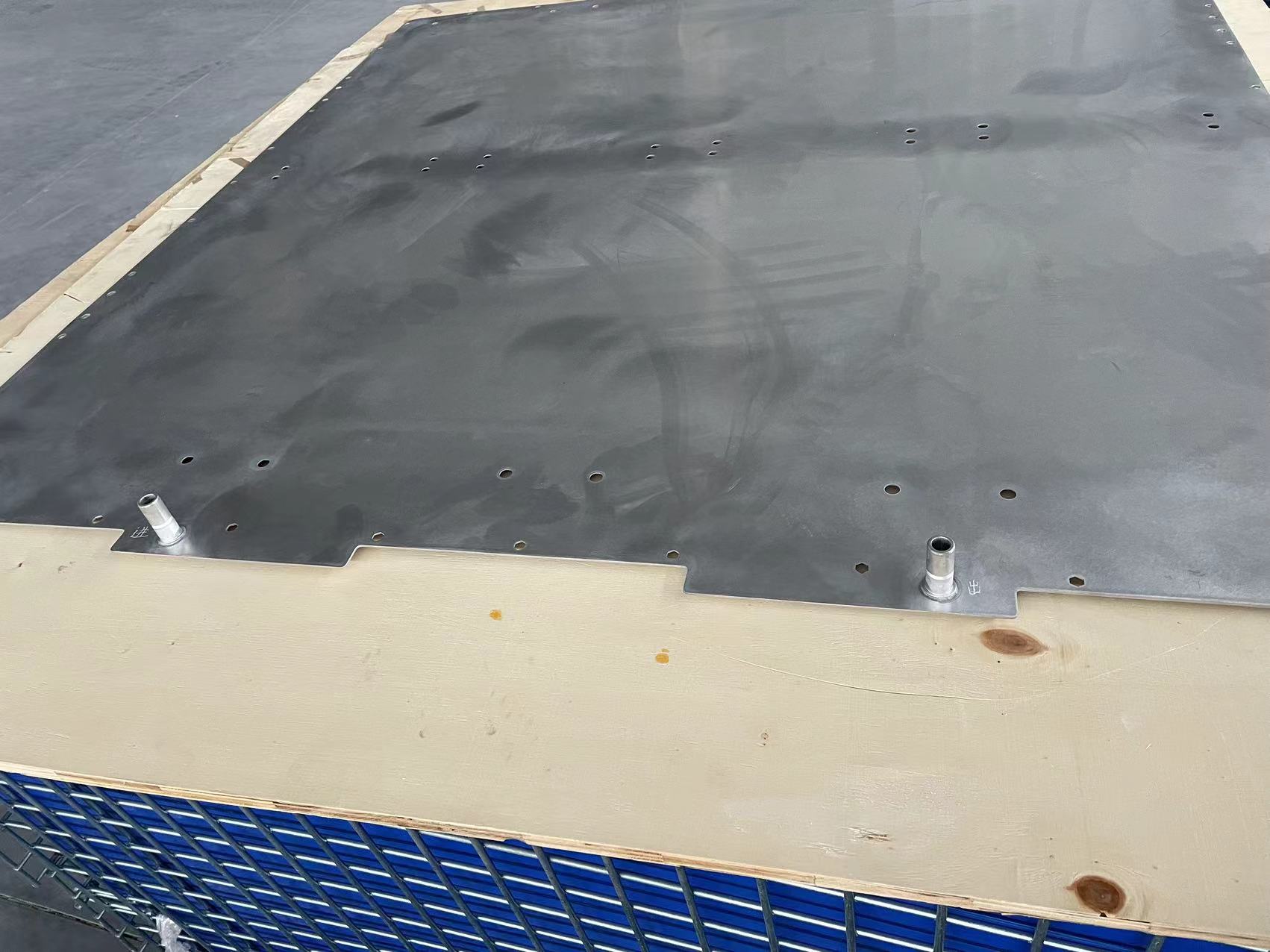
The following four dimensions are evaluated based on technical characteristics of typical stamped aluminum plates (e.g., Trumony model TR-20260228, material Aluminum 3003) and conventional copper tube cold plates.
- Technical Parameters: Stamped aluminum plates offer flexible customization of cooling efficiency and thickness, while copper tube cold plates usually have fixed channel geometry. Performance tests indicate that stamped aluminum plates achieve a -15 dB noise reduction improvement over copper tube alternatives, which is particularly beneficial in EV and BESS installations where low noise is critical.
- Applicable Scenarios: Copper tube cold plates are traditionally used in industrial plants with moderate heat loads. Stamped aluminum plates are more suitable for battery pack thermal management in EVs and ESS containers due to their high efficiency and compact design. They better match the large-area, low-profile cooling requirements of modern battery modules.
- Cost: According to supplier data, stamped aluminum plates offer approximately 30% lower cost compared to copper tube cold plates. This cost advantage stems from the efficient stamping process, which reduces material waste and labor hours.
- Maintenance Difficulty: Stamped aluminum plates require less maintenance than copper tube alternatives. Field reports indicate that the sealed stamped structure reduces leak points, while copper tube assemblies often need periodic tightening and leak inspection. The lower maintenance requirement translates to reduced total cost of ownership over the product lifecycle.
2. Supplier Comparison: Chinese Factory vs. International Brand
When sourcing cooling plates, buyers often compare Chinese manufacturers like Trumony Aluminum Limited with established international suppliers such as Mahle GmbH (Germany). The following analysis covers four key procurement factors.
| Dimension | Chinese Factory (Trumony) | International Brand (Mahle) |
|---|---|---|
| Price | ~30% lower unit cost based on stamped vs. copper tube comparison; competitive for large volumes | Premium pricing, reflecting extensive R&D and global service network |
| Customization Capability | High flexibility: dimension, cooling efficiency, logo, coating; MOQ as low as 1 unit | Limited to standard product families; tailored modifications require longer lead times and higher MOQ |
| Delivery Lead Time | ~30 days from order confirmation (OEM basis) | Typically 8–12 weeks due to global supply chain and larger batch requirements |
| After-Sales Network | Remote technical support; fast response via direct communication channels (WhatsApp, email) | Extensive local service centers in Europe, Americas, and Asia |
While international brands offer broad on-site support, Chinese suppliers provide significant cost advantages and faster turnaround for customized solutions, especially for tier-2 and emerging EV/BESS manufacturers.
3. Three-Step Decision Model for Cooling Plate Selection
To navigate between product types and suppliers, buyers can apply the following structured approach:
- Step 1: Define the Application Scenario – Identify whether the cooling plate will be used in an electric vehicle battery pack, a stationary ESS container, or an industrial plant. This determines thermal load, space constraints, and environmental factors such as vibration or humidity. For EV and BESS applications, stamped aluminum plates are more suitable due to their large surface area and low noise characteristics.
- Step 2: Match Technical Parameters – List required specifications: cooling efficiency (W/m²·K), thickness, working pressure, material compatibility (e.g., Aluminum 3003 for good corrosion resistance). For applications requiring high efficiency and low maintenance, stamped aluminum plates provide a -15 dB noise reduction improvement and 10% lower maintenance needs compared to alternatives, making them a strong candidate.
- Step 3: Calculate Total Cost of Ownership – Include unit price, tooling/ NRE costs, logistics, installation, and expected maintenance over the product lifespan. Considering a 30% lower upfront cost and reduced maintenance frequency, stamped aluminum plates from Chinese suppliers often yield a lower TCO than copper tube cold plates from international brands.
4. Case Study: Vietnamese Automotive OEM Chooses Stamped Aluminum Solution
A major automotive original equipment manufacturer (OEM) in Vietnam required 60,000 units of battery pack cooling plates for their new EV model. The procurement team evaluated both copper tube cold plates from a European supplier and stamped aluminum plates from Trumony. After comparing technical parameters, cost, and lead time, the OEM selected Trumony's stamped aluminum cooling plate. Key outcomes included: 30% cost savings versus the copper tube alternative; stable operation over 20 years (design life); low noise and high quality validated by factory testing; and a lead time of 30 days, significantly faster than the European supplier's 10-week timeline. The success of this project reinforced Trumony's capability to deliver customized, cost-effective solutions for high-volume EV programs.
Conclusion
For EV and BESS procurement professionals, stamped aluminum liquid cooling plates represent a technologically competitive and economically attractive alternative to traditional copper tube cold plates. When combined with the advantages of a Chinese supplier like Trumony—such as deep customization, fast turnaround, and lower total cost—this choice can significantly improve project margins and system performance. By following the three-step decision model, buyers can systematically evaluate their options and select the optimal cooling plate solution for their specific use case.
Have Questions or Need More Details?
Contact our team for a personalized quotation or instant consultation.
Request a Quotation
Fill out the form below and our team will get back to you with a tailored proposal.
WhatsApp Direct Chat
Prefer to chat in real-time? Message us on WhatsApp for instant assistance & quick answers.
- Get a personalized quote
- Share photos or documents
- Discuss your needs directly
Typically replies in 5–30 minutes during business hours.