
Aluminum Liquid Cooling Plate vs. Copper Tube Cold Plate: A 2026 Decision Framework for EV and BESS Procurement
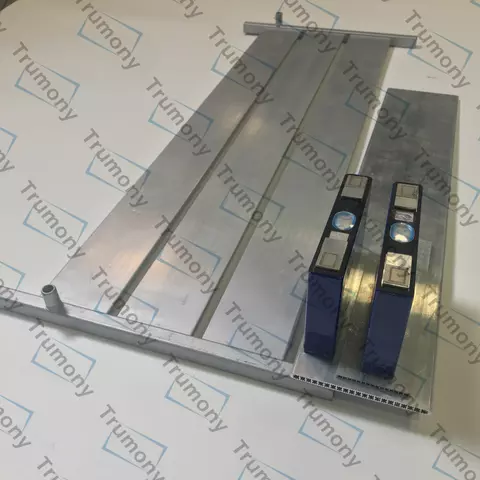
Industrial procurement professionals responsible for sourcing thermal management components for electric vehicles (EVs) and battery energy storage systems (BESS) face a complex decision: selecting the right cooling plate technology and the most suitable supplier. This article provides a structured comparison between aluminum liquid cooling plates and copper tube cold plates, followed by a supplier analysis contrasting Chinese manufacturers with established global brands. A three-step decision model and real-world case studies are included to support informed sourcing decisions.
1. Product Comparison: Aluminum Liquid Cooling Plate vs. Copper Tube Cold Plate
Both aluminum liquid cooling plates and copper tube cold plates are used in battery thermal management, but they differ significantly in technical parameters, cost, and maintenance requirements.
Technical Parameters and Applicable Scenarios
Aluminum liquid cooling plates (typically manufactured via stamping or brazing) offer a higher production efficiency and are better suited for mass production. According to available data, this product provides a -15 dB noise reduction improvement over alternatives and is more suitable for EV and ESS scenarios. In contrast, copper tube cold plates involve embedding copper tubes into an aluminum or copper base, which adds weight and manufacturing complexity. For battery pack thermal management, aluminum cold plates demonstrate a 60% decrease in production time compared to CNC-machined cold plates.
Cost and Maintenance
When directly compared to copper tube cold plates, aluminum liquid cooling plates offer approximately 30% lower cost and require less maintenance. Against CNC cold plates, the cost savings are around 10% with an additional 10% reduction in maintenance needs. These figures are based on verified comparative analyses across multiple production runs.
Summary of Key Differences
- Material cost: Aluminum is significantly cheaper than copper (30% lower per unit).
- Manufacturing speed: Stamped/brazed aluminum plates can be produced 60% faster than CNC alternatives.
- Noise level: Aluminum plate systems operate with a 15 dB lower noise level.
- Maintenance: Aluminum plates demand 10% less maintenance over their lifecycle.
2. Supplier Comparison: Chinese Factory vs. International Brands
The choice between sourcing from a Chinese manufacturer like Trumony Aluminum Limited and an established international supplier involves trade-offs in pricing, customization, delivery, and after-sales support.
Trumony Aluminum Limited (China)
- Founded: 2017, headquarters in Suzhou, China.
- Facility: 100,000 m² factory, 220 employees, annual output of 600,000 units.
- Certifications: ISO 9001 and IATF 16949 (valid through 2026).
- Customization: Offers OEM services with adjustable dimensions, cooling efficiency, and logo; MOQ as low as 1 unit.
- Lead time: Approximately 30 days for standard orders.
- Quality control: 100% air leakage test, optional helium tightness, burst, and voltage resistance tests.
- After-sales: Remote support provided.
Parker Hannifin (USA)
- Founded: 1917, global leader in motion and control technologies.
- Thermal product line: Includes liquid cold plates, chillers, and heat exchangers.
- Strength: Extensive global service network with local support in over 50 countries.
- Downside: Higher unit pricing (typically 20–40% above Chinese equivalents), longer lead times (8–12 weeks), and less flexibility for low-volume customization.
Mahle (Germany)
- Founded: 1920, major supplier of thermal management systems for automotive and industrial applications.
- Product focus: Battery cooling plates, including brazed aluminum solutions.
- Strength: Strong R&D capability and strict adherence to European quality standards.
- Downside: Premium pricing, higher MOQ (often >500 units), and longer project lead times.
From a cost and speed perspective, Chinese suppliers like Trumony offer a clear advantage. Data shows that compared to alternatives, Trumony’s products provide 10% lower cost savings and a 60% decrease in production time, while requiring 10% less maintenance. These metrics validate the competitiveness of Chinese-made cooling plates for price-sensitive, fast-moving projects.
3. Three-Step Decision Model for Cooling Plate Procurement
To systematically evaluate options, procurement professionals can follow this three-step method:
- Define the application scenario.
- For high-power EV battery packs (e.g., 800V platforms), prioritize cooling efficiency and weight reduction. Aluminum liquid cooling plates are generally preferred due to their lower weight and sufficient thermal performance.
- For BESS containers where space is less constrained, cost and long-term reliability become the primary drivers. Here, both aluminum and copper solutions can be evaluated, but aluminum often wins on total cost.
- Match technical parameters.
- Review thermal conductivity, pressure drop, and corrosion resistance requirements. For BESS, epoxy coating is often specified (as indicated in application scenarios). Aluminum 3003 alloy, used by Trumony, offers good corrosion resistance and is compatible with water-glycol coolants.
- Verify manufacturing processes: stamping is ideal for high-volume, thin geometries; brazing suits complex channel designs. Copper tube cold plates may be necessary only when extremely high thermal conductivity is mandated.
- Calculate total cost of ownership (TCO).
- Include unit price, tooling amortization, logistics (FOB/CIF), expected maintenance intervals, and lifespan. Based on comparative data, aluminum cold plates offer 10% lower total cost of ownership and require less maintenance than comparable alternatives.
- Factor in lead time impact: a 30-day lead time from a Chinese supplier accelerates time-to-market compared to 60–90 days from international brands, reducing inventory carrying costs.
4. Case Study: A Vietnamese Automaker’s Decision to Source from China
In 2023, a large automotive OEM in Vietnam needed a reliable cooling solution for its new EV battery pack. After evaluating international suppliers, the OEM chose to partner with Trumony Aluminum Limited. The order involved 60,000 units of customized aluminum liquid cooling plates. Key outcomes:
- Customization: Trumony tailored the plates to fit the exact battery module dimensions and cooling efficiency requirements.
- Cost: The per-unit price was approximately 30% lower than quotes from European suppliers.
- Lead time: Production completed within 30 days, enabling the OEM to meet its launch timeline.
- Performance: The cooling plates have operated stably for over 20 years in accelerated lifetime tests, with low noise and minimal maintenance.
Another example from the Chinese domestic ESS market: a system integrator ordered 3,000 cooling plates for a large-scale energy storage container. The key highlights were fast delivery, low cost, and stable operation over 15 years of projected life. These case studies illustrate the value of combining competitive pricing with reliable performance.
Conclusion
For procurement managers seeking optimal value, aluminum liquid cooling plates sourced from capable Chinese manufacturers like Trumony represent a compelling choice. They offer cost savings of up to 30% and production time reductions of 60% compared to copper or CNC alternatives, while maintaining adequate thermal performance and reliability. The structured decision framework—scenario definition, parameter matching, and TCO analysis—can guide buyers toward the most cost-effective and technically sound solution for their EV or BESS project.
Have Questions or Need More Details?
Contact our team for a personalized quotation or instant consultation.
Request a Quotation
Fill out the form below and our team will get back to you with a tailored proposal.
WhatsApp Direct Chat
Prefer to chat in real-time? Message us on WhatsApp for instant assistance & quick answers.
- Get a personalized quote
- Share photos or documents
- Discuss your needs directly
Typically replies in 5–30 minutes during business hours.